Monday, January 11, 2021

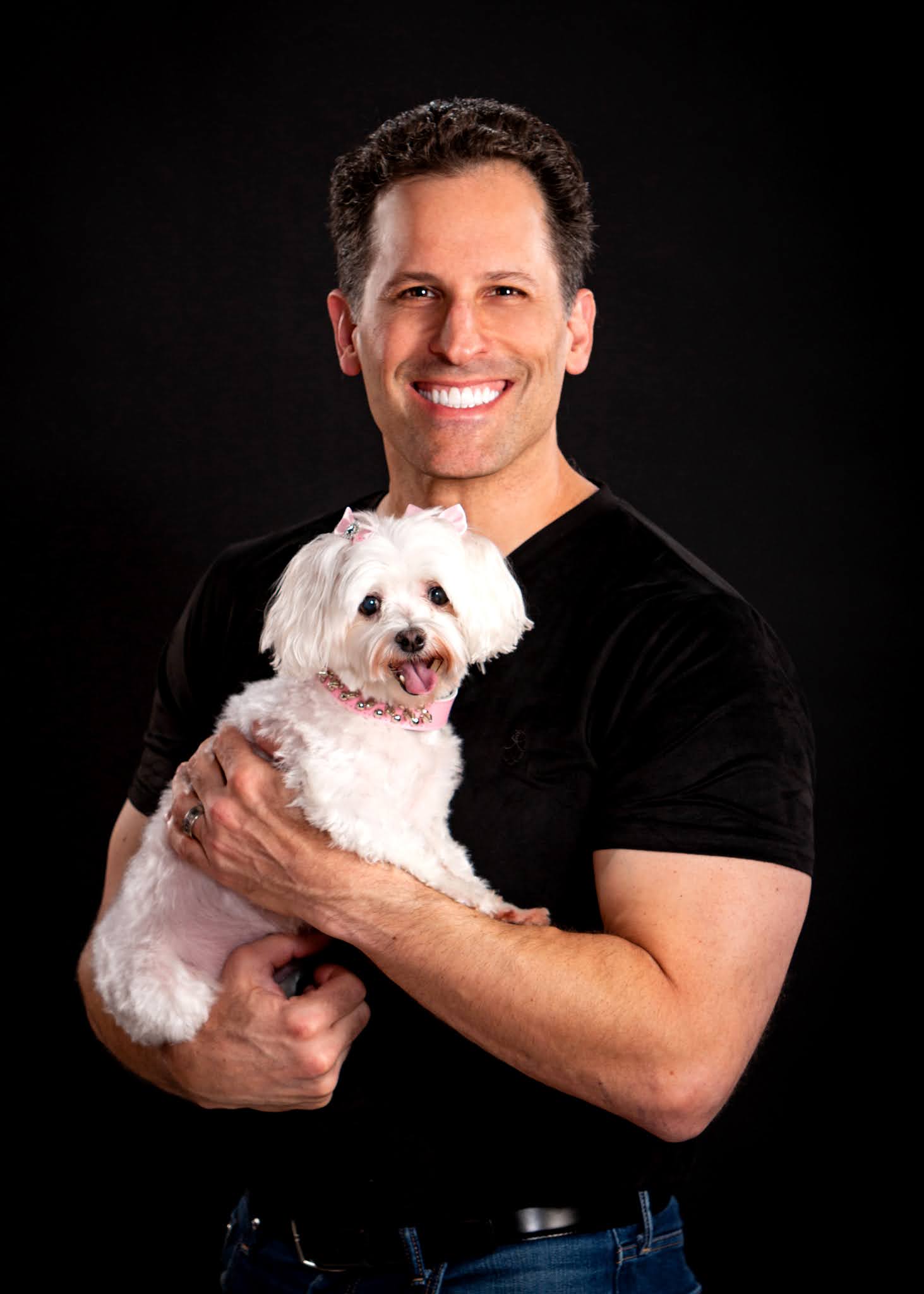
FEATURED AUTHOR: PETER W.J. HAYES


ABOUT THE BOOK


After a house fire hospitalizes his partner and forces him onto medical leave, Pittsburgh Bureau of Police detective Vic Lenoski starts a desperate search for the woman who set the blaze. She is the one person who knows what happened to his missing teenage daughter, but as a fugitive, she’s disappeared so thoroughly no one can find her.

Risking his job and the wrath of the district attorney, Vic resorts to bargaining with criminal suspects for new leads, many of which point to North Dakota. He flies there, only to discover he is far from everything he knows, and his long-cherished definitions of good and bad are fading as quickly as his leads. His only chance is one last audacious roll of the dice. Can he stay alive long enough to discover the whereabouts of his daughter and rebuild his life? Or is everything from his past lost forever?


Book Details:
Title: The Things That Last Forever
Author: Peter W. J. Hayes
Genre: mystery, police procedural
Series: The Vic Lenoski Mysteries, book 3
Publisher: Level Best Books (September 1, 2020)
Print length: 278 pages


TWENTY QUESTIONS/ONE WORD ANSWERS WITH PETER W.J. HAYES


1. Where is your cell phone? Charging.
2. Your hair? Missing.
3. Your workplace? Desk.
4. Your other half? Home.
5. What makes you happy? Efficiency.
6. What makes you crazy? Inefficency.
7. Your favorite food? Ribs.
8. Your favorite beverage? Wine.
9. Fear? Health.
10. Favorite shoes? Hiking.
11. Favorite way to relax? Music.
12. Your mood? Positive.
13. Your home away from home? Car.
14. Where were you last night? Home.
15. Something that you aren't? Impatient.
16. Something from your bucket list? Ireland.
17. Wish list item? Enstrom’s.
18. Where did you grow up? Pittsburgh.
19. Last thing you did? Slept.
20. What are wearing now? Carhartt.


EXCERPT FROM THE THINGS THAT LAST FOREVER

Chapter 1

Sometimes you walk into a room and what’s inside changes your life forever. That sense stopped Vic just inside the doorway. A woman with skin the color of dark amber lay on the only bed, her bandaged arms shockingly white among the shadows. She was reflected in a large window in the far wall, the outside sky as black and still as the inside of a tomb. He smelled disinfectant and blood. Numbers and graph lines flared on grey-eyed medical monitors. Somewhere in the vast empty spaces of the hospital a voice echoed.

He’d never visited a burn ward.

Never had a partner so close to death.

Never thought a room could seem as hollow as he felt inside.

The feeling was so disembodying that when he reached the bed and looked into the woman’s face, he half expected to see himself. But it was Liz, her forehead and knobby cheekbones smeared with ointment, eyebrows and eyelashes burned away. A bandage covered her left earlobe where her favorite earring, a small gold star, usually sat. It seemed like every breath she took pained her.

He wanted to take her hand but the bandages made it impossible. “Liz,” he said softly, her name almost lost among the beeps and clicks of the monitors. Liquid dripped into a tangle of IV tubes at the back of her fist.

Her eyelids fluttered.

“Liz. Doctor told me I could talk to you.”

Her eyes opened. He watched her pupils widen and narrow as they absorbed the distance to the ceiling and distinguished shadows from feeble light.

“Vic?” A hoarse whisper.

“I’m here.”

She turned her face to him. “You got me out.”

Relief rose in Vic’s throat. “Yeah. But the house didn’t make it.”

“Cora Stills?”

Vic squeezed his eyelids shut and rocked on his heels. He didn’t know where to start. Cora Stills. The one person who knew something—anything—about his missing teenage daughter. Liz on her way to arrest her. Instead, Liz, handcuffed to a radiator pipe as flames lathered and stormed through Cora’s house. Cora’s burned-out car found two days later on a crumbling stone dock next to a deserted warehouse, the Allegheny River emptying westward.

Cora, alive and moving through that tomb of darkness outside the window. Free.

“Vic…” Liz said something more but he couldn’t make it out.

He bent closer.

She forced her words from somewhere deep inside, and as she spoke, he knew this was what she saved through all the fear and pain to tell him. “Someone told Cora I was coming.”

***

Excerpt from The Things That Last Forever by Peter W. J. Hayes.  Copyright 2020 by Peter W. J. Hayes. Reproduced with permission from Peter W. J. Hayes. All rights reserved.


OTHER BOOKS BY PETER W.J. HAYES

The Pittsburgh Trilogy (The Vic Lenoski Mysteries):

Book 1: The Things That Aren’t There

Book 2: The Things That Are Different

Book 3: The Things That Last Forever


ABOUT THE AUTHOR


Peter W. J. Hayes worked as a journalist, advertising copywriter, and marketing executive before turning to mystery and crime writing. He is the author of the Silver Falchion-nominated Pittsburgh Trilogy, a police procedural series, published by Level Best Books. He is also a Derringer-nominated author of more than a dozen short stories. His short work has appeared in Black Cat Mystery Magazine, Mystery Weekly, Pulp Modern and various anthologies, including two Malice Domestic collections and The Best New England Crime Stories. He is also a past nominee for the Crime Writers Association (CWA) Debut Dagger Award.

Connect with Peter:
Website  |  Facebook  |  Twitter  |  Goodreads

Buy the book:
Amazon  |  Barnes & Noble


Thursday, January 7, 2021

FEATURED AUTHOR: ROB BATES


ABOUT THE BOOK


Max Rosen always said the diamond business isn't about sorting the gems, it's about sorting the people. His daughter Mimi is about to learn that some people, like some diamonds, can be seriously flawed.

After Mimi's diamond-dealer cousin Yosef is murdered--seemingly for his $4 million pink diamond--Mimi finds herself in the middle of a massive conspiracy, where she doesn't know who to trust, or what to believe. Now she must find out the truth about both the diamond and her cousin, before whoever killed Yosef, gets her.

Book Details: 

Title: A Murder is Forever

Author: Rob Bates

Genre: mystery 

Series: The Diamond District Mystery Series

Publisher: Camel Press (October 19, 2020)

Print length: 216 pages


LOVE IT OR LEAVE IT WITH ROB BATES


A few of your favorite things: my son and my wife are my favorite people, and I feel very lucky to have had them with me during this crazy pandemic year. I also appreciate all the i- devices that give me unlimited access to books, music, etc. But I also hate them because I spend way too much time on them. It’s a complicated relationship.
Things you need to throw out: our apartment is absurdly cluttered. Don’t get me started. 


Things you need in order to write: a deadline helps. Basically, fear.
Things that hamper your writing: the news has proven a major distraction this year. So, also, fear.

Things you love about writing: when you tell people you’re a writer at parties, sometimes they find it cool. Unless, of course, they know other writers.
Things you hate about writing: the low pay. The rejection. Also, a lot of writers like to whine, which is exactly what I’m doing now.
 
Things you love about where you live: New York City, despite its high cost of living, is a fantastic place to live, with tons of things to do.
Things that make you want to move: New York is a little less fantastic when, like this year, you can’t leave your small apartment, which now also serves as your office, plus you also have a seven-year-old who needs attention.   

Words that describe you: a guy from the Jersey suburbs.
Words that describe you but you wish they didn’t: bald.

Favorite music: I’m a huge Beach Boys fan. I generally like older music. Not sure why, other than being old myself.
Music that make your ears bleed: the music blaring from the guy in the next apartment. Turn it down, dude. 


Last best thing you ate: we just bought chocolate-covered pretzels. They are pretty great.
Last thing you regret eating: I really should stop eating those chocolate-covered pretzels.

Things you always put in your books: humor. Warmth. Oblique references to my favorite TV shows. 

Things you never put in your books: I try not to be excessively cruel. Some of the stuff I read or watch is so bleak and nasty. I don’t find that entertainment.

Favorite places you’ve been: I’ve been to Africa, and it’s beautiful and amazing. 

Places you never want to go to again: The McDonalds in my neighborhood is kind of gross.   

People you’d like to invite to dinner (living): it’s COVID time! I’d be happy to have dinner with anyone!

People you’d cancel dinner on: I once read an expression, “everyone is interesting, as long as they’re honest.” So anyone who is honest about their life is worth having dinner with.

Things that make you happy: great music, great TV, great books, great movies. And, of course, my great family.

Things that drive you crazy: the news. Not great.

The last thing you did for the first time: this is my first book! Does that count?

Something you’ll never do again: a few years back, my wife and I were in a taxicab accident. We weren’t that badly hurt, but it was made worse because we were sitting in the back seat and not wearing seat belts. So I’ll never again not wear a seat belt. None of you should, either. This has beemn a public service announcement.


EXCERPT FROM A MURDER IS FOREVER


CHAPTER ONE

As Mimi Rosen exited the subway and looked out on the Diamond District, she remembered the words of her therapist: “This won’t last forever.”

She sure hoped so. She had been working on Forty-Seventh Street for two months and was already pretty tired of it.

To outsiders, “The Diamond District” sounded glamorous, like a street awash in glitter. To Mimi, who had spent her life around New York, Forty-Seventh Street between Fifth and Sixth Avenues was a crowded, dirty eyesore of a block. The sidewalk was covered not with glitz, but with newspaper boxes, cigarettes, stacks of garbage bags, and, of course, lots of people.

Dozens of jewelry stores lined the street, all vying for attention, with red neon signs proclaiming “we buy gold” or “50 percent off.” Their windows boasted the requisite rows of glittery rings, and Mimi would sometimes see tourists ogling them, their eyes wide. She hated how the stores crammed so many gems in each display, until they all ran together like a mess of kids’ toys. For all its feints toward elegance, Forty-Seventh Street came off as the world’s sparkliest flea market.

Mimi knew the real action in the Diamond District was hidden from pedestrians, because it took place upstairs. There, in the nondescript grey and brown buildings that stood over the stores, billions in gems were bought, sold, traded, stored, cut, appraised, lost, found, and argued over. The upstairs wholesalers comprised the heart of the U.S. gem business; if someone bought a diamond anywhere in America, it had likely passed through Forty-Seventh Street.

Mimi’s father Max had spent his entire life as part of the small tight-knit diamond dealer community. It was a business based on who you knew—and even more, who you trusted. “This business isn’t about sorting the diamonds,” Max always said. “It’s about sorting the people.” Mimi would marvel how traders would seal million-dollar deals on handshakes, without a contract or lawyer in sight.

It helped that Forty-Seventh Street was comprised mostly of family businesses, owned by people from a narrow range of ethnic groups. Most—like Mimi’s father—were Orthodox, or religious, Jews. (“We’re the only people crazy enough to be in this industry,” as Max put it.) The Street was also home to a considerable contingent of Hasidic Jews, who were even more religious and identifiable by their black top hats and long flowing overcoats. Mimi once joked that Forty-Seventh Street was so diverse, it ran the gamut from Orthodox to ultra-Orthodox.

Now Mimi, while decidedly secular, was part of it all. Working for her father’s diamond company was not something she wanted to do, not something she ever dreamed she would do. Yet, here she was.

She had little choice. She had not worked full-time since being laid off from her editing job a year ago. She was already in debt from her divorce, which had cost more than her wedding, and netted little alimony. “That’s what happens when you divorce a lawyer,” said her shrink.

Six months after she lost her job, Mimi first asked her father for money. He happily leant it to her, though he added he wasn’t exactly Rockefeller. It was after her third request—accompanied, like the others, by heartfelt vows to pay him back—that he asked her to be the bookkeeper at his company. “I know you hate borrowing from me,” he told her. “This way, it isn’t charity. Besides, it’ll be nice having you around.”

Mimi protested she could barely keep track of her own finances. Her father reminded her that she got an A in accounting in high school. Which apparently qualified her to do the books at Max Rosen Diamond Company.

“We have new software, it makes it easy,” Max said. “Your mother, may she rest in peace, did it for years.”

Mimi put him off. She had a profession, and it wasn’t her mother’s.

Mimi was a journalist. She had worked at a newspaper for nine years, and a website for five. She was addicted to the thrill of the chase, the pump of adrenaline when she uncovered a hot story or piece of previously hidden info. There is no better sound to a reporter’s ears than someone sputtering, “How did you find that out?”

“It’s the perfect job for you,” her father once said. “You’re a professional nosy person.”

She loved journalism for a deeper reason, which she rarely admitted to her cynical reporter friends: She wanted to make a difference. As a girl, she was haunted by the stories they told in religious school, how Jews were killed in concentration camps while the world turned its head. Growing up, she devoured All the President’s Men and idolized pioneering female muckrakers like Nellie Bly.

Being a journalist was the only thing Mimi ever wanted to do, the only thing she knew how to do. She longed to do it again.

Which is why, she told her therapist, she would tell her father no.

Dr. Asner said she understood, in that soft melancholy coo common to all therapists. Then she crept forward on her chair.

“Maybe you should take your father up on this. He’s really throwing you a lifeline. You keep telling me how bad the editorial job market is.” She squinted and her glasses inched up her nose. “Sometimes people adjust their dreams. Put them on hold.”

Mimi felt the blood drain from her face. In her darker moments—and she had quite a few after her layoff—she had considered leaving journalism and doing something else, though she had no idea what that would be. Mimi always believed that giving up her lifelong passion would be tantamount to surrender.

Dr. Asner must have sensed her reaction, because she quickly backtracked.

“You can continue to look for a journalism job,” she said. “Who knows? Maybe working in the Diamond District will give you something to write about. Besides,”— here, her voice gained an edge—“you need the money.” That was driven home at the end of the forty-five minutes, when Dr. Asner announced that she couldn’t see Mimi for any more sessions, since Mimi hadn’t paid her for the last three.

By that point, Mimi didn’t know whether to argue, burst into tears, or wave a white flag and admit the world had won.

It was a cold February morning as Mimi walked down Forty-Seventh Street to her father’s office, following an hour-plus commute from New Jersey that included a car, a bus, and a subway. With her piercing hazel eyes, glossy brown hair, and closely set features, Mimi was frequently told she was pretty, though she never quite believed it. She had just gotten her hair cut short to commemorate her thirty-eighth birthday, hoping for a more “mature” look. She had always been self-conscious about her height; she was five foot four and tried to walk taller. She was wearing a navy dress that she’d snagged for a good price on eBay; it was professional enough to please her father, who wanted everyone to look nice in the office, without being so nice that she was wasting one of her few good outfits. She was bundled up with multiple layers and a heavy coat—to protect against the winter chill, as well as the madness around her.

Even though it was before 9 AM, Forty-Seventh Street was, as usual, packed, and Mimi gritted her teeth as she bobbed and weaved through the endless crowd. She sidestepped the store workers grabbing a smoke, covering her mouth so she wouldn’t get cancer. She swerved around the stern-looking guard unloading the armored car, with the gun conspicuously dangling from his belt. And she dodged the “hawker” trying to lure her into a jewelry store, who every day asked if she had gold to sell, even though every day she told him no.

Finally, Mimi reached her father’s building, 460 Fifth, the most popular address on “The Street.” After a few minutes standing and tapping her foot on the security line, she handed her driver’s license to the security guard and called out, “Rosen Diamonds.”

“Miss,” growled the guard with the oversized forehead who’d seen her three days a week for the past two months, “you should get a building ID. It’ll save you time in the morning.”

“It’s okay. I won’t be working here for long,” she chirped, though she wasn’t quite sure of that.

Next stop, the elevator bank. Mimi had an irrational fear of elevators; she was always worried she would die in one. She particularly hated these elevators, which were extremely narrow and perpetually packed. She envied those for whom a subway was their sole exposure to a cramped unpleasant space.

As the car rose, one occupant asked a Hasidic dealer how he was finding things.

“All you can do is put on your shoes. The rest is up to the man upstairs.”

Only in the diamond business. Mimi’s last job was thirty blocks away, yet in a different universe.

At each floor, dealers pushed and rushed like they were escaping a fire. When the elevator reached her floor, Mimi too elbowed her way to freedom.

As she walked to her father’s office, she marveled how the building, so fancy and impressive when she was a kid, had sunk into disrepair. The carpets were frayed, the paint was peeling, and the bathroom rarely contained more than one functioning toilet. If management properly maintained the building, they’d charge Midtown Manhattan rents, which small dealers like her father couldn’t afford. The neglect suited everyone.

She spied a new handwritten sign, “No large minyans, by order of the fire department.” Mimi produced a deep sigh. She had long ago left her religious background behind. Somehow, she was now working in a building where they warn against praying in the halls. She was going backward.

Perhaps the dealer in the elevator was right. You could only put on your shoes and do your best. She grabbed her pocketbook strap, threw her head back, and was just about at her father’s office when she heard the yelling.

“I’m so tired of waiting, Yosef! It’s not fair!”

Max’s receptionist, Channah, was arguing with her boyfriend, Yosef, a small-time, perpetually unsuccessfully diamond dealer. Making it more awkward: Yosef was Mimi’s cousin.

Channah and Yosef had dated for nearly eighteen months without getting married—an eternity in Channah’s community. Still, whenever Channah complained, Mimi remembered how her ex-husband only popped the question after three years and two ultimatums.

“Give me more time,” Yosef stuttered, as he tended to do when nervous. “I want to be successful in the business.”

“When’s that going to happen? The year three thousand?”

The argument shifted to Yiddish, which Mimi didn’t understand, though they were yelling so fiercely she didn’t need to. Finally, tall, skinny Yosef stormed out of the office, his black hat and suit set off by his red face. He was walking so fast he didn’t notice his cousin Mimi standing against the wall. Given the circumstances, she didn’t stop him to say hello. She watched his back grow smaller as he stomped and grunted down the hall.

Mimi gave Channah time to cool down. After a minute checking in vain for responses to her latest freelance pitch—editors weren’t even bothering to reject her anymore—she rang the doorbell. She flashed a half-smile at the security camera stationed over the door, and Channah buzzed her in. Mimi hopped into the “man trap,” the small square space between security doors that was a standard feature of diamond offices. She let the first door slam behind her, heard the second buzz, pulled the metal handle on the inner door, and said hello to Channah, perched at her standard spot at the reception desk.

Channah had long dark curly hair, which she constantly twirled; a round, expressive face, dotted with black freckles; and a voluptuous figure that even her modest religious clothing couldn’t hide.

“Did you hear us argue?” she asked Mimi.

“No,” she sputtered. “I mean—”

Channah smiled and pointed to the video monitor on her desk. “I could see you on the camera.” Her shoulders slouched. “It was the same stupid argument we always have. Even I’m bored by it.”

“Hang in there. We’ll talk at lunch.” Mimi and Channah shared a quick hug, and Mimi walked back to the office.

She was greeted by her father’s smile and a peck on the cheek. If anything made this job worthwhile, it was that grin. Plus the money.

“How are things this morning?”

“Baruch Hashem,” Max replied. Max said “thank God” all the time, even during his wife’s sickness, when he really didn’t seem all that thankful.

Sure enough, he added, “We’re having a crisis.”

Mimi almost rolled her eyes. It was always a crisis in the office. When Mimi was young, the family joke was that business was either “terrible” or “worse than terrible.”

Lately, her dad seemed more agitated than normal. As he spoke, he puttered in a circle and his hands clutched a pack of Tums. That usually didn’t come out until noon.

“I can’t find the two-carat pear shape.” He threw his arms up and his forehead exploded into a sea of worry lines. “It’s not here, it’s not there. It’s nowhere.”

Max Rosen was dressed, as usual, in a white button-down shirt and brown wool slacks, with a jeweler’s loupe dangling on a rope from his neck. His glasses sat off-kilter on his nose, and two shocks of white hair jutted from his skull like wings. When he was excited about something, like this missing diamond, the veins in his neck popped and the bobby-pinned yarmulke seemed to flap on his head.

Mimi stifled a laugh. That was the crisis? Diamonds always got lost in the office. As kids, Mimi and her two sisters used to come in on weekends and be paid one dollar for every stone they found on the floor. “They travel,” Max would say.

It was no surprise that things went missing in that vortex of an office. Every desk was submerged under a huge stack of books, magazines, and papers. The most pressing were placed on the seat near her father’s desk, what he called his “in-chair.”

When Mimi’s mother worked there, she kept a lid on the chaos. After her death, Max hired a few bookkeepers, none of whom lasted; two years later, the job had somehow fallen to Mimi.

Eventually, Channah found the two-carat pear shape, snug in its parcel papers, right next to the bathroom keys. The only logical explanation was that Max was examining it while on the toilet.

Max sheepishly returned to his desk. Mimi loved watching her father at work. She was fascinated by how he joked with friends, took grief from clients, and kept track of five things at once. It felt exotic and forbidden, like observing an animal in its natural habitat.

For the most part, they got along, which was no small thing. Over the years, there had been tense moments as he struggled to accept that she was no longer religious. Lately, he rarely brought the topic up, and she didn’t want him to. Her split from her non-Jewish ex probably helped.

On occasion, the old strains resurfaced, in subtle ways. Max’s desk was covered with photos—mostly of Mimi’s mom and her religious sisters and their religious broods. One time when Max was at lunch, Mimi tiptoed over to glance at them, and—not incidentally—check how many were of her. It made her feel silly, yet she couldn’t help herself. She was a professional nosy person.

She got her answer: out of about twenty photos, Mimi was in three, an old family photo and two pics from her sisters’ weddings. That was less than expected. She tried not to take it personally. She had no kids and her marriage was a bust. What was there to show off?

Mimi spent most of the morning deciphering her father’s books—a task made more difficult by his aging computer system, which regularly stalled and crashed. Her father’s “new” software was actually fifteen years old.

Sometimes she wished he gave her more substantial tasks to do. While her father would never say it, he didn’t consider the diamond industry a place for women, as it had always been male-dominated—even though, ironically, it catered mostly to females. That was fine with Mimi. She didn’t want to devote her life to a rock.

At 1 PM, Channah and Mimi headed for Kosher Gourmet, their usual lunch spot. Mimi always joked, “I don’t know if it’s kosher, but it’s not gourmet.”

In the two months Mimi had worked for her father, she and Channah had become fast friends, bonding over their shared love of mystery novels, crossword puzzles, and sarcastic senses of humor.

Channah was not Mimi’s typical friend. She was twenty-three and her parents were strictly religious, even more than Mimi’s. She commuted to Forty-Seventh Street every day on a charter bus from Borough Park, a frum enclave in Brooklyn. The Diamond District was her main exposure to the wider world. She reminded Mimi of her younger, more religious self, under her parents’ thrall yet curious what else was out there.

Mimi was not Channah’s typical friend either. During their lunches, Channah quizzed her on the taste of non-Kosher food (it didn’t taste any different, Mimi told her); sex (“When the time comes,” Mimi said, “you’ll figure it out”); and popular culture (“Can you explain,” Channah once asked, “why Kim Kardashian is famous?” Mimi just said no.) Today, as usual, they talked about Yosef.

“I don’t get it.” Channah wrapped sesame noodles around her white plastic fork. “I love him. He loves me. Why not get married?”

Mimi took a sip from her Styrofoam cup filled with warm tap water. She preferred bottled water but couldn’t afford it. “Have you thought of giving Yosef an ultimatum? Tell him if he doesn’t marry you by a certain date, that’s it.”

“Yosef wouldn’t take that seriously.” Channah turned her eyes to her tray.

“Why not?”

“Cause I’ve done that already. Three times! I backed down every time.” Her fork toyed with her food. “I believe it is beshert that Yosef and I will end up together. I’ve thought so since I first met him at your father’s office, and he smiled at me. What choice do I have?” Her elbow nudged her tray across the table.

“I understand why he’s waiting. He wants to be a steady provider. That’s a good thing, right?”

Actually, Mimi found it sexist. She didn’t say that, because she found many things in Channah’s world sexist.

“He just needs to sell that pink,” Channah said, spearing a dark brown cube of chicken.

Mimi took a quick sip of water. “That pink” was an awkward subject.

One month ago, Yosef had bought a three-point-two carat pink diamond. It was the biggest purchase of his career, the kind of high-risk move that could make or break his business. Max was overjoyed. “Do you know how rare pink diamonds are?” he exclaimed. “And it’s a three-carater! Sounds like a great buy!”

That was, until Yosef proudly presented it to his uncle Max, who inspected it under his favorite lamp, muttered “very nice,” and quickly handed it back.

It was only after Yosef left that Max dismissed his nephew’s score as a strop, a dog of a diamond, the kind of unsellable item that gathered dust in a safe.

“It has so many pepper spots,” Max lamented. “The color’s not strong at all. No one will buy that thing.”

“Maybe he got it for a good price,” Mimi said.

“I’m sure whoever sold it to him said it was the bargain of the century. Anytime someone offers me a metziah, that’s a sign they can’t sell the stone. There’s a saying, ‘your metziah is my strop.’” His face sagged. “I wish he talked to me first. That stone is worthless. I don’t have the heart to tell him.”

When Channah brought up the big pink at lunch, Mimi didn’t want to dwell on the subject. “What’s happening with that?” she asked, as casually as possible.

“Didn’t you hear?” Channah jerked forward. “It got the highest grade possible on its USGR cert.”

“You’ll have to translate.” Mimi tuned out most diamond talk.

“Cert is short for certificate, meaning grading report. The USGR is the U.S. Academy for Gemological Research, the best lab in the industry.”

Mimi just stared.

“That stone’s worth four million dollars.”

That Mimi understood. “Wow.” A lot of money for a dog of a diamond.

“Four point one million, to be exact.” Channah laughed. “Don’t want to leave that point one out!”

“I thought that stone was—”

“Ugly?” Channah chuckled. “Me too! I don’t understand how it got that grade. I guess it doesn’t matter. As your father says, ‘today the paper is worth more than the diamond.’” She slurped some diet soda.

“Is Yosef going to get four million dollars?”

“Who knows? He isn’t exactly an expert in selling such a stone. Your father convinced him to post it on one of the online trading networks. Someone called him about it yesterday.”

“That’s great!”

“Hopefully. If anyone could screw this up, Yosef could.” Channah’s mouth curled downward. “I keep checking my phone to see if there’s any news.” She flipped over her iPhone, saw nothing, and flipped it back. “The way I figure, if he sells that stone, he’ll have to marry me. Unless he comes up with some new excuse. He wouldn’t do that, right? Not after all this time. Would he?” 

Mimi struggled to keep herself in check. She was dying to shake Channah and scream that if Yosef wasn’t giving her what she wanted, it was time to move on. She didn’t. Yosef was her cousin. Mimi was in no position to critique someone else’s love life. She always told people hers was “on hold.” It was basically non-existent.

Plus, she remembered how, weeks before her wedding, her friends warned her that her fiancé had a wandering eye. That just strengthened her resolve to marry him, even though in retrospect, they were right. “With situations like that,” her therapist said later, “I always recommend not to say anything. Just be a supportive friend.” 

Mimi waited until Channah stopped speaking. She touched her hand. “I’m sure it will work out,” she said.

***

Excerpt from A Murder is Forever by Rob Bates.  Copyright 2020 by Rob Bates. Reproduced with permission from Rob Bates. All rights reserved.


ABOUT THE AUTHOR  


Rob Bates has spent over 25 years writing and reporting on the diamond and jewelry industry, including 20 years for JCKonline.com. In that time, he has won 12 editorial awards. He has also been a comedy writer and performer. A Murder is Forever, the initial entry in the Diamond District Mystery Series, is his first novel.


Connect with Rob:
Website Blog  |  Facebook  |  Twitter  |  Goodreads  |  book trailer 


Buy the book:
Amazon  |  Barnes & Noble


a Rafflecopter giveaway

Tuesday, January 5, 2021

FEATURED AUTHOR: KIRK ZUROSKY


ABOUT VOLUME 1: MY EX-WIFE SAID GO TO HELL

Sirius Sinister keeps sleeping with the wrong women. And this time, it’s led to his imprisonment in Hell. Literal Hell. Immortal vampire assassin Sirius Sinister has a healthy libido that constantly results in bad relationship decisions. But when he’s served divorce papers by Bloodsucker Number One—a shady woman from his past—he realizes there’s a major problem: he was never even married to her, or so he thought. Regardless of the truth, Sirius is put under the jurisdiction of Immortal Divorce Court. You would think by now he’d know having sex can lead to horrific consequences like marriage, children, and ex-wives—but some habits just won’t die. Leaving his faithful vampire Maltese, Garlic, behind, Sirius travels to court to defend himself with the help of his demon attorney, Maximillian Justice. Unfortunately, the trial quickly spirals out of control, and Sirius is banished to hell for a hundred years. When Sirius finally escapes, he ends up in the Caribbean where he meets his next paramour: the Howler. After a wild romp with his new werewolf lover under the lure of a full blood moon, he finds himself becoming the father of a litter of pups—but, the Howler and her Pack want to put the dead in deadbeat dad. Luckily, Sirius is saved by the Queen of the Merfolk, who comes with a hidden agenda even as they fall in love. Can he make it work with the Queen, or will he have to head to Immortal Divorce Court once again as yet another relationship flounders? For all those who have nursed a broken heart—or a vengeful one—Immortal Divorce Court Volume 1 is a sexy, exciting debut and the start of a hellishly fun new series about the flawed antihero Sirius Sinister.


ABOUT VOLUME 2: A SIRIUS EDUCATION

Sirius Sinister has always been a bit of a know-it-all, but in order to save the world, he’s going to need a serious education!

The Lady of the Underworld has cast Sirius Sinister out of her fiery realm and into the icy Himalayas to teach him a lesson in humility. Hades can be a real bitch, but self-doubt is even worse. It’s here that Sirius and his vampire Maltese, Garlic, battle for their immortal lives against menacing wolves and crazed snow demons.

After leaving the mountains, Hedley Edrick, the Master of Masters, leads Sirius to the Queen, but their reunion is quickly interrupted by some murderous merfolk. Escaping to the House of Indigo, Hedley informs Sirius about the mystical Seven Sacred Relics, and warns him that the forces of evil will gain limitless power if they get their hands on them. Sirius wants a life of sunshine, rainbows, and glitter for his daughters, so there’s no way he’s going to let unspeakable evil muck that up!

To prepare for a battle over the Relics, Hedley sends Sirius to Florence, Italy to be enlightened by the incomparable, rainbow-haired bookworm, Knowledge. After gaining an impressive education, a spot on the faculty at the College of Immortals opens up, which Sirius happily accepts. It’s not long before he realizes that simultaneously teaching young immortals, balancing parenthood, and taking on the forces of evil is a test the world cannot afford him to fail.

In Immortal Divorce Court Volume 2: A Sirius Education, the story of Earth’s most notorious vampire continues with adventure and intensity, as Sirius Sinister seeks the answers to the questions that plague him. Can Hedley Edrick, the Master of Masters really be trusted? Or is he simply using Sirius as a pawn in a much more dangerous game? And, perhaps most troubling of all—will Sirius ever be comfortable with his daughters dating?
 

LOVE IT OR LEAVE IT WITH KIRK ZUROSKY


A few of your favorite things: traveling the world with my wife Susie, enjoying the conversations with folks we meet along the way, and eating the local food and drinking the local wine.  
Things you need to throw out: those boxes in the attic I keep telling myself I am going to throw out.


Things you need in order to write: to be inspired, have an idea of what I want to write, and absolute quiet.
Things that hamper your writing: if my mind is focused on other things, or I am not in a creative mood, it is really hard to get started sometimes.  But, usually once I do, I can get into the scene of what I am writing.


Things you love about writing: sharing a piece of myself with the world, and the thrill of coming up with things that challenge my characters, and amuse myself all at the same time.
Things you hate about writing: I don’t hate anything about the process of writing, though it is sometimes frustrating how hard it is to get your work out there.

Easiest thing about being a writer: when I am in the right frame of mind, the words just flow right to the page. 
Hardest thing about being a writer: ignoring the noise of those that don’t get your work, characters, or humor.  No matter how thick your skin is, no one likes to hear or read negative things about what they have created.


Things you love about where you live: I live in Charlotte, North Carolina, which is a good-sized city with a small-town feel.  The weather is great most of the year, and it has an international airport, so I can get anywhere in the world from here.
Things that make you want to move: I have been in North Carolina for over twenty-five years, and retiring somewhere overseas to immerse myself in a different culture is a dream that I would like to come true.


Things you never want to run out of: great wine, dog treats for our wannabe vampire Maltese, Daisy, and energy.
Things you wish you’d never bought: all that stuff the kids never used or wore.


Favorite foods: I am a foodie, so I will try just about anything.
Things that make you want to throw up: it won’t make me throw up, but super spicy food does not like me very much!

Favorite music: I am child of the 80s, so classic rock.
Music that make your ears bleed: most music put out after 2000.

Favorite beverage: awesome red wine.

Something that gives you a pickle face: really crappy wine.

Favorite smell: my wife.

Something that makes you hold your nose: my ex.

Something you’re really good at: word games, making a mess, and breaking things.

Something you’re really bad at: fixing things.


Last best thing you ate: we just came back from Cabo, and everything we ate was amazing!
Last thing you regret eating: eating dessert every night was something the scale says was a bad idea.

Things you always put in your books: extra hot sex scenes.

Things you never put in your books: sad endings.

Favorite places you’ve been: South Africa, South America, Spain, Italy, and England.

Places you never want to go to again: mortal divorce court.

Favorite things to do: travel, exercise, laughing, eating, and playing with Daisy. 

Things you’d run through a fire wearing gasoline pants to get out of doing: shopping in a mall.

Best thing you’ve ever done: marry my wife, Susie.

Biggest mistake: not finding her soon enough.

Most daring thing you’ve ever done: bungee jumped off of a 290-foot bridge.
Something you chickened out from doing: I’m pretty daring, but I would pass on the bungee jumping now. Being in your 50s versus your 20s, discretion is ever the better part of valor.

The last thing you did for the first time: rode a camel.

Something you’ll never do again: bungee jump, and drink crappy wine. And, definitely not both of these at the same time!


EXCERPT FROM IMMORTAL DIVORCE COURT, VOLUME 1

One

I could do nothing but wait for the deputies to return and, hopefully, free me. I was just beginning to grow a little bit crazy, trading insults with the boil, when I heard footsteps approaching. Through the door came a broad-shouldered figure wearing a traveling cloak as blue as the sky with a large cowl draped over its head. It moved slowly but deliberately, like its knees had suffered many an injury, and stopped suddenly just out of the boil’s range.

“Drat,” said the boil to our mysterious guest. “How did you know to stop just outside of spitting range?”

“I’ve read Bartholomew’s Treatise on Enchanted Boils,” the deep voice behind the cowl said. “Save your pus for a less well-read guest.”

“Who are you?” By this point I’d had so many guests that I was not remotely bothered by my privates being on full display. “Are you a special warlock envoy of Immortal Divorce Court, sent to try your magic on these accursed chains?”

“Well, Sirius Sinister,” said my guest, “I have actually been waiting a few centuries to make your acquaintance. I grew tired of waiting for you to come to me, so I decided to come to you. And seeing how you have been on the wrong end of a few bad decisions, I figured now was the perfect time.” He drew his hood back, revealing a perfectly clean-shaven head that glistened in the eerie light of the chains. “I am Hedley Edrick, but you can call me ‘the Teacher of Teachers,’ ‘the Master of Masters,’ ‘the Scholar of Scholars,’ ‘the Sage of Sages,’ and yes, you guessed it, I am the most learned creature on this amazing planet of ours.”

“What a cocky cock!” opined the boil.

I smiled wryly. “It is a pleasure to finally meet you,” I said. “I always meant to attend your school at some point in the last two hundred years. But instead I seem to have wandered off onto an all too different path.” I rattled my chains. “Of course, I have been getting some hard lessons all the same, though.”

“So I see,” Hedley replied, his eyes twinkling. “But it is never too late to find the proper path. Sometimes life is like making sausage— the process is not something that is pleasant to look at but ends up as something you really wanted all along.”

“What I really want is to be free from these chains so I can go to Immortal Divorce Court and fight for my girls,” I said, feeling a tear come to my eye, which I fought unsuccessfully to blink back in.

“I will free you from those chains,” Hedley said. “If you promise that you will do just one little thing for me.”

“Anything!” I said. “Just name your price!”

“No matter your result at the IDC, whether you are jailed for a thousand years or are free to live unfettered with your girls, you must promise to come to my school and study for as long as I say,” he said.

“I will,” I said. “Not a problem. Now get me out of these chains!”

“Swear,” Hedley said.

“Shit!” said the boil. “Are we free yet?”

“Fine, I swear, I swear,” I said. “Now come on, Edrick, get a move on, those faeries will be coming back any minute now. I can feel it.”

“Swear also to never give up in trying to find the purest love that lifts your heart up and makes all well with the world.”

Damn, that certainly wasn’t a question I wanted to be asked while chained to a wall with my breeches at my ankles and some

strange hooded man in the room. But hopefully, this wasn’t that kind of party.


Excerpt from Immortal Divorce Court, Volume 1. Copyright © 2020 by Kurk Zurosky. Reproduced with permission from Kurk Zurosky. All rights reserved.


ABOUT THE AUTHOR


Kirk Zurosky has practiced plaintiff’s personal injury and workers’ compensation law in North Carolina and South Carolina for over twenty years.  He finds working as an attorney helping those that have been injured to be incredibly rewarding.  He has enjoyed writing poems, and fiction stories, since he was a child. Writing was his first love, or so he thought until he met his wife, Susie. That is when he realized what love really was all about and that he could write one Hell of a sex scene. In Kirk’s spare time he enjoys traveling the world with Susie, world history and cultures, fitness, and experiencing all the wonder that life has to offer!


Connect with Kirk:
Website  |  Facebook  | Goodreads  

Buy the book:

Amazon  Volume 1 Amazon Volume 2  |  Barnes & Noble 


Sunday, January 3, 2021

FEATURED AUTHOR: CARA REINARD


ABOUT THE BOOK 


It’s what Sarah Ellsworth dreamed of. Marriage to her childhood sweetheart, Martin. Living in a historic mansion in Pennsylvania’s most exclusive borough. And Finn, a teenage son with so much promise. Until . . . a call for help in the middle of the night leads Sarah and Martin to the woods, where they find Finn, injured, dazed, and weeping near his girlfriend’s dead body. Convinced he’s innocent, Sarah and Martin agree to protect their son at any cost and not report the crime.

But there are things Sarah finds hard to reconcile: a cover-up by Martin’s family that’s so unnervingly cold-blooded. Finn’s lies to the authorities are too comfortable, too proficient, not to arouse her suspicions. Even the secrets of the old house she lives in seem to be connected to the incident. As each troubling even unfolds, Sarah must decide how far she’ll go to save her perfect life.


Book Details:

Title: Sweet Water

Author: Cara Reinard

Genre: domestic thriller

Publisher: Thomas & Mercer (January 1st, 2021)

Print length: 363 pages


LOVE IT OR LEAVE IT WITH CARA REINARD


A few of your favorite things: my Bernese mountain dog, Lily (I love dogs), inspirational coffee mugs, my shoe collection, although I’ve had nowhere to wear them lately.
Things you need to throw out: my sweatshirts from twenty years ago (but they’re so soft!).


Things you need in order to write: COFFEE. That is all.
Things that hamper your writing: research. Too much noise. Especially people sounds. Or the dishwasher. Or a fly buzzing around. Everything. Every. Single. Thing. Is a distraction.


Things you love about writing: escapism. The power to disappear into a different world. It’s truly felt like a gift this year.
Things you hate about writing: there’s never enough time to escape, and while you’re escaping no one is cleaning your house and the laundry continues to pile up.

Easiest thing about being a writer: talking to other writers about writing.

Hardest thing about being a writer: explaining being a writer to non-writers.


Things you love about where you live: all four seasons.
Things that make you want to move: the fourth season. Winter. Winter in Pittsburgh is frigid, with hills, so it’s like living on a ginormous ski slope that never stops. The other three seasons are okay. Unless you have hay fever. Or any allergies at all. Maybe I should just move!

Things you never want to run out of: coffee, chocolate, toilet paper (THIS YEAR ONLY).
Things you wish you’d never bought: all that damn toilet paper.


Favorite foods: sushi, Italian, Mexican.
Things that make you want to throw up: cabbage, cooked or raw.   

Favorite beverage: red wine. 

Something that gives you a pickle face: IPAs.

Something you wish you could do: play an instrument.
Something you wish you’d never learned to do: play Animal Crossing. One more distraction!

Things you’d walk a mile for: nothing. I’d run instead. I’m a runner. Why would I walk?
Things that make you want to run screaming from the room: Rob Zombie movies.

Things you always put in your books: the title of my book. I always sneak it in there somewhere. I’m one of those.

Things you never put in your books: the death of a dog. I love them too much. Humans, on the other hand, I have no problem killing off in my stories.

Things to say to an author: what are you working on these days?
Things to say to an author if you want to be fictionally killed off in their next book: I wish I had the time to write a book. (As if time is the only thing holding them back). Writing a novel is hard, people.

Favorite places you’ve been: Grand Cayman, Hawaii, Italy.

Places you never want to go to again: Detroit, Syracuse, Tijuana.

Favorite things to do: run, read, write, play with my kids (ages 7 and 10), being a hockey and cheer mom.

Things you’d run through a fire wearing gasoline pants to get out of doing: yard work.

Things that make you happy: my family—my husband. My dog. Books. Movies. Music.

Things that drive you crazy: fake news. Social Media. Roundabouts.

The last thing you did for the first time: saw a concert from the second row (The Black Keys, almost a year ago) P.S. I really MISS concerts.

Something you’ll never do again: run a full marathon.


EXCERPT FROM SWEET WATER

Chapter 1

I reach for my phone inside my purse slung around my neck. It’s dangling behind my back because I had nowhere else to put it while examining the body.

“Sarah, is she breathing?” Martin asks. I turn my head to find him, but it’s too dark.

I stumble, disoriented under the canopy of trees. We’re somewhere off Fern Hollow Road, the closest turnoff to Finn’s pinned iPhone location.

“I d-don’t know,” I sputter, still shocked we found her and not Finn when we parked the car and hiked the rest of the way into Sewickley Heights Park.

“Check her—now. I need to find Finn.” Martin’s voice fades into the forest, and all I want to do is follow him, but I just spoke to my son on the phone. His speech was slurred, and his girlfriend is . . .

“Oh God.” I open my mouth and let out a strangled breath, so sick that I sway to the side.

My eyes water as I kneel beside Yazmin Veltri, a girl I’ve known for only the briefest period. The wetness soaks through the holes in my jeans, settling into my bare kneecaps, ice on bone.

“Yazmin?” I shine my phone’s light in her direction, but I’m stopped by the certain hint of marijuana.

Shit. All these years working with at-risk young women, and I couldn’t see that Finn was dating one.

“Please,” I beg the starlit sky peeking through the trees. “Let her be breathing.”

I sniffle and inhale the truth through the rotting leaves. Something terrible has happened here, and I’m too late. The autumn mist snakes in through my nose, out through my mouth, emitting tiny white puffs of air.

The forest ground is slippery, a feathered blanket beneath my knees, slathering the tops of my shoes.

I hear more hurried footsteps. Martin sounds like a mouse lost in a maze. Has he found Finn? I need to go to him, but my husband told me to stay here.

The branches scratch the tops of my feet as I move closer to her, the fallen leaves collecting between my knees. Yazmin could still be alive. A bitter taste rises in my mouth as I bite my tongue, and I’m close enough to touch her now.

My arm trembles as I place two fingers on the cold flesh of her neck. Not only cold—wet. I can’t see what I’m touching, but I can feel her absence. Right below her jawline, in the space beside her trachea where I know a steady drumbeat should exist, there’s nothing.

No pulse. My heartbeat quickens and plummets. Oh God.

My blood is rushing. Pounding. I’m sweating despite the near-thirty-degree temperature. I dip my head closer to Yazmin’s chest, careful not to tangle my hair with hers. I’ve checked on my kids enough times in the middle of the night to know this girl’s not breathing. I shut my eyes and listen anyway.

Sure enough, the steady rise and fall of Yazmin’s chest is absent along with her pulse.

“She’s dead. We have to call the police,” I announce, loud enough for Martin to hear, but not nearly as loud as the screaming in my head.

Call somebody! Help!

I hear Martin crunch closer, and I turn my back on the girl.

I scoot up on my legs and use my hands to push myself into a crouching position. My breath is heavy, and everything on my body—my hands, my knees—rattles with fear. I hear a cry in the distance.

My son’s cry. And then Martin’s rustling footsteps. Beside me again.

“Where is he?” I ask.

“He’s okay, but . . .” Martin nods to the right. “He’s injured. We need to get him out of here, Sarah.”

“Okay,” I say, but I close my eyes because my head is a ringing bell of stress even though this wooded area is one of the things that drew me to this town. The park is near the country club where we’re members, where Martin’s family have been members for years, and things like this just don’t happen here.

“Let’s go, Sarah!” Martin urges.

My eyes snap open, and I hold up my phone. “Wait. I’m calling 911. For her.”

“No.” Martin swats my hand away with the flick of his strong knuckles. The blood on my palms makes everything slick, and my cell phone goes flying across the forest like a bar of soap in the shower. I slip sideways into a bramble of branches and land on my left hip, staring at my husband’s garish face in the moonlight. He looks unfamiliar, that expression one reserved for when he loses business at work, a rare occurrence. Martin is an innovator, his causes noble. Sometimes I don’t approve of how he does things, but I usually approve of why.

“Damn it.” Martin scrambles to find my phone. Right now, I don’t approve at all.

“Why did you do that?” I ask, but I’m more surprised that he’s hit me than I am by the fact that he doesn’t agree with my decision to call the police.

“It will get reported tomorrow. We need to leave with Finn. Now.”

“What? That makes no sense.”

Martin retrieves my phone, and I’m trying to get his attention, but he’s looking right past me at the gas pipeline in the distance, a clear-cut, inclined path free of foliage about a thousand yards long in the mountainous terrain. Martin and I messed around with sleds one winter on a protected slope of land just like it, and I think maybe Finn and Yazmin planned their own adventure out here tonight and something went terribly wrong.

“Martin.” I try to get up, but my foot slips on a mossy rock.

He grabs my arm. Then drops it. “Watch yourself,” he says, but he doesn’t help me rise. He’s too busy texting.

It’s then that I hear water rushing nearby. The river rocks are indigenous to this area, like everything else woodsy and serene in Sewickley.

Sewickley, the Shawnee word for sweet water, derived from the tribe’s belief that the borough’s shores were a little sweeter on that stretch of the Ohio River, the maple trees that grow at its shores only part of the saccharine story.

“Who’re you texting?” I’m crying and my hands are still wet, but I can’t wipe them. There’s blood all over my palms, and I can’t remember how it got there; head wounds bleed the worst.

“Hold on!” Martin is standing with his back to me now, holding his phone in the air like he’s trying to decide what to do with it, a six-foot silhouette of trepidation. He scratches his dark hair and rubs his cell phone on his sweater-vest, but he doesn’t use it to call anyone, only texts.

“I’m getting legal advice from my father,” Martin says.

His father?

I picture William Sr. texting back from the comfort of one of his high-back chairs inside his home, one of the few estates that make up Sewickley Heights like a richly woven patchwork quilt—the expensive kind sewn together with colonials surrounded by alabaster columns and mile-long driveways.

“Martin?”

William’s house is a fat-thatched Tudor hiding behind manicured bushes, a peek of white here, a slip of brown there, but there’s no hiding from this.

“Of course you have to report it!” I look again—at her—and the blood is already congealing around her open head wound, her neck bent at an awkward angle, a matchstick snapped in half. The rushing water streams just behind her.

Martin’s tugging on my coat. “Get up, Sarah. We have to go.”

“We can’t leave her.” Yazmin’s long black hair is covering the expression on her face, although the one I imagine is stuck there will haunt me more than the one I cannot see. She rests on her back, and it would be an odd way to fall, backward instead of forward, her hands crossed over her chest as if she were thwarting an attack. It reminds me of a tae kwon do block from when Finn used to take classes. We’d enrolled him when he was a child because he was painfully shy, whereas Spencer, his older brother, was frequently mentioned by his teachers as boisterous or exuberant, adjectives used in private schools to describe disruptive overachievers. I might expect Spencer to get into trouble with a girl like this, but not my poor Finny.

I turn toward Martin. He’s speaking, but I’ve stopped listening.

His eyes are pleading. “She’s dead. We can’t help her. Finn was the last person with her.”

“But—”

“He’s on something, Sarah. Drugs.” Martin shakes his head furiously. “This looks bad.”

I can hear what he’s saying, but I’ve retreated into my own body, and I don’t even know who we are right now.

We used to be Martin and Sarah Ellsworth of Blackburn Road.

We were the couple sitting at a corner table at a fancy restaurant, splitting a bottle of wine. Laughing at each other’s jokes.

“We have to do something for her.” My voice is swallowed by the humming sounds of the forest and the flapping of the leaves on the trees, the river. She’s already dead, but we need to make sure she’s at least taken to the hospital so her parents can identify her. Bile rises in my mouth. My heart is beating so fast, drowning out everything else, but I faintly hear Finn’s voice again nearby.

“I’m sorry.” Martin extends his arm to help me up, but I waggle my finger in the air at him, pointing to my hands, reminding my brainy husband that I’m bloodied and pulling me up isn’t a good idea. I must’ve made the mistake of touching Yazmin in the wrong place.

“Right.” He draws his palms back.

My legs won’t work. I gaze up, silently praying. The large enveloping trees of Sewickley Heights tower above us like old wealthy gatekeepers winking in the night.

“I need your help. I can’t move him on my own, Sarah,” Martin reveals.

I close my eyes, wishing it all away. It’s all a bad dream.

“Can we just make an anonymous call from a pay phone or something? For her parents’ sake, at least?”

“You can’t. They’ll try to interview Finn, see the drug use, and assume the worst. He’ll go to jail.” His voice is thick with desperation. “Sarah, this will ruin Finn’s life. This isn’t his fault!” Martin kicks a stone with his worn loafer, a product from one of the posh boutiques that line downtown Sewickley, a mishmash of overpriced things people don’t really need displayed in windowed storefronts on cobblestone streets. There’s a place to reupholster old furniture with patterns better left to die with their original owners, a claw-foot-tub specialist, an herbal spa with enough fresh fruit remedies to double as a bakery, the imported-leather-shoe store.

I bought Martin the shoes he has on now, and he’s worn them down to the soles. He’s practical, a computer engineer and CEO of a robotics start-up in the Strip District. He does things that make sense.

But right now, he’s not making any.

“Maybe she slipped.” My voice is shallow like the night air sneaking away from my lips, but the idea of an accident fills my heart with hope. “We’ll leave an anonymous tip.” If I had my phone, I’d call myself.

I’d explain this is exactly how we found her. She wasn’t even near our son when we discovered her body.

Unless . . . we’ve messed with the scene of the crime so much that we’ve hurt Finn more than helped him. I look down at my bloody hands and cringe. As far as we know, Finn is the last one who saw Yazmin alive. This could be very bad for him. “Shit.”

Martin grabs me by the arm. “We have to go, Sarah. Get up.” I can’t see much of Martin’s face but the stringy blue vein in his forehead that only comes out when he’s upset.

It’s been only minutes, but we need to move—faster.

“We need to go to him,” I say.

“Yes.” Martin nods.

I’m in shock. That’s what’s wrong with me. I blindly follow Martin, adrenaline fueling my limbs. Finn is off the beaten path, and I feel as though I’ve already failed him for taking so long. He’s huddled over a pile of leaves, his knees tucked into his chest like he used to do when he was a little kid. He looks so small right now.

So young.

A little boy who fell off his scooter and skinned his knee. I wish this problem were as easy to fix.

I wipe my hands on my jeans and throw my arms around him.

“I’m here. Mom’s here.” Finn’s crying and I don’t know how to make it better for him. He obviously didn’t mean for the girl to get hurt, but this was no accident either. He’s made a terrible mistake, gotten himself into a horrible predicament. So Finn did what we always told him to do if he was ever in trouble—he called us.

***

Excerpt from Sweet Water by Cara Reinard. Copyright 2021 by Cara Reinard. Reproduced with permission from Cara Reinard. All rights reserved.


ABOUT THE AUTHOR


Cara Reinard is an author of domestic suspense and women’s fiction. She lives in the Pittsburgh area with her husband, two children and Bernese mountain dog. Sweet Water is her debut domestic thriller. It was released from Thomas & Mercer on January 1, 2021. Into the Sound, her next domestic thriller, will be released from Thomas & Mercer in December 2021.

Connect with Cara:

Website  |  Blog  |  Facebook  |  Twitter Goodreads

Buy the book:
Amazon  |  Barnes & Noble


a Rafflecopter giveaway

Wednesday, December 30, 2020

GUEST POST WITH GRAY BASNIGHT


ABOUT THE BOOK


Six years after his Flight of the Fox ordeal that dubbed him the American Prometheus, humble math professor Sam Teagarden becomes embroiled in another mission involving decoding a secret document provoking tragic reactions around the world. Unearthed in northern Israel, the ancient parchment is called the Q Document, for the German word quelle, meaning: source. Biblical scholars believe it may be the original source for the two Gospels: Matthew and Luke. If decoded, it could shed light on the creation of the world's most widely observed religious faith.

This time, instead of trying to kill him, the FBI formally taps Teagarden to assist – and help stop – a contagion of mass suicides among religious zealots. Each cult-like group is motivated by fear of what may, or may not, be revealed if the document is decoded and published.  His mission is supposed to last two days on foreign soil. When the plan goes awry, Teagarden is forced to work alone, without the promised protection from the FBI and CIA.
 
The journey takes him from New York to Israel, across the Mediterranean Sea to Rome, and finally Berlin. As he tries to decipher the two-thousand-year-old enigmatic parchment, he must outsmart two fanatical and equally dangerous groups: one entrenched in religious faith, the other rooted in fervent atheism. He learns that one group wants him dead, while the other wants him alive – until their goals reverse midstream.
 
Will he become another casualty caught up in the controversy caused by fear of the Q Document? Or, if he survives the gauntlet of extreme violence, will he be blamed for conveying news to the world that millions will not want to hear?


Book Details:
Title: Madness of the Q
Author: Gray Basnight
Genre: thriller
Series: Sam Teagarden Thriller, book 2
Publisher and publish date: Down & Out Books, December 14, 2020
Print length: 345 Pages


GUEST POST BY GRAY BASNIGHT


The Writer’s Life: Outside Looking In & Inside Looking Out

 
From the outside, the writerly life would appear quite boring. Imagine watching someone at a desk, fingers on keyboard, butt in chair, 4-6 hours a day, 6 days a week. That’s it. That’s really the only rule for writing.  If the aspiring writer doesn’t spend large chunks of time writing on a daily basis, then it will remain an aspiration only. 

In between the work of writing, my writer’s life is a regular pursuit of family, friends, food, and recreation. COVID has changed the scenario because there’s less time for all that, and therefore, less distraction. I realize that for some writers, the COVID restrictions diminish productivity because they need social interaction as creative motivation – but for me, it equals more writing time and increased productivity. 
 
Having said that, while the writers’ life is generally very internal and solitary, I wouldn’t call it lonely, and I wouldn’t say I’m alone. From the inside looking out, there are endless ideas, characters, and plots knocking around my consciousness. They talk to me, and I talk to them. They tell me their stories and sometimes take me places I don’t expect.  Sometimes they stop midstream and force me to figure out where they and the story will go next. That happens because I am mostly a seat-of-the-pants-er, which means I don’t work from outlines. I’ve tried and just can’t do it. The risk of not outlining is great loss of time caused by diving into some rabbit hole that you don’t know is wasted time until you realize—uh-oh, that was wasted time. 
 
On the other hand, the benefit of not outlining poses a greater chance for discovery, a more intensely burning fire, and creative newness. As Picasso said, to create, you must “close your eyes and sing.” Personally, I believe non-outliners can be better singers.
 
It’s also worth noting that writers are watchers, listeners and readers. Curiosity is a creative spark that involves expanding the mind. On the reading front, I tend to read and re-read from my list of favorite novels. This list started to accumulate once I graduated from comic books around age 11. Another point of inspiration for me comes from history. For Flight of the Fox, the spark was a “what if” idea involving discovery of a diary kept by Clyde Anderson Tolson, who was J. Edgar Hoover’s lover and lifetime partner.  That led to the genesis of my everyman math professor Sam Teagarden.

A far more ancient point in history became the launching point for Sam’s return in my current thriller Madness of the Q. I was listening to a Great Courses audio lecture about the New Testament when the real professor mentioned a theorized source for two Gospels called the Q Document. That was a lightning bolt that engendered another “what if” scenario. What if the Q Document were discovered in our time? And off I went to find out through a fictional lens.
 
Finally, in sharing thoughts about the writing life, I can’t say enough about the writer’s need for readers – including interacting and hearing from readers. During COVID, it’s a little more challenging with few in-person events. But it can still be done via virtual events, online reviews, and social media. Here’s where I give thanks to libraries and indie bookstores that have stepped up and are playing a very timely and vital role in hosting both established and emerging authors.
 
Long story short, to see what a writer does, don’t look. But do read the book because that’s where you’ll see the act of someone who had some fun by playing God, inventing a world, filling it with people, and making things happen to each of them.    


ABOUT THE AUTHOR

Gray Basnight was born and raised in Richmond, Virginia, where he spent his childhood and teen years on two much-loved activities: reading and participating in theatre productions. After studying English and theatre at a small college in North Carolina and George Washington University in Washington, DC, Gray moved to New York City where, after experiencing the actor's struggle, he began working in local radio. Almost 30 years later, he was laid off as a radio reporter at the height of the worst financial crisis since the Great Depression. Though he'd been writing fiction all along, he decided to turn that life-altering event into an opportunity to pursue a second (or third) life.  His first novel, The Cop with the Pink Pistol, was published to rave reviews in 2012.  His Civil War historical novel Shadows in the Fire was released in 2015. Flight of the Fox, a political thriller, appeared 2018, and its sequel, Madness of the Q followed in mid-December 2020.

Connect with Gray:
Website Facebook  |  Twitter  |  Goodreads 

Buy the book:
Amazon  |  Barnes & Noble  |  Down & Out Books


Tuesday, December 22, 2020

FEATURED AUTHOR: PAULA DOMBROWIAK


ABOUT THE BOOK

Love is complicated, messy, and sometimes painful but oh so worth it. A heartbreaking journey through love, friendship, family, and fame. Music brought them together, addiction tore them apart, loyalty saved them. It was always Jack and Mia, everyone else was just collateral damage.

Jack O’Donnell’s life was teetering on the edge. Forced, as a teenager, to make a decision that would change his life forever, he left his hometown to pursue a music career with collaborator Mia Stone. Living in a van by the beach was not the glamorous Los Angeles lifestyle they had envisioned but sparked the most creative time of their lives. Making it big was all they ever wanted but when it happened, friendships were tested, hearts were broken, and lives were changed forever.

Erin Langford is a seasoned journalist tasked with writing a feature on Jack O’Donnell. Being at the right place at the right moment puts Erin in a unique position to get the story, but at what cost? Having preconceived notions about Jack’s rock star image, she learns there is more to a story than just the headlines. The two embark on a journey through Jack’s past where he recounts the rise and fall of his band Mogo and the irreplaceable bond between himself and collaborator Mia Stone. The feature she thought she was going to write, turns into so much more.

Blood and Bone is an evocative story told in alternating time periods, from the early ‘90s to the present day about deep bonds between flawed people whose only outlet of self-expression is through their music.


Book Details


Title: Blood and Bone


Author: Paula Dombrowiak


Genre: women’s fiction/romance


Publisher: Paula Dombrowiak (October 30, 2020)


Print length: 324 pages


LOVE IT OR LEAVE IT WITH PAULA DOMBROWIAK


A few of your favorite things: chocolate, music, animals and books.
Things you need to throw out: a stack of papers that needs to be shredded.


Things you need in order to write: silence, comfy chair, and comfy pair of leggings.
Things that hamper your writing: interruptions such as kids and the lure of social media.


Things you love about writing: creating a story that someone will connect with.
Things you hate about writing: the first start of transferring the story from my head to the blank page. It’s so difficult to get that first bit down, but once I do it gets easier.

Easiest thing about being a writer: you can do it from anywhere, home, a coffee shop, on vacation, etc.

Hardest thing about being a writer: editing, especially removing a scene that you love but just doesn’t fit into the story anymore.


Things you love about where you live: the weather, especially in the winter is very nice.
Things that make you want to move: I wish we had all four seasons because I miss that.

Things you never want to run out of: veggies because they are my life force.
Things you wish you’d never bought: potato chips because let’s face it, I could do without them.


Words that describe you: impatient, sweet, honest, loyal.
Words that describe you but you wish they didn’t: introvert, shy, corpulent.

Favorite foods: cheese and bread.
Things that make you want to throw up: sushi, meat.

Favorite music or song: Alternative Rock.
Music that make your ears bleed: Rap.

Favorite beverage: it’s a toss-up between a Hot Dirty Chai Tea Latte with Almond Milk and an Iced Mexican Mocha with Almond Milk.

Something that gives you a pickle face: very dry wine.

Favorite smell: vanilla.

Something that makes you hold your nose: dog farts.

Something you’re really good at: keeping in touch with friends.

Something you’re really bad at: giving advice.


Something you wish you could do: play the guitar.
Something you wish you’d never learned to do: ballet.

Something you like to do: going to wineries with my friends, whether it’s local or a trip.

Something you wish you’d never done: gotten married, ha ha, well, true but I remedied that.


Last best thing you ate: deep dish pizza.
Last thing you regret eating: Christmas tree snack cake.

Things you’d walk a mile for: caffeinated beverage.
Things that make you want to run screaming from the room: my cat’s licking their butts.

Things you always put in your books: a musical element.

Things you never put in your books: cheesy pop culture references.

Things to say to an author: Can I take a picture with you? Can you sign my book? I really enjoyed your latest book.

Things to say to an author if you want to be fictionally killed off in their next book: Did you really do the things you wrote about in your book?

Favorite places you’ve been: Portland, Oregon; San Diego, California.

Places you never want to go to again: Peter Piper Pizza.

Favorite things to do: relax at home and watch TV, take road trips, read a good book.
Things you’d run through a fire wearing gasoline pants to get out of doing: public speaking.

Things that make you happy: snuggles from my kids, kisses from my dog, a glass of wine with my besties.

Things that drive you crazy: slow drivers and when my pets lick themselves in front of me.

Proudest moment: graduating college.
Most embarrassing moment:
going up on stage to collect an award but realizing it wasn’t my name they called.


Best thing you’ve ever done: had my kids although I said I never wanted kids just because I didn’t want to go through childbirth, I’m a scaredy cat that way, but so glad I did.

Biggest mistake: selling a house I owned to an investor who kind of screwed me.

Most daring thing you’ve ever done: going on The Eagle roller coaster at Great America in Gurnee, Illinois.

Something you chickened out from doing: zip lining.

The last thing you did for the first time: hiking in Oak Creek Canyon, in Sedona, Arizona.

Something you’ll never do again: go on a scary roller coaster.


ABOUT THE AUTHOR 


Paula Dombrowiak grew up in the suburbs of Chicago, Illinois but currently lives in Arizona. She is the author of Blood and Bone, her first adult romance novel which combines her love of music and imperfect relationships. Paula is a lifelong music junkie, whose wardrobe consists of band T-shirts and leggings which are perpetually covered in pet hair. Music is what inspires her storytelling.


Connect with Paula:
Website  |  Facebook  |  Twitter Goodreads


Buy the book:
Amazon  |  Barnes & Noble