Showing posts with label thriller. Show all posts

Saturday, April 30, 2022

FEATURED AUTHOR: T.S. ROSE


ABOUT THE BOOK


Modern-day Britain, with the terrorism threat level set at severe and rising to critical, needs extraordinary measures to overcome the next threat, including the use of students with psychic abilities.
 
Alone, and frightened of her own power, Alpha is forced to use it to protect the care home she’s lived in since the loss of her parents. But such abilities do not go unnoticed, bringing her to the attention of others, some with good intentions and others with racist affiliations. She runs, but just when she thinks she’s found a sanctuary it turns out to have been infiltrated by those with the most violent form of terrorism on their agenda.
 
Sunday, a most unlikely hero and would-be young thief, must form a bond with Alpha if the pair are to stand even the slightest chance of averting the most catastrophic terrorist attack on British soil for many years. They must learn to trust others, too—but how can they do this, when everyone else is a suspect?


Book Details:
Title: Psychic
Author: T.S. Rose
Genre: sci-fi/fantasy/thriller
Publisher: Apprentice House Press (June 7, 2022)
Print length: 380 pages


GUEST BLOG: A DAY IN THE LIFE OF T.S. ROSE­­


Note: T.S. Rose is the pen name for Sharon and Tammy Rose, a mother-daughter duo


Sharon’s Day:

5:45 am  Alarm goes off. I get to work at 7.30 am, and start on over 300 emails and Facebook messages from local residents and councillors. The usual complaints: potholes, trees either just about to fall on someone’s house despite the fact that all the trees in that area were recently risk assessed, but in the mind of the complainant must immediately be cut down. Another complaint that the Council doesn’t plant enough trees. Can’t please them all! Applications from both national and local charities, pedestrian lights not working again, town clock out of order, and a hundred other things. 

9 am  Staff meeting, printer not working, and problems with sick leave applications not being received. Training on how to bring the lift down manually if the electricity is cut. Review of budget against actual expenditure. 


11 am  Walk round local park where a major event is being held – plan wrongly drawn up. Glad to have caught this in time.  


12 noon  Sign off 45 purchase orders raised by staff, query 2 of these. Goal posts in park haven’t been anchored in with concrete. Investigate with Property Officer.   


1 pm  Working lunch with councillors to consider the big strategic issues facing the Town Council. Flooding and the need to create more sequestration opportunities become important considerations. 


3 pm  Problem with allotment fencing that has blown down in the storm. Consider whether it’s worth claiming on insurance.  


4:30-6 pm  Meeting with Policy and Finance Committee. Review cost of capital project that is 2.5 x more expensive than anticipated and where funding will come from.   


7-8.00 pm
 Meeting to discuss renewing contract with Leisure Service Provider, and implications of Covid-19 on swimming and gym membership.  


8:00 pm  Grab some dinner. Thank goodness my other half is cooking tonight.  


8:30 pm  Have a very quick swim. 


9 pm   Prepare agenda for Business Development meeting including writing a report on a new asset/liability to be transferred to the Council. 


10.30 pm  Take half an hour to consider my co-author’s next chapter and discuss implications with her.  Great writing. Oh dear! I’ve done nothing yet on my next chapter. Blank page facing me. Think long and hard – write first sentence, then go to bed. Very proud of first sentence.  No idea what second sentence will be.    
 

Tammy’s Day:


6:45 pm  Alarm goes off. I get dressed, then review my lesson plans over breakfast (great start today it’s croissants and grapes) and walk to school.  


8:10 am  Early meeting with other members of the English Department over forthcoming curriculum and in particular book choices for the year. 


8:35 am Staggered classes start. First lesson is with year 11 high achievers. Prompt them to find the humour and writing techniques used in The Importance of Being Earnest. Long and very funny debate about cucumber sandwiches.  


9:10 am. Year 7 class. Need to work on underachievement of targets, particularly with students inclined to be disruptive. Issue 5 S1 discipline records for poor behaviour, 4 x S2s and 1 x S3. That means yet another detention class this week after school.  


10:15 am   Shakespeare’s As you Like It. At least this lesson starts with a short film about the play.  


11:10 am   Take a class on creative writing and media studies. Several students impress me with their creativity. One busts into tears after getting an S1. Oh dear – something else more personal going on here that I will need to find out about.  


12-1 pm  My turn to monitor the canteen. 


1 pm  Library session – I usually enjoy these. These young people actually like reading, but this week we’ve got work people banging about outside the window, so it’s really not very productive.


1:50 pm  Grammar with year 10s. The difference between Demonstrative, Indefinite and Reflective Pronouns. Does anyone really care? Just ensuring students can identify the pronouns within a piece of text is difficult enough. 


2:30 pm Last class of the day. 


4 – 6 pm  Lesson planning for the next day. 


7 pm  An hour of yoga, followed by a shower – my mind is at peace. 


8 pm  Dinner – Dad’s a good cook – it’s cottage pie. 


8:30 pm Back to lesson planning, and marking of essays, then some Facetime with my brother and a few fellow teachers from my student years.  


10 pm  I finish a chapter of my own writing at great speed. I think it works well, but we’ll see what my co-author has to say.   


11 pm  Bed, then start all over again. If only I had an actual social life.        


ABOUT THE AUTHORS

T.S. Rose is the pen-name of Tammy and Sharon Rose, a mother-daughter duo living in London.

Tammy is a recent graduate of Queen Mary University of London and is now a secondary school teacher.

Sharon was born in South Africa, partially schooled in Germany and the UK, and lived for a while in Kissimmee, Florida. Her career as a Town Clerk, working for the good of the community, keeps her exceptionally busy, so writing takes place during stolen moments just before bed.

Connect with the authors:
Website  |  Goodreads 
Buy the book:
Amazon
   |  Barnes & Noble   |  Bookshop


Sunday, March 20, 2022

FEATURED AUTHOR: M.B. LEWIS


ABOUT THE BOOK


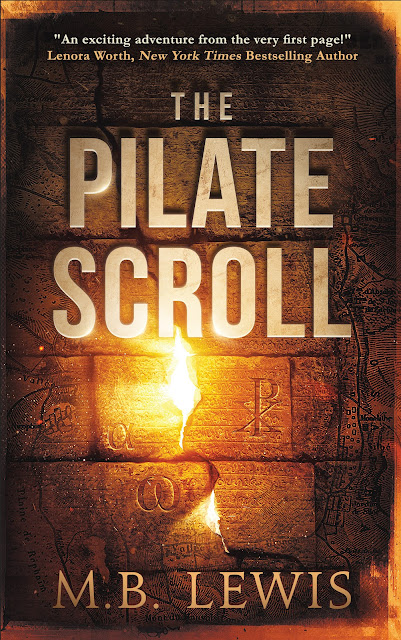
An artifact with untold power. An unlikely protector. Can she prevent the past from being used to destroy the future?

Kadie Jenkins lost her faith long ago. Traveling to Egypt as part of a research team battling a lethal virus, the talented scholar’s already weakened beliefs take a deadly dive when her colleague and mentor is murdered. With the man about to share a shocking finding before he met his demise, Kadie frantically gathers his papers… and barely escapes when the killer returns.

Fleeing by plane and forced into an emergency-landing in Israel, Kadie questions who in her group she can actually trust. And as the murderers close in, she’s stunned to discover they’re all hunting for an ancient relic that could change the course of history . . .

Will this headstrong academic lean on powers from above to keep the wicked from wreaking havoc on Earth?

The Pilate Scroll is a pulse-pounding Christian thriller. If you like complicated heroines, stunning twists, and divine light shining through the darkness, then you’ll love M.B. Lewis’s breakneck page-turner.


Book Details:

Title:The Pilate Scroll

Author: M.B. Lewis

Genre: Christian thriller

Publisher:  SATCOM Publishing (April 27, 2021)

Print length: 364 pages
The Jason Conrad Thriller Series


LOVE IT OR LEAVE IT WITH MB LEWIS


A few of your favorite things: new electronics.
Things you need to throw out: old electronics and incompatible power cords.


Things you need in order to write: coffee, coffee, and more coffee.
Things that hamper your writing: sleep.


Things you love about writing: the freedom to express ideas in an entertaining format.
Things you hate about writing: not enough hours in the day.

Easiest thing about being a writer: generating and organizing ideas.

Hardest thing about being a writer: marketing books.


Things you love about where you live: family close by, the beach, the people, the history.
Things that make you want to move: big crowds, lack of seasons, new surroundings.


Things you never want to run out of: ideas.
Things you wish you’d never bought: VHS tapes/DVDs.

Favorite foods: steak, pepperoni pizza, Buffalo wings.
Things that make you want to throw up: unfortunately, nothing.

Favorite beverage: water . . . followed closely by a nice Cabernet . . . 

Something that gives you a pickle face: pickles?

Something you’re really good at: flying airplanes.

Something you’re really bad at:  water skiing.


Something you wish you could do: play the piano.
Something you wish you’d never learned to do: there is some good in everything you learn whether you like it or not.

Things you always put in your books: characteristics of people I know.

Things you never put in your books: an exact replica of someone I know.

Things to say to an author: I left you a review!

Things to say to an author if you want to be fictionally killed off in their next book: I love your books, but I haven’t read any of them yet. (Yes, it happens)

Favorite places you’ve been: the Holy Land in Israel.

Places you never want to go to again: not that I don’t like Japan or Korea, but I’ve lived in Japan (Okinawa) and spent plenty of time in Korea. I’ve only got so much time left on this planet, I’d like to explore other places instead.

Favorite books: thrillers.

Books you would ban: well, banning books is not something I would promote, but there are age-inappropriate books that should be kept away from children.

Favorite things to do: fly, write, spend time with family.
Things you’d run through a fire wearing gasoline pants to get out of doing: pay income tax.

Most daring thing you’ve ever done: probably some of that combat stuff back in the day.

Something you chickened out from doing: talking about my first book in public as a new author. (Combat seemed like a better alternative.)


EXCERPT FROM THE PILATE SCROLL

Chapter 1

Port Said, Egypt
The Market District

Samuel Jacobson was a dead man. Or at least he thought so. His phone call had been erratic, anxious—almost in a panic.

“Brian, we have to go.” Kadie Jenkins stood and slid her iPhone back in the pocket of her tan 5.11 cargo pants. She grabbed her purse and rose from the table in the back of the tiny restaurant, dragging her nineteen-year-old brother out before they had a chance to order their dinner. The restaurant sat tucked between shops selling hookahs on one side and women’s clothes on the other. The aroma of fresh bread and grilled meats dissipated, replaced by the pungent scent of car exhaust and camel dung.

“It’s only a fifteen-minute walk back to the hotel,” Kadie said. “I bet we can make it in ten.”

Brian stumbled behind her as they hurried along dusty streets. They turned into the souk, or open-air market, the brick-laid section of the market that was pedestrian-only this time of night. While many of the shops had their “roll-up” metal security doors pulled down, the market bristled with life. 

Vendors waved items in their faces, children tugged on their pant legs, and beggars held their palms up hoping for a handout. Her eyes studied everyone who came close, gauging their intentions in a moment’s glance. She was one of only a few women in the market not wearing a hijab.

“Kadie slow down,” Brian said. His breathing came deep and awkward, despite being a regular participant in the Special Olympics.

“Sorry, Brian. We could get a cab at the other end of the market. But by the time we find one, describe our hotel, and negotiate a price, we could walk to the hotel.” While she relished the exercise, she worried her pace was too much for him. He was fit for a young man with Down syndrome, but she moved swiftly.

Their team had been in Egypt for almost three weeks. Starting in Cairo, the small group of seven from GDI, the Global Disease Initiative, had been scouring the city for clues to an ancient cure. Their quest had led them from the United States to Cairo, then to Port Said. Their four days here had not yet proven fruitful.

The goosebumps on her skin reminded her of Samuel’s phone call. His message was brief yet concise: his life was in danger because he knew what they were really searching for. What did he mean? Their team was one of four positioned across the Middle East in search of their goal. Now, for some reason, Samuel questioned what that was.

GDI had been contracted by the United States government to locate an ancient cure for an even older virus—the hantavirus. Kadie researched the topic before they left for Egypt. Rodents generally spread it, and this strain was a particularly virulent “Old World” virus that had proven resistant to modern medicine.

The Central Intelligence Agency learned that ISIS weaponized the hantavirus in aerosol form and planned to unleash it across the West. The virus was known at the CDC to cause hemorrhagic fever with renal syndrome. Initial symptoms include fever, chills, blurred vision, back and abdominal pain, and intense headaches known to bring a grown man to his knees. Later, those exposed would experience shock, low blood pressure, kidney failure, and vascular leakage—all in all, a nasty virus to thrust upon any population. The logistics involved in treating the virus were obvious.

The unique thing about the “Old World” hantavirus, was that it had predominantly appeared in Europe and Asia. GDI discovered that the virus had been eliminated in the Middle East, which was odd, as rodents were prevalent throughout the region.

Through one of their many connections, GDI learned of a legendary cure developed in ancient Israel around 30 A.D. The virus had a different name back then, but the symptoms were the same. The cure was a simple combination of plants and minerals. The formula was stored in a vase with Aramaic writing on the side and lay hidden for millennia. That was why she was here. Kadie was fluent in Latin, Greek, and Aramaic. The executive vice president for the Science and Technology Division of GDI had contacted her personally, telling her she was “uniquely qualified” for this job. Kadie was enthralled to join the team when the offer came.

Samuel was in his early sixties, and he and Kadie had struck up a friendship at the beginning of their journey. He became her mentor and father figure, occasionally giving her advice on what to do with her career. Samuel was the team’s expert on carbon dating. His equipment was state-of-the-art, but other than testing its functionality the day after they arrived, he hadn’t used it. So, what did he discover? What did he know that was worth killing for?

Halfway to the hotel, she mumbled something she shouldn’t have as she pulled out her phone and dialed. Her eyes darted toward her brother.

“Do not c-cuss,” Brian said between heavy breaths.

Brian. Her moral compass there to steer her back on course. She squeezed her brother’s hand. Brian always kept her grounded. What would she do when he was gone? But he was here now, and she needed to make sure he would be safe, something she had done for him since the day he was born.

“Sorry, Brian. I just remembered I need to call Curt. He’s probably on his way to the restaurant to meet us.”

“He is probably s-still wor—king.” Brian’s eyes darted back and forth. His speech impediment that made his ‘r’s sometimes sound like ‘w’s wasn’t nearly as bad as it was when he was younger, and his stutter only showed up when he was nervous.

Kadie grimaced. Curt didn’t answer his phone. He was GDI’s security man and the only full-time employee on their team. Kadie left a message, telling him she was sorry, but she had to leave the restaurant. They’d talk later.

Next, she called Samuel. He didn’t answer either. She slipped her phone back in her cargo pocket and glanced at her brother. He was doing all he could to keep up with Kadie and avoid the distractions of the numerous shops in the marketplace. Gasping, his jaw jutted forward, brow furrowed, and his eyes bulged. He had been reluctant to leave the restaurant; he must be starving. She had to plead with him to get him to budge.

“We did not stay—for food. I am hungry,” Brian said.

“I know. I’m sorry. I am, too.” Her eyes darted back and forth in search of something they could eat. A few moments later she smiled. Near the end of the market, a vendor baked and sold bread. They stopped next to the giant metal oven that extended back into a yellowing mud-brick building. The bread rolled out of the front like doughnuts at Krispy Kreme, and two men placed the warm food on a rack woven out of sticks to cool. Her limited vocabulary in conversational Arabic helped her in situations like this. Kadie bought two loaves of Aish Baladi, an Egyptian flatbread made with whole wheat flour, similar to a pita. Handing the bag of bread to Brian, they continued on their way.

The dust of the market peeled away as they rounded the corner, and their hotel came into sight. Well-lit against the black sky, it sat on the edge of the water where the Suez Canal merged into the Mediterranean Sea. An outdoor restaurant sat to her left; the numerous tables had their umbrellas open, lit candles centered on each table. To her right, a small mosque lay nestled amongst other buildings. This street was far less crowded than the souk.

“What do you think about Curt?” Her chestnut-brown hair bounced as she slowed her pace so Brian could keep up. She needed a conversation to take her mind off Samuel.

“He is okay.” Brian looked away when he answered. Kadie knew what that meant. Brian’s instincts on people were spot on, and he wasn’t very fond of Curt. She wasn’t sure why; she was still trying to figure him out herself. Curt was a few years older than her. He was handsome, dashing, and brave—former Delta Force. There was something to be said for that.

They entered the newly renovated hotel, leaving the Third World atmosphere behind them. Kadie sighed as they weaved through the crowded lobby and lumbered up the stairs to their room on the second floor. She dropped Brian off in their room before she went to check on Samuel.

“Don’t leave,” she said. “I’ll be back in a minute.”

“Okay.” Brian moved to the couch and pressed the big green button on the television remote.

Kadie closed the door; the hairs on the back of her neck bristled, and her heartbeat raced higher than usual. She hurried down the hall to Samuel’s room. Inside, she heard a loud crash and the sound of something hitting the wall, followed by a solid thud.

That’s not good, she thought.

Kadie tried the door handle. Locked. She pulled a small FOB out of her pocket. It was called a Gomer, a new device that opened almost any electronic lock. It had wreaked havoc on the hotel industry, but she had picked one up back in the States knowing she’d be living in hotels abroad for three months.

She was hesitant to use it. She shouldn’t just barge into his room. Then came a second thud, followed by a muffled cry.

Kadie swiped the FOB across the lock and pushed hard against the door. The door cracked open about two inches and abruptly stopped; the chain secured on the inside.

“Samuel?” She peered through the gap; a body lay on the floor. Oh my, he’s had a heart attack. Kadie lowered her shoulder and bulldozed the door. It started to give way. On the second try, the chain burst free from the wall and the door flew open.

Kadie gasped. In the center of the room, a large man stood over Samuel’s body, wearing a faded brown futa, the traditional Yemini male shirt, and black pants. A black keffiyeh covered his face, with only his eyes exposed.

The man stood over Samuel, the bloody knife in his hand dripping on the floor.

***

Excerpt from The Pilate Scroll by M.B. Lewis.  Copyright 2022 by Michael Byars Lewis. Reproduced with permission from Michael Byars Lewis. All rights reserved.


ABOUT THE AUTHOR 

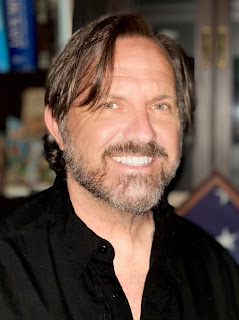
M.B. Lewis is an Amazon #1 International Bestselling Author (as Michael Byars Lewis), and his books have also been on the Bestseller lists on Barnes and Noble Nook and Kobo platforms. The author of the award-winning Jason Conrad Thriller series has been on numerous author panels at writer’s conferences such as Thrillerfest, The Louisiana Book Festival, The Pensacola Book and Writers Festival, and Killer Nashville.

A 25-year Air Force pilot, he has flown special operations combat missions in Bosnia, Iraq, and Afghanistan in the AC-130U Spooky Gunship. Michael is currently a pilot for a major U.S. airline.

A proud Christian active in his community, Michael has mentored college students on leadership development and team building and is a facilitator for an international leadership training program. He has participated as a buddy for the Tim Tebow Foundation’s “Night to Shine” and in his church’s Military Ministry program. Michael has also teamed with the Air Commando Foundation, which supports Air Commando’s and their families’ unmet needs during critical times.

While his adventures have led to travels all around the world, Michael lives in Florida with his wife Kim.


Connect with the author:


Website  |  Facebook  |  Goodreads  |  Book trailer 


Buy the book:
Amazon  


Tuesday, March 15, 2022

FEATURED AUTHOR: SUSAN OUELLETTE


ABOUT THE BOOK


Revenge knows no deadline.

Although told to stand down now that the Chechen rebel who killed her fiancé is dead, CIA analyst Maggie Jenkins believes otherwise and goes rogue to track down the assassin. Soon it becomes clear that failure to find Zara will have repercussions far beyond the personal, as Maggie uncovers plans for a horrific attack on innocent Americans. Zara is the new face of terrorism-someone who doesn't fit the profile, who can slip undetected from attack to attack, and who's intent on pursuing a personal vendetta at any cost.

Chasing Zara from Russia to the war-torn streets of Chechnya, to London, and finally, to the suburbs of Washington, D.C., Maggie risks her life to stop a deadly plot.

Book Details:

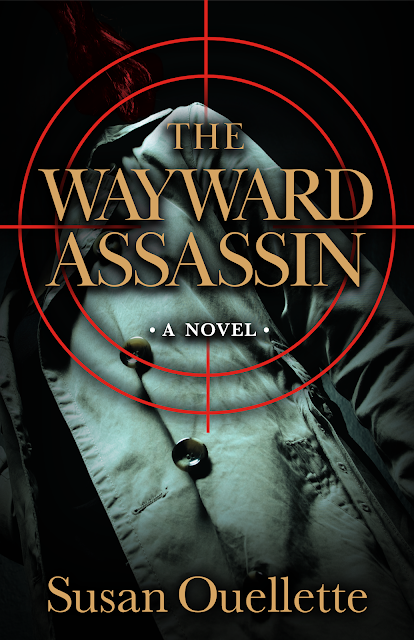
Title: The Wayward Assassin

Author: Susan Ouellette

Genre: spy thriller

Series: The Maggie Jenkins Wayward Series

Publisher: CamCat Books (March 15, 2022)

Print length: 371 pages


LOVE IT OR LEAVE IT WITH SUSAN OUELLETTE


A few of your favorite things: Coffee, fuzzy socks, a good workout, and my chickens.
Things you need to throw out: Old files (I keep everything!) and clothes I keep “just in case.” 


Things you need in order to write: my laptop, earbuds (so I can listen to white noise in order to drown out distractions), coffee/tea/soda/water so I don’t die of dehydration (or find an excuse to pop up every 20 minutes to get something to drink).
Things that hamper your writing: distractions including texts, social media, noise, conversation, and the cat begging to go outside/come inside every five minutes.


Things you love about writing: it is the only thing I do where I completely lose track of time. Sometimes I look up from the keyboard and hours have gone by like minutes.
Things you hate about writing: when I don’t know what is going to happen next in the story. It’s usually a fleeting sense of panic, but every time, I think, “Oh, no. Writer’s block!”

Things you love about where you live: I live on a farm with a lot of privacy and beautiful views. It’s very serene.
Things that make you want to move: I love the ocean, so moving closer to the coast is very appealing.

Favorite foods: any and all pasta.
Things that make you want to throw up: mushrooms, coconut, mayonnaise, shellfish.

Favorite beverage: coffee in the morning, wine in the evening.

Something that gives you a pickle face: whiskey.

Favorite smell: honeysuckle.

Something that makes you hold your nose: boiled lobster.

Things you’d walk a mile for: coffee.
Things that make you want to run screaming from the room: fingers on a chalkboard (do they make chalkboards anymore?).

Things to say to an author: Congratulations on finishing your book!

Things to say to an author if you want to be fictionally killed off in their next book: You should name a character after me.


EXCERPT FROM THE WAYWARD ASSASSIN


CHAPTER ONE

CIA Headquarters, August 16, 2004

Maggie Jenkins strode across the parking lot to the sidewalk that led her past the “Bubble,” the CIA’s white, dome-shaped auditorium. Just ahead, she paused at the bronze statue of Nathan Hale, the first American to be executed for spying for his country. A half dozen quarters lay scattered at his feet, left there by superstitious CIA employees hoping to garner good luck before deploying overseas. She fished around in her purse for a quarter, which she placed carefully atop Hale’s left shoe.

In just a few minutes, Maggie would learn whether her six-month deployment to the US embassy in Moscow had been approved. Even though Warner Thompson, the CIA’s deputy director for operations, had advocated on her behalf, there were several others, including an Agency psychiatrist and a team of polygraphers who were not convinced that she should be stationed overseas. She’s not ready yet, the shrink had opined, as if she were a piece of fruit not quite ripe enough for picking.

“Wish me luck,” she said to the statue as she turned for the entrance ahead. The CIA’s headquarters comprised two main buildings, both seven stories high, which were linked together by bright hallways with large windows overlooking a grassy courtyard. Maggie worked in the original headquarters building (OHB), which had been built some forty years earlier during the height of the Cold War. From the outside, OHB was a concrete monstrosity with no aesthetically redeeming value, at least in Maggie’s opinion. It reminded her of Soviet architecture—heavy on the concrete, light on the beauty.

And other than the expansive marbled foyer and the posh seventh-floor executive offices, OHB’s interior also was nothing to write home about. Every floor between the first and the seventh looked exactly the same—drab, hushed, windowless hallways lined with vault doors. Behind those heavily fortified doors sat rows of cubicles, a few conference rooms, and cramped offices here and there for mid-level managers.

Maggie pulled open the heavy glass entry door and ducked into a pristine lobby gleaming with white marble-clad walls. Ahead, the Agency’s bright blue logo covered a massive swath of the gray-and-white checked granite floor. To the right stood the Memorial Wall, which was emblazoned with black stars honoring dozens of Agency officers who’d perished in the line of duty. Maggie stopped and bit down on her lip.

The wall was an awesome, solemn reminder of lives given in the defense of freedom. Every time she walked past it, the sharp points of the eighty-fourth star—Steve’s star—ripped another gash in her heart. He’d been working under cover, so no outside friends or relatives had been invited to the ceremony. Warner had sat with her, stoic, as she clutched his hand and stared at the parade of speakers, not hearing a word they said.

She turned her gaze from the wall, slid her badge through the security turnstile, and offered a polite hello to the officer manning the front desk. She bypassed the elevator that she took every day to the fourth floor and made a beeline for the spacious employee cafeteria. In the far corner sat Warner Thompson, nose buried in the Washington Post.

“Morning,” she offered.

Warner rattled the paper and folded it lengthwise. “Coffee?” He pushed a Styrofoam cup across the quartz tabletop and smiled at her. His full head of hair had grayed considerably since last year, but it worked on him, enhancing his gray-flecked eyes and tanned complexion.

“Thanks.” Maggie sat.

“You ready?”

“I guess.” She sipped the coffee, still piping hot and perfectly sweetened. Warner knew her well. “What do you think they’ll say?”

“There’s no reason they should deny you the posting.”

“The psychiatrist thinks I’m obsessed with Zara.”

“He has a point.” Warner leaned forward, elbows on the table. “I told you not to bring her up in your evaluation sessions. If she’s still alive, we’ll find her, Maggie. I promise.”

“There’s no ‘if’ about it.” She waited until a man with a breakfast tray settled at a nearby table, then lowered her voice. “I saw her fleeing the farmhouse in Georgia. Who do they think set fire to the place after I escaped with Peter?”

Warner winced, obviously uncomfortable with the reminder of Peter, his former case officer, the one who’d been intimately involved in the murder of Steve, another case officer, and his protĂ©gĂ©, nine short months ago. That Steve also had been Maggie’s fiancĂ© made saying what he had to say all the more difficult. “The point is, the Agency needs to think that you’ve moved on from what happened in Georgia before they send you to such a sensitive overseas posting.”

“Moved on? Warner—”

He raised a hand to stop her. They’d had this discussion dozens of times since the previous November. Maggie had made it perfectly clear that there was no moving on, no closure, as people said these days, until she found Zara. “You know what I mean. You have to toe the party line and say you believe that everyone involved in Steve’s murder is dead. Period.”

“I still don’t understand why they won’t at least consider the possibility that Zara got away.”

Warner rubbed his forehead. “Because the Agency wants this to go away. A star operations officer was murdered by a terrorist and the terrorist is dead. It’s a simple, straightforward narrative. They don’t want the press finding out that another Agency employee and a senior US congressman were involved in Steve’s death. Everything is about the war on terror, Maggie. If the media found out that CIA and elected officials were mixed up with terrorists, there would be hell to pay.”

Maggie quoted the Biblical phrase inscribed on a wall in the CIA’s lobby. “The truth shall make you free.” She snorted. “The truth, unless it’s too embarrassing?”

Warner exhaled and shifted in his seat. “Both of us are lucky that the FBI investigation didn’t uncover . . . everything.”

He was right, of course. Last year, Maggie had destroyed classified documents and withheld other evidence from the FBI to protect them both. And Warner had been entangled, albeit unwittingly, with a Russian who had ties to both Zara and the congressman. Had the FBI known any of this, neither of them would be CIA employees today.

Maggie waved to a coworker who stared from the nearby coffee station. Warner didn’t frequent the employee cafeteria, so his appearance was sure to raise eyebrows. She’d grown accustomed to sidelong glances inside the Agency’s walls. Everyone recognized her. The media had splashed her face all over television and the internet after Congressman Carvelli’s death. There were some who whispered about her using her fiancĂ©’s death to advance her career. Fortunately, they were in the minority. Most who knew about her role in uncovering the terrorist plot considered her a hero, a designation she refused to embrace. Her actions may have saved thousands of lives, but her motivation had been personal—to clear Steve’s name.

He was no traitor, and she’d proven it.

Maggie glanced at her watch. “We’d better go.”

Warner nodded. They grabbed their coffees and headed for the elevator bank. “Remember, you believe Zara died in the fire at the farmhouse,” Warner reminded her on the way up to the fourth floor.

“That’s what I told the shrink last session, but then he talked to the polygraph people.” Since leaving the House Intelligence Committee to return to the CIA earlier this year, she’d endured three marathon polygraph sessions. Every time, the stupid machine registered deception in her response to questions about whether she intended to violate government policies for her own benefit. “Now he thinks I’m up to something.”

Warner shrugged. “Aren’t you?”

Maggie laughed despite herself. “Always.”

***

Excerpt from The Wayward Assassin by Susan Ouellette.  Copyright 2022 by Susan Ouellette. Reproduced with permission from CamCat Books. All rights reserved.


ABOUT THE AUTHOR  


Susan Ouellette is the author of The Wayward Spy (Camcat Books, 2021), winner of the Independent Publisher Book Award Gold Medal for Suspense/Thriller and a 2021 “Top 12 Book of the Year'' (“The Strand Magazine”). The sequel, The Wayward Assassin, launched March 15, 2022. The third book in the series, The Wayward Target, will be released in the spring of 2023. Ouellette’s books draw heavily on her academic studies of international relations and Russian language and culture at both Harvard University and Boston University. As the Soviet Union teetered on the edge of collapse, she worked as an intelligence analyst at the CIA, where she earned a commendation for her work done during the failed 1991 Soviet coup. Subsequently, Ouellette worked on Capitol Hill as a professional staff member for the House Permanent Select Committee on Intelligence (HPSCI). There, she participated in several overseas staff and congressional delegations focused on intelligence cooperation with allies and classified operations against adversaries. She later worked as a government contractor and freelance researcher, analyzing terrorism and weapons of mass destruction. 


Connect with Susan:
Website  |  Blog  |  Facebook  |  Twitter  |  Goodreads  |  Book trailer

Buy the book:
Amazon  |  Barnes & Noble


Wednesday, November 24, 2021

FEATURED AUTHOR: C. MATTHEW SMITH


ABOUT THE BOOK


When wildlife biologist Alex Lowe is found dead inside Great Smoky Mountains National Park, it looks on the surface like a suicide. But Tsula Walker, Special Agent with the National Park Service's Investigative Services Branch, isn't so sure.  
 
Tsula's investigation will lead her deep into the park and face-to-face with a group of lethal men on a mission to reclaim a historic homestead. The encounter will irretrievably alter the lives of all involved and leave Tsula fighting for survival--not only from those who would do her harm, but from a looming winter storm that could prove just as deadly.  
 
A finely crafted literary thriller, Twentymile delivers a propulsive story of long-held grievances, new hopes, and the contentious history of the land at its heart.


Book Details:


Title: Twentymile


Author: C. Matthew Smith


Genre: mystery/thriller


 Publisher: Latah Books, (November 19, 2021)


Print length: 320 pages


LOVE IT OR LEAVE IT WITH C. MATTHEW SMITH


A few of your favorite things: time spent with my wife, Cindy, and my son, Everett. Being in the woods. Traveling to new places. And, of course, good stories.
Things you need to throw out: honestly, I’m pretty good at not holding onto things that aren’t essential. I have no compunction against shedding stuff. Every now and then I think about jettisoning social media, but my name’s not Cormac McCarthy, so I can’t just yet.

Things you need in order to write: quiet, time, and my laptop. Writing requires all of my concentration, and I don’t easily slip in and out of that mode.
Things that hamper your writing: any noise, any interruption—so, unfortunately, the rest of life.

Things you love about writing: so many things. Writing well requires you to place yourself in someone else’s (often many other people’s) shoes. It’s an exercise in empathy—which, let’s be honest, the world could use more of. I’m also obsessive about my writing at a line-by-line level. So, for example, when a particular combination of words conjures exactly the right image, or a series of sentences glide into each other and make their own compelling rhythm, or I make a concise connection between ideas that had not occurred to me previously but feels right, I get excited.
Things you hate about writing: honest writers will admit to nagging doubts about their own works. What is colloquially referred to as “impostor syndrome” is a real thing and can strike without warning. In addition, I’m a slow writer. If I get a solid 200 to 400 words in, I call that a good day. So there are long stretches where I’m chipping away at a manuscript, not at all certain where it’s headed or if it’ll turn out well in the end, if the time taken away from family and friends is going to be worth it. It’s like wandering through the desert, one footstep at a time, not certain if you’re even moving in the right direction.

Things you love about where you live: Georgia is a lovely state with real geographic diversity—rugged (if modest) mountains, expansive swamp, and lovely coastline. You get all four seasons, yet the winters aren’t out to kill you.
Things that make you want to move: have you seen western Montana? Or Costa Rica? Or Norway? They’re pretty great.

Words that describe you: contemplative and a little nerdy.
Words that describe you but you wish they didn’t: I blame my day job (attorney), but I can be argumentative and stubborn.  

Favorite foods: I love a good Indian curry or Persian stew. Also, just about any dish from the Tuscan region of Italy.
Things that make you want to throw up: chocolate (yes), raisins, and cold soups.

Favorite music: Wu-Tang Clan, classic country, and blues-inflected rock like The Black Keys.
Music that make your ears bleed: modern pop-country. I won’t name names, but they know who they are.

Favorite beverage: coffee. I drink it constantly.

Something that gives you a pickle face: Kombucha, though I still occasionally drink it.

Favorite smell: there’s a crisp smell in the morning air when summer finally yields to autumn. It doesn’t last long. It’s the smell of leaf change, good fishing, and college football. It’s pretty great.

Something that makes you hold your nose: overly aggressive cologne or perfume.

People you consider as heroes: so many could fall in this category, but I think the overwhelming characteristic of them all is a desire to leave the world a better place for others than they entered it. Since I live in Georgia, I’ll mention Jimmy Carter. Say what you will about his presidency, but he has put his time on Earth to noble use.

People with a big L on their foreheads: those who behave as though we’re not all in this thing together.

Things to say to an author: frankly, any comment that discusses what aspect of the author’s story you connected with is greatly appreciated. It’s why we do this.

Things to say to an author if you want to be fictionally killed off in their next book: “I wish I had the time to just make some stuff up.” 

Favorite places you’ve been: the Great Smoky Mountains, where Twentymile is set, have a part of my heart. Same with Montepulciano, Italy and northwestern Montana.

Places you never want to go to again: metropolitan areas who don’t prioritize public greenspace. All steel and asphalt and no place to escape it.

Favorite things to do: hiking, fly fishing, traveling to new places with my family, cooking.

Things you’d run through a fire wearing gasoline pants to get out of doing: shopping of any sort except for groceries. I loathe shopping.

Things that make you happy: my wife and son's laughs. The quiet at the top of a mountain where all you hear is the wind. Waiting out the rain under a tin roof.

Things that drive you crazy: Atlanta traffic. People who lack the ability to roll with even the basic punches of life.

Most daring thing you’ve ever done: I used to backcountry camp solo for days on end in some pretty wild places. Great for solitude, but I wouldn’t probably recommend it to my son.

Something you chickened out from doing: I hate heights. I’ve not chickened out from doing much for that reason, but I can tell you I didn’t spend a lot of time at the top of the Eiffel Tower or the Empire State Building. Get up, get a photo, and get down. 


EXCERPT FROM TWENTYMILE

HARLAN

CHAPTER ONE

May 10

The same moment the hiker comes upon them, rounding the bend in the trail, Harlan knows the man will die.

He takes no pleasure in the thought. So far as Harlan is aware, he has never met the man and has no quarrel with him. This stranger is simply an unexpected contingency. A loose thread that, once noticed, requires snipping. 

Harlan knows, too, it’s his own fault. He shouldn’t have stopped. He should have pressed the group forward, off the trail and into the concealing drapery of the forest. That, after all, is the plan they’ve followed each time: Keep moving. Disappear.

But the first sliver of morning light had crested the ridge and caught Harlan’s eye just so, and without even thinking, he’d paused to watch it filter through the high trees. Giddy with promise, he’d imagined he saw their new future dawning in that distance as well, tethered to the rising sun. Cardinals he couldn’t yet spot were waking to greet the day, and a breeze picked up overhead, soughing through shadowy crowns of birch and oak. He’d turned and watched the silhouettes of his companions taking shape. His sons, Otto and Joseph, standing within arm’s length. The man they all call Junior lingering just behind them.

The stranger’s headlamp sliced through this reverie, bright and sudden as an oncoming train, freezing Harlan where he stood. In all the times they’ve previously made this journey—always departing this trail at this spot, and always at this early hour—they’ve never encountered another person. Given last night’s thunderstorm and the threat of more to come, Harlan wasn’t planning on company this morning, either.

He clamps his lips tight and flicks his eyes toward his sons—be still, be quiet. Junior clears his throat softly.

“Mornin’,” the stranger says when he’s close.

The accent is local—born, like Harlan’s own, of the surrounding North Carolina mountains—and his tone carries a hint of polite confusion. The beam of his headlamp darts from man to man, as though uncertain of who or what most merits its attention, before settling finally on Junior’s pack.

The backpack is a hand-stitched canvas behemoth many times the size of those sold by local outfitters and online retailers. Harlan designed the mammoth vessel himself to accommodate the many necessities of life in the wilderness. Dry goods. Seeds for planting. Tools for construction and farming. Long guns and ammunition. It’s functional but unsightly, like the bulbous shell of some strange insect. Harlan and his sons carry similar packs, each man bearing as much weight as he can manage. But it’s likely the rifle barrel peeking out of Junior’s that has now caught the stranger’s interest.

Harlan can tell he’s an experienced hiker, familiar with the national park where they now stand. Few people know of this trail. Fewer still would attempt it at this hour. Each of his thick-knuckled hands holds a trekking pole, and he moves with a sure and graceful gait even in the relative dark. He will recognize—probably is just now in the process of recognizing—that something is not right with the four of them. Something he may be tempted to report. Something he might recall later if asked.

Harlan nods at the man but says nothing. He removes his pack and kneels as though to re-tie his laces.

The hiker, receiving no reply, fills the silence. “How’re y’all do—”

When Harlan stands again, he works quickly, covering the stranger’s mouth with his free hand and thrusting his blade just below the sternum. A whimper escapes through his clamped fingers but dies quickly. The body arches, then goes limp. One arm reaches out toward him but only brushes his shoulder and falls away. Junior approaches from behind and lowers the man onto his back.

Even the birds are silent.

Joseph steps to his father’s side and offers him a cloth. Harlan smiles. His youngest son is a carbon copy of himself at eighteen. The wordless, intent glares. The muscles tensed and explosive, like coiled springs straining at a latch. Joseph eyes the man on the ground as though daring him to rise and fight.

Harlan removes the stranger’s headlamp and shines the beam in the man’s face. A buzz-cut of silver hair blanches in this wash of light. His pupils, wide as coins, do not react. Blood paints his lips and pools on the mud beneath him, smelling of copper.

“I’m sorry, friend,” Harlan says, though he doubts the man can hear him. “It’s just, you weren’t supposed to be here.” He yanks the knife free from the man’s distended belly and cleans it with the cloth.

From behind him comes Otto’s fretful voice. “Jesus, Pop.”

Harlan’s eldest more resembles the men on his late wife’s side. Long-limbed and dour. Quiet and amenable, but anxious. When Harlan turns, Otto is pacing along a tight stretch of the trail with his hands clamped to the sides of his head. His natural state.

“Shut up and help me,” Harlan says. “Both of you.”

He instructs his sons to carry the man two hundred paces into the woods and deposit him behind a wide tree. Far enough away, Harlan hopes, that the body will not be seen or smelled from the trail any time soon. “Wear your gloves,” he tells them, re-sheathing the knife at his hip. “And don’t let him drag.”

As Otto and Joseph bear the man away, Harlan pockets the lamp and turns to Junior.

“I know, I know,” he says, shaking his head. “Don’t look at me like that.”

“Like what?”

Harlan sweeps his boot back and forth along the muddy trail to smooth over the odd bunching of footprints and to cover the scrim of blood with earth. He’s surprised to find his stomach has gone sour. “No witnesses,” he says. “That’s how it has to be.”

“People go missing,” Junior says, “and other people come looking.”

“By the time they do, we’ll be long gone.”

Junior shrugs and points. “Dibs on his walking sticks.”

Harlan stops sweeping. “What?”

“Sometimes my knees hurt.”

“Fine,” Harlan says. “But let’s get this straight. Dibs is not how we’re going to operate when we get there.”

Junior blinks and looks at him. “Dibs is how everything operates.”

Minutes later, Otto and Joseph return from their task, their chests heaving and their faces slick. Otto gives his younger brother a wary look, then approaches Harlan alone. When he speaks, he keeps his voice low.

“Pop—”

“Was he still breathing when you left him?”

Otto trains his eyes on his own feet, a drop of sweat dangling from the tip of his nose.

“Was he?”

Otto shakes his head. He hesitates for a moment longer, then asks, “Maybe we should go, Pop? Before someone else comes along?”

Harlan pats his son’s hunched neck. “You’re right, of course.”

The four grunt and sway as they re-shoulder their packs. Wooden edges and sharp points dig into Harlan’s back and buttocks through the canvas, and the straps strain against his burning shoulders. But he welcomes this discomfort for what it means. This, at last, is their final trip.

This time, they’re leaving for good.

They fan out along the edge of the trail, the ground sopping under their boots. Droplets rain down, shaken free from the canopy by a gust of wind, and Harlan turns his face up to feel the cool prickle on his skin. Then he nods to his companions, wipes the water from his eyes, and steps into the rustling thicket.

The others follow after him, marching as quickly as their burdens allow.

Melting into the trees and the undergrowth.

PART I:

DRIFT 

TSULA 

CHAPTER TWO

October 26

By the time the two vehicles she’s expecting appear at the far end of the service road, Tsula is already glazed with a slurry of sweat and south Florida sand so fine it should really be called dust. She hasn’t exerted herself in the slightest—she parked, got out of her vehicle, waited for the others to arrive—but already she longs for a shower. She wipes her brow with an equally damp forearm. It accomplishes little.

“Christ almighty.”

Tsula grew up in the Qualla Boundary—the eighty square miles of western North Carolina held by the federal government in trust for the Eastern Band of Cherokee Indians—and had returned to her childhood home two years ago after a prolonged absence. This time of year in the Qualla, the mornings are chilly and the days temperate, autumn having officially shooed summer out of the mountains. In northern Wyoming, where she’d spent nearly two decades of her adult life, it takes until mid-morning in late October for the frost to fully melt. Tsula understands those rhythms—putting on layers and shedding them, freezing and thawing. The natural balance of it. But only miles from where she stands, in this same ceaseless heat, lies the Miami-Dade County sprawl. It baffles her. Who but reptiles could live in this swelter?

Tsula raises her binoculars. A generic government-issued SUV, much like her own, leads the way. An Everglades National Park law enforcement cruiser follows close behind.

She looks down at her watch: 11:45 a.m.

Tsula flaps the front of her vented fishing shirt to move air against her skin. The material is thin, breathable, and light tan, but islets of brown have formed where the shirt clings to perspiration on her shoulders and chest. She removes her baseball cap, fans her face, and lifts her ponytail off her neck. In this sun, her black hair absorbs the heat like the hood of a car, and she would not at all be surprised to find it has burned her skin. For a moment, she wishes it would go ahead and gray. Surely that would be more comfortable.

The vehicles pull to a stop next to her, and two men exit. Fish and Wildlife Commission Investigator Matt Healey approaches first. He is fifty-something, with the tanned and craggy face of someone who has spent decades outside. Tsula shakes his hand and smiles.

“Special Agent,” he says, scratching at his beard with his free hand.

The other man is younger—in his late twenties, Tsula figures—and dressed in the standard green-and-gray uniform of a law enforcement park ranger. He moves with a bounding and confident carriage and thrusts out his hand. “Special Agent, I’m Ranger Tim Stubbs. Welcome to Everglades. I was asked to join y’all today, but I’m afraid they didn’t give me much other info. Can someone tell me what I’m in for?”

“Poachers,” Healey answers. “You’re here to help us nab some.”

“We investigate poaching every year,” Stubbs says, nodding toward Tsula. “Never get the involvement of the FBI.”

“ISB,” she corrects him. “Investigative Services Branch? I’m with the Park Service.”

“Never heard of it,” Stubbs says.

“I get that a lot.”

Whether he knows it or not, Stubbs has a point. The ISB rarely, if ever, involves itself in poaching cases. Most large parks like Everglades have their own law enforcement rangers capable of looking into those of the garden variety. Federal and state fish and wildlife agencies can augment their efforts where necessary. At just over thirty Special Agents nationwide, and with eighty-five million acres of national park land under their jurisdiction from Hawaii to the U.S. Virgin Islands, this little-known division of the Park Service is too thinly staffed to look into such matters when there are suspicious deaths, missing persons, and sexual assaults to investigate.

But this case is different.

“It’s not just what they’re taking,” Healy says. “It’s how much they’re taking. Thousands of green and loggerhead turtle eggs, gone. Whole nests cleaned out at different points along Cape Sable all summer long. Always at night so cameras don’t capture them clearly, always different locations. They’re a moving target.”

“We’ve been concerned for a while now that they may be getting some assistance spotting the nests from inside the park,” Tsula adds. “So, we’re keeping it pretty close to the vest. That’s why no one filled you in before now. We don’t want to risk any tip-offs.”

“What would anyone want with that many eggs?”

“Black market,” Healey says.

“You’re kidding.”

Healey shakes his head. “Sea turtle eggs go down to Central America where they’re eaten as an aphrodisiac. Fetch three to five bucks apiece for the guy stateside who collects them. Bear paws and gallbladders go over to Asia. All kinds of other weird shit I won’t mention. And, of course, there are the live exotics coming into the country. Billions of dollars a year in illegal animal trade going all over the world. One of the biggest criminal industries besides drugs, weapons, and human trafficking. This many eggs missing—it’s like bricks of weed or cocaine in a wheel well. This isn’t some guy adding to his reptile collection or teenagers stealing eggs on a dare. This is commerce.”

Tsula recognizes the speech. It’s how Healey had hooked her, and how she in turn argued her boss into sanctioning her involvement. “Sure, most poaching is small-potatoes,” he told her months ago. He’d invited her for a drink that turned out to be a pitch instead. “Hicks shooting a deer off-season on government land and similar nonsense. This isn’t that. You catch the right guys, and they tell you who they’re selling to, maybe you can follow the trail. Can you imagine taking down an international protected species enterprise? Talk about putting the ISB on the map.”

“So maybe that’s what’s in it for me,” Tsula said, peeling at the label on her bottle. “Why are you so fired up?”

He straightened himself on his stool and drew his shoulders back. “These species are having a hard enough time as it is. Throw sustained poaching on top, it’s going to be devastating. I want it stopped. Not just the low-level guys, either. We put a few of them in jail, there will always be more of them to take their place. I want the head lopped off.”

Tsula had felt a thrill at Healey’s blunt passion and the prospect of an operation with international criminal implications. Certainly, it would be a welcome break from the child molestation and homicide cases that ate up her days and her soul, bit by bit. It took three conversations with the ISB Atlantic Region’s Assistant Special Agent in Charge, but eventually he agreed.

“This better be worth it,” he told her finally. “Bring some people in, get them to tell us who they’re working for. We may have to let the FBI in after that, but you will have tipped the first domino.”

Their investigation had consumed hundreds of man-hours across three agencies but yielded little concrete progress for the first several months. Then a couple weeks ago, Healey received a call from the Broward County State Attorney’s office. A pet store owner under arrest for a third cocaine possession charge was offering up information on turtle egg poachers targeting Everglades in a bid for a favorable plea deal. Two men had recently approached the store owner, who went by the nickname Bucky, about purchasing a small cache of eggs they still had on hand. It was toward the end of the season, and the recent yields were much smaller than their mid-summer hauls. Since many of the eggs they’d gathered were approaching time to hatch, the buyers with whom the two men primarily did business were no longer interested. The two men were looking for a legally flexible pet store owner who might want to sell hatchlings out the back door of his shop.

Tsula decided to use Bucky as bait. At her direction, he would offer to purchase the remaining eggs but refuse to conduct the sale at his store. The strip mall along the highway, he would explain, was too heavily trafficked for questionable transactions. But he knew a quiet place in the pine rocklands near the eastern border of the park where he liked to snort up and make plans for his business. They could meet there.

“Do I really have to say the part about snorting up?” Bucky had asked her, scratching his fingernails nervously on the interrogation room table. “I really don’t want that on tape. My parents are still alive.”

“You think they don’t know already?” Tsula said. “You don’t like my plan, good luck with your charges and your public defender here. How much time do you figure a third offense gets you?”

At his lawyer’s urging, Bucky finally agreed. The plan was set in motion, with the operation to take place today.

“So how are we looking?” Healey asks.

“Bucky’s on his way,” Tsula says. “I met with him earlier for a final run-through, got him mic’d up. We’re going to move the vehicles behind the thicket over there and wait. I’ve scouted it out. We’ll be concealed from the road. The purchase will take place about 12:30. As soon as Bucky has the eggs, we make our move.”

“I’ll secure the eggs,” Healy says. “You guys reel in some assholes.”

Tsula looks at Stubbs. His jaw is clenched, his eyes suddenly electric. “I’ll ride with you when it’s time, if that’s alright,” she says. “Keep it simple.”

They move their vehicles behind the wall of climbing fern and ladies’ tresses. Tsula exits her SUV, takes a concealed vantage point behind the brush, and raises her binoculars. To her left, a breeze has picked up and is swaying the distant sawgrass. A golden eagle circles effortlessly on a thermal, its attention trained on something below. Directly beyond the thicket where she stands, a large expanse of grass spreads out for a quarter mile before giving way to a dense stand of pine trees. To her right, that same open field stretches perhaps two miles, bordered by the service road on which Healy and Stubbs had just come in. All is silent but the soft hum of the breeze.

Bucky’s rust-colored compact bounces up the road around 12:15 and disappears as it passes on the opposite side the thicket. Minutes later, a mud-flecked pickup on oversized tires proceeds the same direction up the road, dragging a dust plume like a thundercloud behind it.

Tsula turns, nods to Healey, and climbs quietly into Stubbs’s cruiser. She inserts her earpiece and settles into the seat. Stubbs looks over at her expectantly, his hand hovering over the ignition.

Tsula shakes her head. “Not yet.”

***

Excerpt from Twentymile by C. Matthew Smith.  Copyright 2021 by C. Matthew Smith. Reproduced with permission from C. Matthew Smith. All rights reserved.


ABOUT THE AUTHOR

C. Matthew Smith is an attorney and writer whose short stories have appeared in and are forthcoming from numerous outlets, including Mystery Tribune, Mystery Weekly, Close to the Bone, and Mickey Finn: 21st Century Noir Vol. 3 (Down & Out Books). He’s a member of Sisters in Crime and the Atlanta Writers Club.
 
When he isn’t writing and paying the bills, Matt enjoys fly fishing, hiking, and backcountry camping. He holds a degree in English from Davidson College and a law degree from the University of Georgia. He lives near Atlanta with his wife, son, and father-in-law.


Connect with the author:
Website  |  Blog  |  Twitter  |  Goodreads


Buy the book:

Amazon

Tuesday, August 3, 2021

FEATURED AUTHOR: DAVID GARDNER


ABOUT THE BOOK


Writing for a cheesy Boston tabloid, Jeff Beekle fabricates a whimsical tale about a mob-built CIA prison for ghosts.

Which turns out to be true.

Now both the mob and the CIA have Jeff in their sights.

Even worse, Jeff discovers that his great-grandmother is an inmate and that she and the other spectral residents are being groomed as CIA spies. (And why not? They’re invisible, draw no salary, and won’t hop into bed with enemy agents.)

To his horror, Jeff learns that ancestors held too long in earthly captivity will vanish as if never born, taking with them all their descendants, including him.

Can Jeff outwit the mob and the CIA, free his ghostly ancestors, destroy the prison and save himself?


Book Details:

Title: The Journalist: A Paranormal Thriller

Author: David Gardner

Genre: thriller, humor
, paranormal
Publisher: Encircle Publications, LLC (February 10, 2012)

Print length: 322 pages


LOVE IT OR LEAVE IT WITH DAVID GARDNER


A few of your favorite things: my recumbent bike, my electronic keyboard, my telescope.
Things you need to throw out: nothing of mine, but lots of my wife’s stuff, but I don’t think that she’d agree.


Things you need in order to write: three free hours.
Things that hamper your writing: phone calls, errands, interruptions in general.


Things you love about writing: the writing itself.
Things you hate about writing: marketing.

Easiest thing about being a writer: final passes through the manuscript.

Hardest thing about being a writer: first drafts.


Things you love about where you live: culture and diversity.
Things that make you want to move: New England winters.


Things you never want to run out of: whipped cream in a can.
Things you wish you’d never bought: quite as much whipped cream in a can.


Favorite foods: lobster, fresh fruit, blueberry shortcake with too much whipped cream.
Things that make you want to throw up: Brussel sprouts.

Favorite song: Satie’s “GymnopĂ©die #1.”
Music that make your ears bleed: “Rudolph the Red-Nosed Reindeer” (And now I have it in my head and can’t get rid of it.)

Favorite smell: spring grass.

Something that makes you hold your nose: boiled Brussel sprouts.

Something you’re really good at: getting people to laugh.

Something you’re really bad at: meeting new people.


Something you like to do: travel.

Something you wish you’d never done: work nine-to-five in an office.

Last best thing you ate: blueberry shortcake.
Last thing you regret eating: a bad burrito.

Things you’d walk a mile for: a good croissant.
Things that make you want to run screaming from the room: someone who won’t stop talking about themselves.

Things you always put in your books: an emotionally scarred protagonist.

Things you never put in your books: graphic violence, rape, bigotry.

Things to say to an author: I loved your book and have told all my friends.

Things to say to an author if you want to be fictionally killed off in their next book: I’ve got this really great idea for a novel—let’s write it together.

Favorite places you’ve been: Paris.

Places you never want to go to again: Basic training at Fort Leonard Wood, Missouri.

Favorite genre: whimsical books with a plot.

Books you would ban: novels that take themself too seriously.

Favorite things to do: biking, writing, hiking with my kids, traveling with my wife.

Things you’d run through a fire wearing gasoline pants to get out of doing: sitting down and paying bills.

Things that make you happy: long walks in the woods with my wife.

Things that drive you crazy: Boston traffic.

Proudest moment: becoming a father.
Most embarrassing moment: I’m too embarrassed to tell you.


Best thing you’ve ever done: raised two children.

Biggest mistake: waiting too long to start writing fiction.

Most daring thing you’ve ever done: serving as a paratrooper in Army Special Forces.

Something you chickened out from doing: introducing myself to a favorite author at a writing conference.

The last thing you did for the first time: publish a novel.

Something you’ll never do again: attempt to build my own website.


EXCERPT FROM THE JOURNALIST

Chapter 1

SCORPIO Oct. 23 – Nov. 21
Your ancestors are the raw material of your being, but who you become is your responsibility alone. Learn to turn your troubles into opportunities. Today is a good day to defrag your hard drive.

He hovers in the doorway at the far end of the newsroom, his feet not touching the floor. When he spots me, he glides forward, trailing diaphanous versions of himself that become smaller and smaller until they disappear. He wears leather chaps, an oversized black cowboy hat and high-heeled boots that almost bring him up to five feet. He has leathery skin and a drooping gray mustache.

It’s my great-great-grandfather Hiram Beekle, back for another ghostly visit.

He first showed up when I was six years old, right after I shot and killed my stepfather.

I’m the only one who can see him, hear him, talk to him.

As a kid, I would wet my pants and run away whenever Hiram showed up. Now he’s just a pain in the ass.

I turn back to my keyboard, hoping he’ll go away. I’m not in the mood for advice, taunts, prods, complaints, boasts.

He showed up last week to tell me to quit my job and find something better. Same thing the week before and the week before that. Probably why he’s back today.

I have to admit he’s right, but I’m sure as hell not going to tell him that.

Just four months ago I was a hot-shot investigative reporter for the Boston Globe. Now I write for a tacky supermarket tabloid, the Boston Tattler. Its newsroom is an open bay on the second floor of a ratty building that once served as a cheese warehouse that on humid days still smells of camembert. Out front are the marketing and distribution people, along with the office of the publisher, my Uncle Sid. Only he would hire a disgraced journalist like me.

I churn out fanciful tales about creatures from outer space, Elvis sightings and remedies for double chins. Some readers believe my stuff and some don’t. Those in between ride the wave of the fun and nonsensical and don’t care whether the stuff they’re reading is true or not.

Our larger rivals concentrate on noisy Hollywood breakups and soap-opera stars with gambling addictions. The worst of our competitors traffic in fake political conspiracies. But Uncle Sid stays with alien visitors, kitten pictures and herbal cures for chin wattles. He likes to point out that kittens and spacemen don’t sue. He’s been sued too often.

I type:

Although local sportswriters puzzle over the inconsistencies of Red Sox hurlers, the shocking truth is that—

“That’s crap, Jeff.”

Hiram has drifted around behind me to peer over my shoulder.

“Try ‘terrifying’,” he adds. “‘Shocking’ is overused.”

Hiram pretends he’d been a cowpoke, but in fact made a living writing pulp westerns.

I look around to see if anyone is watching, then turn back to Hiram and whisper, “Is that why you’re here, to dispense advice on adjectives?”

“That and to let you know I sense danger.”

“You’re always sensing danger. Just last week, you told me than an earthquake was…”

I stop whispering when Sherwood shuffles over, coffee cup in hand. He’s a doughy, middle-aged man who reads the dictionary for pleasure. “Another tale about space critters, Jeff?”

“A follow-up to last week’s. It’s Uncle Sid’s idea. He loved the national exposure.”

Sherwood nods. “You knocked that one out of the ballpark.”

Sherwood loves sports metaphors but hates sports.

One of my stories from the week before somehow got into the hands of a particularly dim U.S. Congressman who scrambled onto the floor of the House of Representatives to fume against the government agency for hiring a mob-controlled construction company to build a prison for creatures from the planet Ook-239c.

I kick off my sneakers, tilt back my chair and put my bare feet up on my desk. “What’re you working on today?”

“I’ve got a TV chef who’s gone on a hunger strike, identical twin sisters in Chattanooga who’ve been secretly exchanging husbands for fourteen years, and an eight-year-old boy in Brisbane who can predict the future by licking truck tires—the usual stuff.” Sherwood takes a gulp of coffee, shrugs, sighs. “Do you ever wonder what you’re doing with your life?”

“Sometimes. But who doesn’t?”

Again Sherwood sighs. I’ve never known anyone to sigh so often. His wife ran off with a termite inspector a few years back, and soon afterward he lost his professorship and his house. Sherwood was put on the earth as an example of what I don’t want to become.

“You should look for another job,” I say.

Sherwood shrugs, then ambles back to his desk. He doesn’t want another job because it would make him feel better.

But I want a better job so badly that I dream I’ve found one, then wake up to reality.

Hiram floats around front and shakes his head. “The little guy’s right—you should get a better job. And for that, you need to get that darn Pulitzer back.”

I delete ‘shocking’ and type ‘terrifying.’ “Think I’m not trying?”

“Try harder. Young people these days—”

“…don’t know the meaning of hard work,” I contribute. “Yeah, I know. Now go away.”

“No, you go away. You’re in deep trouble, young man. Two black-hearted sidewinders have ridden into town to—”

“That’s the ridiculous opening line from Rise From Ashes. A dreadful novel.”

“Dreadful? Do you know how many copies I sold?” Hiram says.

“The protagonist was an idiot who shot his own big toe off.”

“That had a solid plot purpose. And at least he shot himself, not a member of his own family.”

Whenever I piss Hiram off, he brings up the shooting.

“Screw you!” I whisper and turn back to my keyboard.

Green Monsters on the Green Monster!
Late last night, a sharp-eyed Boston Red Sox guard spotted a pack of green, three-eyed space monsters in Fenway Park. Authorities believe them to be the aliens who escaped from the secret government prison first brought to the public’s attention in last week’s Boston Tattler. The guard reported seeing the creatures scrambling up the wall that Red Sox fans have lovingly dubbed ‘The Green Monster.’
Green monsters attracted to a green wall? A coincidence? Unlikely. In fact, experts on the subject of aliens from outer…

“This little piggy—”

“Hey!” I jerk my foot back.

Melody has sneaked up on me. She likes to do that.

She wiggles my little toe again. “This little piggy went to market, this little piggy—well, you know the rest of the narrative.” She lets go of my toe.

“Actually, that felt good. Don’t stop.”

“That’s as much wiggling as you get, Jeff. You’re married.”

I pull my feet off my desk and rest them on the floor. “Separated.”

“That’s still married.”

Melody is my editor. She’s thirty-seven—three years older than I am. Her face is narrow and pretty, her hair red and wavy. She likes hoop earrings and has long feet.

She shuffles through the printout in her hands. “You sent me eight stories this week but promised me nine.”

“I’m still working on the last one. Did you know that a space creature has replaced the Red Sox mascot and has put a hex on the top of the batting order?”

“They’re already hexed,” Melody says. She eyes me for a long moment, then screws up her mouth. “I’m concerned.”

Here it comes again. “About my articles? About my bare toes? Or my collection of metal toys?” I reach across my desk, pick up the Spirit of St. Louis and fly it back and forth overhead.

Melody puts her hands on her hips and rolls her eyes. “Yes, all those things, Jeffrey, but in this instance, what I meant was I hate to see you wasting your talent writing this garbage. You’re the best writer I’ve ever edited. You deserved that Pulitzer.”

“Which they took back twenty-seven days later.”

“Most journalists would kill to have one for even twenty-seven days.”

Melody said that with a smile. She says most everything with a smile. It’s a pretty smile, but sometimes forced, as if she were trying to make herself happier than she feels. She’s the opposite of Sherwood, who wallows in gloom and wants to pull everyone down with him.

I say, “You always see the best in every situation.”

“Thanks.”

“It drives me batshit.”

Melody raps her knuckles on my desk. “I need the copy by two o’clock.” She raps her knuckles on the top of my head. “At the latest.”

I watch her go. I shouldn’t tease her the way I do. Melody’s not the hard-ass editor she pretends to be. She’s in fact a softy, smart and thoughtful. Also curvy.

Hiram says, “That young lady has a fine carriage.”

“I hadn’t noticed,” I say and pick up my typing where I left off:

Space lizards have the ability to slow down fast balls, strip the spin from curves and send knuckleballs off in…

Hiram says, “‘slow down fast balls’ is flabby and clumsy because ‘slow’ and ‘fast’ interfere with each other.”

“Un huh.” I keep on typing.

“Clementine’s coming to visit.”

“Oh?”

“She’s worried about Ebenezer.”

I look up from my keyboard. “What is it this time?”

“He’s missing.”

“Grandpa Ebenezer is always missing,” I say.

“Clementine thinks he’s in trouble.”

I delete ‘slow down fast balls’ and type ‘retard fast balls. “How can Ebenezer be in trouble? He’s dead.”

“I don’t like that word—and now you’re the one in trouble.”

I look up to see Uncle Sid coming toward me. Two burly guys walk with him, one on each side, clutching his arms.

My uncle looks scared. I hate to see that. I love the guy.

“Jeff,” he says with a quiver, “these two gentlemen want a word with you.”

I’ve watched enough local news to recognize the Ramsey twins—Hank and Freddie. Not gentlemen. Mobsters.

I get to my feet, pull Sid free from the pair’s grasp and wrap my arm around his shoulders. They’re trembling. “What in hell do you two want?

Hank steps closer and blows his cigar breath in my face. He has big ears and black hair combed straight back. At six feet three, he stands eye-to-eye with me, but he’s half again as wide. He says, “Did you write that idiotic story?”

“Which idiotic story? I write lots of idiotic stories.”

Freddie says, “Asshole!” and steps forward.

Hank reaches out to hold him back. “Easy.”

Although the two were born identical, no one has trouble telling them apart because Freddie had the front half of his nose lobbed off in a knife fight. This gives him a piggy look.

Hank says, “You know what I’m talking about, wiseass. Who told you about that government prison for space monsters?”

“Who? No one. I made it up.”

“You made it up?”

“I make up everything I write.”

Hank tilts his head back and half closes his eyes. “You made the story up?”

“Isn’t that what I just said?”

Hank pokes me in the chest. “Then how come it’s true?”

***

Excerpt from The Journalist by David Gardener.  Copyright 2021 by David Gardener. Reproduced with permission from David Gardener. All rights reserved.


ABOUT THE AUTHOR  


David Gardner grew up on a Wisconsin dairy farm, served in Army Special Forces and earned a Ph.D. in French from the University of Wisconsin. He has taught college and worked as a reporter and in the computer industry.

He coauthored three programming books for Prentice Hall, wrote dozens of travel articles as well as too many mind-numbing computer manuals before happily turning to fiction: The Journalist: A Paranormal Thriller and The Last Speaker of Skalwegian (both with Encircle Publications).

He lives in Massachusetts with his wife, Nancy, also a writer. He hikes, bikes, messes with astrophotography and plays the keyboard with no discernible talent whatsoever.

Due out September 8, 2021: The Last Speaker of Skalwegian, Encircle Publications.


Connect with David:

Website  |  Facebook  |  Goodreads  |  Book trailer

Buy the book:

Amazon  |  Target