Showing posts with label time travel. Show all posts

Thursday, October 15, 2020

FEATURED AUTHOR: FRAN LEWIS


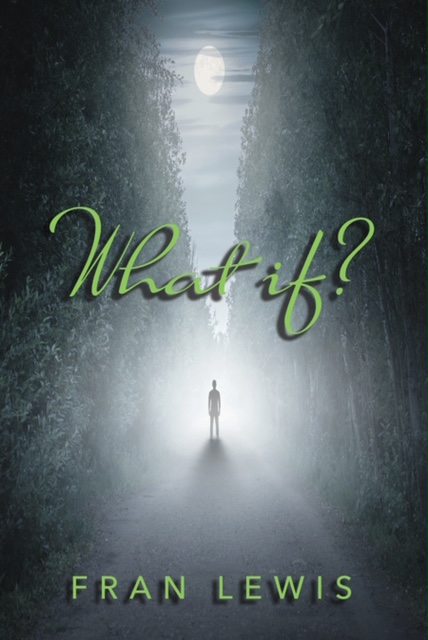
ABOUT THE BOOK


With the pandemic that never seems to be leaving us anytime soon I’ve created worlds that might make you pause for thought. Dark stories told by the characters as they experienced their journeys into worlds that you might not want to live in a hopefully be happy in the one you’re in.


Book Details:

Title: What If?

Author: Fran Lewis

Genre: time travel/ sci fi

Published by: Fidelli (July 8, 2020)

Print length: 78 pages


LOVE IT OR LEAVE IT WITH FRAN LEWIS


Things you need in order to write: my note pad on my phone, my computer, some interesting thoughts and a long walk before I get started and possibly a graphic organizer fill: med with ideas.
Things that hamper your writing: when my mind gets overloaded with ideas and I need to focus on the ones needed to create my novels or stories

Things you love about writing: I love that what I write belongs to me, and I can share my work with everyone.
Things you hate about writing: I hate editing and rereading.
 
Easiest thing about being a writer: just relaxing with a cup of coffee close by and writing without thinking about the outside world.
Hardest thing about being a writer: getting publishers to publisher your work and getting readers to give you constructive feedback before getting your work published.

Things you love about where you live: it’s quiet, and most people stay to themselves.
Things that make you want to move: nothing that would make me want to move.

Things you never want to run out of: coffee, salads, fun foods.
Things you wish you’d never bought: some of the jackets I plan to get rid of. A bag that was really not what it was supposed to be.

Words that describe you: opinionated, hard working, bold, blunt, and yet stating my thoughts without hurting anyone’s feelings. I love working with authors and helping to promote their work.
Words that describe you but you wish they didn’t: tough as nails, asks too many questions, and at times won’t stop until I get the answers I need to solve a problem.
 
Favorite foods: pizza and tuna.
Things that make you want to throw up: beets, olives and spicy foods.

Favorite music: classical music and opera.
Music that make your ears bleed: RAP.

Favorite beverage: black coffee.
Something that gives you a pickle face: salty foods.

Favorite smell: hot brewed coffee.
Something that makes you hold your nose: a skunk.

Something you’re really good at: helping others with projects, finding information on the net and doing research for my books.
Something you’re really bad at: driving a car.

Something you wish you could do: teleport myself anywhere I want so I can finally see my nieces and nephews.
Something you wish you’d never learned to do: dancing lesson: I hated them.

People you consider as heroes: my dad who was my champion and taught me to let everyone hear my voice; my aunt Tommy who taught me to speak out and speak up.
People with a big L on their foreheads: people who are too opinionate and too negative and who never tell it straight.

Last best thing you ate: Sicilian pizza from Arthur avenue pizza.
Last thing you regret eating: chicken salad with too much mayo.
 
Things you always put in your books: something about me and my sense of humor.
Things you never put in your books: personal information and age questions.

Things to say to an author: your work is inspirational, thought provoking and definitely worth reading.
Things to say to an author if you want to be fictionally killed off in their next book: your writing is disjointed and your plot line is flat, poorly crafted and uninteresting.

Favorite books: To Kill a Mockingbird, The Last Scoop, Gone With the Wind.
Books you would ban: I never read porn or erotica.

People you’d like to invite to dinner (living): Dick Belsky, Jon Land, Marsha Casper Cook.

People you’d cancel dinner on: reviewers that are rude,  a relative that is deceptive and betrayed my trust.

Favorite things to do: reading, walking on a nice day, shopping.
Things you’d run through a fire wearing gasoline pants to get out of doing: cooking, housework and talking to certain people.

Things that make you happy: texting my nieces and nephews, helping them with difficult assignments, just hanging out on the phone.
Things that drive you crazy: people that are always negative.

Proudest moment: completing my 4 masters and above.
Most embarrassing moment: burning dinner for date when I was single.

Biggest lie you’ve ever told: telling someone they look lovely not to hurt their feelings.
A lie you wish you’d told: I try not to, I’m too honest.

Best thing you’ve ever done: becoming an educator and working with students with learning challenges.
Biggest mistake: retiring early.

Most daring thing you’ve ever done: stock car racing.
Something you chickened out from doing: hang gliding and riding in a hot air ballon.


EXCERPT FROM WHAT IF?

One Race: One World: The Year 2050

It was now 2050 and the world had really changed.  There were no more planes or trains.  All you needed to do was think about being somewhere and you were there.  The government, in order to save money on gas and fuel, had banned cars, buses, and any means of transportation, and implanted chips in everyone’s arms that helped transport them to wherever they wanted to go, including the past.

A huge explosion had occurred, and all that was left in the world were twenty countries,  with only twelve hundred people in each country. Most people had not survived the explosion, which had caused most of the countries to just disappear into space forever.  No one really knew if anyone was out there or if these people survived somewhere, and no one really cared enough to find out.

One man called The Ruler headed all the countries, and assigned one person as the Chief of Law and Enforcement in each country.  Under this person, five people helped to enforce the rules and the laws.

Then, one miserable day, someone decided there were too many wars, too many hate crimes, too many people being killed on the streets, and too much traffic and congestion on the highways.  The government hired several scientists to find a solution to the problem, and that was how everyone in the entire world wound up multicolored.

Because of all the wars and fighting and hate that took place in the past, the government created a way to eliminate the many different races in the world and opted for only one. Everyone looked the same.  Our faces might have looked a little different, but our skin colors were the same—multicolored.  They did this so that no one would insult, mock, or hurt anyone because of their skin color.  They eliminated houses of worship so that everyone was nonsectarian, and no one would be discriminated against.  However, what they could not eliminate were our thoughts and desires to make changes in our lives, even though they tried.

Everyone that lived here had a job that paid the same amount.  No one, no matter what they did or what career they chose, was paid more than anyone else.  We never had to worry about being laid off.  Unless we decided to move somewhere else our job stayed the same, and there was no room for advancement—ever.  Everyone did the same thing every day.  Nothing changed.  Life was supposed to be anger free, insult free, and most of all, calm and tranquil.  HOW DULL AND BORING!  (OH!  I am not supposed to say that.  Opinions are not allowed here.)

One morning I got up and got dressed to go to my boring job as an accountant with the only accounting firm in this city.  I went over the books daily,  entered my accounts in their daily ledgers, and did taxes for some of the companies in this city.  It was grunt work, and nothing exciting ever happened at work or anywhere else.

Walking to work as usual, I began remembering how it was only twenty years ago when there were cars, trains, and people running and yelling for cabs and trains to wait for them at the station.  I missed the newspaper people on the street and the vendors selling hot coffee and bagels from their pushcarts.  Those were the days.  I loved the way people had looked and the different races and nationalities that lived here.  Learning from other people was what made life exciting. 

Then the unexpected happened.  A new family with two children moved in down the street from me.  These two kids were not going to conform to our way of thinking, and decided it was time to shake things up—and they did.  One morning when going to school they each wore something other than the school’s drab gray uniform.  The girl wore a pink and green dress with flowers, and the boy wore something blue, and a shirt that said, “I hate being the same.  Different Rules.”

This did not go over well, and they were taken into custody by the guards in their school and promptly suspended.  This did not stop them.  They started screaming and yelling all sorts of words we had not heard before.  “One race is not what we are supposed to be.  I hate this planet.  I hate all of you.”

I could not believe my ears. This was grounds for banishment into the Devoid Zone.  These two children had painted stars all over their faces.  Their younger sister decided to paint her face one color.  Who in today’s world had a face that was one color?  Everyone here looked and dressed the same.  It prevented jealousy, arguments, and fashion wars.  How dare they go against the laws of this state?

***

Excerpt from What if? by Fran Lewis.  Copyright 2020 by Fran Lewis. Reproduced with permission from Fran Lewis. All rights reserved.


 ABOUT THE AUTHOR

Fran Lewis taught for 36 years in a New York Public School as a dean, staff developer and reading specialist. She loved helping children with learning disabilities soar and rise to the top. Fran loves music and majored in music when she attended Hunter College and was a concert violist. Fran has a master’s in reading and learning disabilities, education, Administration and supervision and a PD in Administration and supervision. Fran enjoys doing book reviews, interviews on her network MJ network on Blog Talk radio, and she is currently writing her next Faces Behind the Stones book. Title to be decided.


Connect with Fran:
Blog  |  Facebook  |  Twitter  |  Goodreads

Buy the book:
Amazon 

Saturday, December 7, 2019

FEATURED AUTHOR: S.R. MALLERY


“TEA, ANYONE?”

How do two modern, quirky, twenty-something gals solve murders in a small, cozy USA town?
Easy. With a little time travel, some humor, and a lot of hard work. When the skeptical Brooke first meets the psychic Abby, she’s not impressed. But with the help of her comfort cat, her middle-aged roomie, her childhood friend, and a hunky detective hinting at a sweet romance, Brooke not only accepts that Abby has real gifts, it’s clear that these five people and one cat make up a crack team.

Got tea, anyone? In 1773, the Boston Tea Party sure did. Find out why going back in time helps break the case!


Book Details:

Title: Tea, Anyone?

Author: S. R. Mallery

Genre: cozy mystery

Series: A Brooke & Abby Cozy Mystery series, book 1


Published: November 19, 2019


Print length: 190 pages


Ifs


Q: If you could step back into a moment or day in time, where would you go?
A: I would definitely go back in time to my great aunt’s house in Martha’s Vineyard, Massachusetts. A simple clapboard New England hide-away, it didn’t have much property surrounding it and when you took the rickety, weather-beaten, wooden steps down to her little piece of private beach, you weren’t met with pristine white sand, just big bulky looking rocks, which made it impossible to move, much less swim or sun-bathe. But her screened-in porch overlooking the Menemsha Bay had a peaceful magic for me. With nearby buoys clanging, seagulls gently squawking as they swooped down and around in beautiful patterns, my frail, musicologist of a relative, always gave me wise, supportive counsel––and much love.

Q: If you could be anything besides a writer, what would it be?
A: Before I became a writer at fifty, amongst a whole host of other careers, I was a quilt designer and lastly, an English As A Second Language teacher. I truly loved my students. Still do. They were wonderful examples of not only how hard it is to leave one’s own country and family to start a new life here, but also how they manage to do it with grace and humor. But I left teaching because preparing lessons and writing were basically sabotaging my brain. It’s not fun to alternate from a new lesson plan details to the inevitable, “What’s my latest character thinking as she’s doing this?” Particularly when you’re driving to work! Yikes!

Q: If you had to do community service (or already do volunteer work), what would you choose?
A: A long time ago, I worked on the phones of a battered women’s shelter. I was glad to do it, but it sure wasn’t easy hearing all the horror stories of abuse. So this time, I think I’d rather volunteer to help veterans in some way. Their stories are more than sad as well, but the older I get, the more I feel badly about all the sacrifices they have made for our country. After all, these men and women deserve the very best, no?

Q: If you could meet any author for coffee, who would you like to meet and what would you talk about?
A: That’s an easy one. Mark Twain. Boy, what a kick that would be! Imagine the breadth and scope of his insightful humor. Quotes such as, “Politicians are like diapers, they need to be changed often, and for the same reasons,”  “If voting made any difference, they wouldn't let us do it,” and, “We have the best government money can buy,” says it all.LOL. I think I may be one of the few people who has a little Mark Twain quotations booklet in our bathroom.  Does that make me weird?

Q: If you could live anywhere in the world, where in the world would it be?
A: I would probably like living in one of those charming little British villages that figure so prominently in the “Midsomer Mystery” series. Of course, if I did live in such a small and quaint town, I would not want to be a murder suspect… or a victim.


Ands


5 things you need in order to write:  

    •    my laptop
    •    a pencil & pad
    •    my Merriam Webster Thesaurus
    •     Google Search
   and
    •     my imagination!

5 things you love about writing: 

I’ll mention four things first then relate a little story, if you don’t mind.
    •    I like thinking about scenes, motivations, and plots. My overactive OCD brain seems to thrive on being involved with anything creative.
    •    I absolutely love editing. I know, I know, most authors don’t, but for some reason, after I sling my words down, I enjoy going back to “attack” them until they make sense.
    •    I enjoy jotting down ideas onto little papers or 3 x 5 cards, then put them away for later. Probably comes from sewing all those pesky little quilt blocks together in my former career.
    •    I love doing research, be it from the internet, TV, movies, or books.
   and
    •    here’s the main reason: My very first short story was written just outside of a Macy’s Foundations department, where I waited for my then teenage daughter to select a few bras. She was taking her sweet time, so, as I sat on a leather couch nearby, I got out a little pad and pencil and started scribbling a short story. Forty-five minutes later, my daughter appeared, apologizing heartily for taking so long. I looked up at her, dazed, my mind exploding with inspired thoughts and images. “It’s okay, honey,” I told her. “Why don’t you go back and check out some panties?”
    Twenty years later, I feel the same way. Once I start writing, time stops for me.

5 things you always put in your books:  

    •    Because characters are so important to me, I always do research about their characteristics. For example, in my Genteel Secrets, an evil cousin blackmails the female lead into spying. I started out by making the cousin just plain mean. Then I thought about it. That was too simplistic. Why would she be that way? So I took out my book, The Writers Guide to Character Traits, by Linda N. Edelstein, Ph.D. According to her, sometimes a severe accident can change one’s brain enough to create character flaws. Bingo. Problem solved. She was thrown from a horse as a child––and was changed forever.
    •    I also work hard––along with my editor’s gentle reminders––to “Show Not Tell” my characters’ emotions. I first learned about that from the wonderful Harper Lee, who demonstrated all that so beautifully her To Kill A Mockingbird. Actions and little personal gestures speak volumes.
    •    Plots are important for me as well. Sure, I’d love to write the most glorious prose on the planet. Long, detailed and gorgeous paragraphs that make you swoon with admiration. But you know what? After a page or two of that, I’m usually bored enough to start flipping those pages to get to the ‘good stuff,’ the stuff I care about––plots, characters, and motivations. 
    •    Most of my books have been historical fiction, and even my new cozy mystery has some time travel in it. I work very hard to create the past as authentically as I can. That means learning about what went on at that particular time, both in film, TV series, books, and articles.
   and
    •    I like to create vocabulary and phrase sheets of the era I’m portraying, so when you see my dialogues you’re never going to read someone say, “Sure thing, Babe,” when a man is talking to his mistress during the 1700s. My brain has closed for the night. Sorry . . .

5 favorite things to do:  

    •    Sometimes, to de-stress, I just go onto my Youtube app and watch all kinds of videos. Puppies, kittens, parrots, toddlers dancing to music, funny Late Night opening monologues, scenes from comical movies––whatever does the trick. Forget meditation. For me, letting those laughing endorphins loose hits the spot! 
   
   •    I also like to water my plants because I listen to music while I’m doing it and I’m outside (negative ions, negative ions). 
   
   •    I like to have family and friends over (once I’ve cleaned up the house, that is!). 
   
   •    I like my Senior and Fit exercise class. Not only is it helping me physically, as someone who is past thirty (WAY past), before class and after, it is like walking into a cocktail party, everyone is so chatty and friendly. 
   
and 
  
   •    lastly, I LOVE to cuddle with my cat, Junebug. She’s actually featured in my Tea, Anyone? So now, I actually write notes on what cute things she does for future books in the series. Does she realize why I’m taking out a pad and pencil as I coo at her? Maybe. But chances are, she’s just wondering when I’m going to feed her next.


5 people you consider as heroes:  

I’m going to just name some groups of people.
    •    fire fighters who deal with such danger all the time. We owe them so much!
    •    people who stand up against injustices in the world, no matter their jobs or politics.
    •    scientists who work tirelessly to discover cures for horrendous diseases.
    •    people with crippling conditions who fight every day just to survive.
and
    •    people who quietly donate great sums of money to charities without any fanfare.


Whats


Q: What’s your all-time favorite place?
A: On the upper East Side of New York City, there is an old building that used to be someone’s mansion. It’s called the New York Society Library, and is actually the city’s oldest institution. Established in 1754, early on, it even served as the Library of Congress. I loved the fact that my voraciously well-read mother faithfully went there once a week. Inside, there was a main reading room, where huge armchairs and sofas surrounded a giant stone fireplace and nearby little brass lamps sat atop of a wide mahogany table. I marveled at the complete peacefulness and comfort it gave me as I sat with my own little pile of young girlie books, as my brother sat across the way, devouring scientific encyclopedias and our mother blissfully turned pages from one of the seven or eight books she had chosen for the week.

Q: What’s one thing that very few people know about you?
A: Having graduated with a Bachelor of Music as a voice major, I soon faced a dilemma. Although I was told my voice was pretty enough, when it came to performing, I froze. I had gotten several church soloist jobs, always with so much nervousness it wasn’t fun. But then it hit me. I simply needed to loosen up more. It was 1979 and disco was coming in big time. So I tried out in front of a small band as their female singer. I got the job and we played at various inconsequential places here and there. But one place was a college type bar, much like the one in Cheers. Little did I know that singing there was about to change my life.
In the audience was a really good looking man who, after talking to me on a couple of my breaks, finally asked for my phone number. I insisted on taking his, calling him two days later. And the rest, as they say, is history. I had met my hubby of forty years.


Q: What’s your favorite time of day?   
A: Mornings . . . definitely! Even if I don’t get a ton of sleep the night before, just give me a couple of cups of half caffeine, half decaf, poured into my thermos with some Almond milk, and I’m a happy camper. While hubby watches some morning news, I’m off to our bedroom with my laptop, with whatever I’m working on, along with my pencil and eraser, my thermos, and my cellphone. Soon, our kitty, Junebug, jumps up to join me, with her usual squoosh-one-side-of-her-face-against-my-fingers before she circles around once or twice, then flops down close to me to make sure she’ll get more pets and rubs as I work. And we’re off and running. I do take breaks to exercise and clean up a bit. And sometimes, if sleep deprived, by afternoon, I’m ready for a nap. By night, as far as ideas coming into my head, the right side of my brain doesn’t work that well. Remember, I’m an established morning gal. However, my left side works just fine.  So sometimes, I design my promos then.

Q: What’s your favorite dessert?
A: Ice cream. Ice Cream. Ice Cream. And then, of course––there’s always ice cream.

Q: What’s your favorite color?

A: Mauve or Periwinkle blue. My hubby says I obviously got to play with a much bigger crayon set than he did, so I learned early about extensive color pallets).

Q: What book are you currently working on?
A: Brooke & Abby Cozy Mystery Book 2, When In Rome. This time, the clairvoyant, Abby, goes back to Ancient Rome and finds out about poisons . . . and how they were used. Oooooh.


Q: All-time favorites with pictures:
A: This first one is me at four years old, with my brother. I have NO idea why I was wearing that crazy space outfit. I looked ridiculous! And talk about being a major blockhead. Twenty-six later, I was thirty and looked a bit more normal. That’s just after I had married my husband (I checked the wedding ring in the picture).

The other photo is of Venice, Italy. I was just shy of twelve and that summer my family went to England and Italy. So many good memories, but I remember how much I loved Venice. So beautiful, and the sounds of the water lapping, the gondoliers . . . back then, it was heaven. I hear now they have far too many tourists around with huge cruise ships barging in.

Q: What’s your latest recommendation for:
Food: I’ve discovered PB2 Chocolate powder. I use it to make up mug cakes, freeze into little cookies, and turn into popsicles. Recently, I’ve also blended two tablespoons of it with a frozen banana, a little almond milk, and a splash of vanilla, then poured it into a small tub to freeze. Talk about Yummmm. Excuse me while I go make up some more for tonight . . .
Music: Frankly, I am completely eclectic when it comes to music, no matter the genre. If it’s good, I like/love it. But recently, I’ve been appreciating some movie music scores, particularly when they help to create a dramatic mood or tell a story. For example, in The Firm, the constant banging of an old piano really creates tension throughout. In Vertigo, those haunting sounds are perfect. And let’s face it, Jaws is amazing, and The Godfather theme captures that old Sicilian feeling like nobody’s business!
Movie: Green Book. Loved it for its touching appeal and great character personality arcs.
Book: I recently read a sci-fi A.I. book, which completely surprised me how much I got into it. I mean usually anything that says A.I., I’m already tuning out. But this one was very well done. It was written by Inge-loss Goss, called, No Freedom.
Audiobook: Pride and Prejudice. Now I have to say, I love all the movies made from Jane Austen’s books, but, reading her has always been a problem for me. She’s a bit too clause-oriented. I mean, those commas keep coming and coming. However, when I got a free copy of Pride and Prejudice, narrated by the fine actress, Rosamund Pike, I couldn't believe how much she made Austen’s work come alive. Bravo to her!
TV: Mysteries of the Museum and Lucky Dog.
Netflix/Amazon Prime: Recently, I’ve watched Succession and Peaky Blinders.
Miscellaneous: I enjoy putting my once-a-month Newsletter together, not just for promoting my own books, but also to give back to authors—like you do so well, Amy! I may start releasing it twice a month, starting next year. We’ll see . . .

Q: What books do you currently have published?
A: The Dolan Girls
In 1800s Nebraska, where ladies of the night, brutal outlaws, colorful land rushes, and Buffalo Bill’s Wild West shows are the norm, can a whorehouse madam and her schoolmarm daughter both find true love?
Ellie & The War on Powder Creek 
It’s 1891 and The Dolan Girls western romance saga continues. It stars the feisty Ellie Dolan Parker, who finds herself caught up in the middle of the Wyoming Cattle Wars. Filled with Rich, greedy cattle barons, crooked politicians, a major kidnapping, local ranchers in life-threatening danger, and a troubled marriage, this story is a colorful portrayal of a forgotten time. A time when these events and people filled the newspapers.
Unexpected Gifts 
Can we learn from our ancestors? In this 2017 Readers’ Favorite Gold medal winner, a confused college student learns about life from her ancestors’ journals, as she reads of their time during Vietnam, Woodstock, McCarthyism, the Great Depression, their arrival on Ellis Island, and fighting as Suffragists.
Trouble in Glamour Town
Murder. Corruption. Romance. Movie Stars. A modern-day TV shoot ‘em up? No. It’s 1926 Old Hollywood, and a film producer is gunned down in cold blood. In comes Rosie, a pretty bit-player, who, in spite of her stage-mother’s expectations, just longs to be happy. Silent screen idols Clara Bow, Gloria Swanson, Lon Chaney, and Rudolph Valentino float in and out, as Los Angeles’ corruption is exposed, the era described, and a chase to find the killer revs up before there’s another hit.
Sewing Can Be Dangerous and Other Small Threads
History, mystery, action, and romance are all rolled into one book in this 2016 Readers’ Favorite Gold Medal winner. These short stories follow drug traffickers using hand-woven wallets; a U. S. slave sewing freedom codes into quilts; a cruise ship murder mystery; hiding Christian passports in Nazi Germany; Salem Witchcraft quilt curse; the Triangle Shirtwaist Factory fire, and a 1967 Haight-Ashbury love affair gone horribly wrong, just to name a few.
Tender Enemies  
It’s 1941 in New York City, a time before Pearl harbor, when Nazi spies are everywhere in the U. S. and no one knows who’s working for whom. In comes beautiful Lily, paid to gather intelligence by setting up a “honey trap” for Joe Stiles, a supposed German infiltrator. Problem is, she soon faces a danger she isn’t prepared for––falling in love.
Tales To Count On 
Whether it’s 500 words or 5,000, these stories, where sad meets bizarre and deception meets humor; where history meets revenge and magic collides with gothic, will remind you in the end, nothing is ever what it seems.
Genteel Secrets 
What do a well-bred Southern Belle and a Northern working-class Pinkerton detective have in common? Espionage…and romance. At the start of the U.S. Civil War, while young men begin dying on American battlefields and slavery is headed toward its end, behind the scenes, female undercover work and Pinkerton intelligence are alive and well. But in the end, can this unlikely Romeo and Juliet couple’s love survive, or will they be just another casualty of war?
Snippets In Time 
Drift back in time with award winning S. R. Mallery, as she presents some excerpts––or “snippets”––from her different books. They range from an American family saga to full, historical adventures involving sewing; from a U.S. Civil War Romeo and Juliet couple defying all odds to a 1926 Old Hollywood romantic murder mystery; from both a colorful Western romance and a Nazi spy romance thriller to short stories that keep you guessing.


A USA Today Best Selling author and two-time Readers' Favorite Gold Medal winner, S. R. Mallery—as her fans say—"brings history to life."
They say she's as eclectic as her characters. She's been a singer, a composer, a calligrapher, a quilt artist, and an ESL/Reading teacher. But it is the world of writing historical fiction where she feels she's come "home." It's where she's received various awards and in addition, get to do her second love: Research.
When people talk about the news of the day, or when she listens to music, her overactive imagination likens the story to a similar kind of news in the past, which helps her conjure up scenes between characters she's yet to meet.

Connect with Sarah:
Website  |  Facebook  |  Twitter  |  Goodreads  |  Pinterest  |  Instagram  |  Newsletter  |  Amazon  |   Audible  |  BookBub 

Buy the book:
Amazon 


Wednesday, October 16, 2019

FEATURED AUTHOR: RAQUEL RICH


ABOUT THE BOOK


Grace’s nine-year-old son, Jordan, is dying. First, the Metagenesis disease will tear his soul from his body, and then it will kill him. Desperate for a cure, Grace agrees to take part in an illegal clinical trial cloning souls. Supported by her best friend Kay, the two embark on the ultimate “Vegas Vacation” to the past in search of the right soul to clone, racing against time to save Jordan’s life. But someone is trying to stop them and when they discover why, Grace must make a choice: let her son die or kill her husband. If she kills her husband she triggers widespread Metagenesis, sealing the fate of the human race with a new plague. Humanity is counting on Grace choosing to let her son die.


Book Details:


Title: Hamartia


Author: Raquel Rich


Genre: Time Travel Thriller


Series: book one of two


Publisher: Words Matter Publishing (October 2018)


Print length: 338 pages


LOVE IT OR LEAVE IT INTERVIEW WITH RAQUEL RICH


A few of your favorite things: I’m a summer baby. I often plan my days around the weather, revolving around the sun like a planet. For this reason, most of my favourite things fall into the summer category. Ice tea, books to read by the pool, summer dresses, sandals, bikinis. And I’m obsessed with bikinis. I wouldn’t be surprised to discover that I own enough bikinis to carry me through the Canadian summer months without repeating one.
Things you need to throw out: bikinis. lol


Things you need in order to write: a good night’s sleep + giant coffee = good writing day!
Things that hamper your writing: I’m a morning writer and I like to write alone. As soon as my hubby or kids (adult kids) come downstairs, I’m ruined. Their mere presence in the home, even if on the other side of the house watching a TV I can’t hear or see, distracts me. 


Words that describe you: strong; independent; wise; fighter; go-getter; results focused; open-minded; forgiving; loving.
Words that describe you but you wish they didn’t: stubborn; cold; survivor. Let me explain that last one: survivor. It’s not that I wish I hadn’t survived. I wish I hadn’t gone through the tribulations in the first place. Cancer was no walk in the park. Neither is living with a chronic illness, MS. And those are just the beginning. 

Favorite foods: I’m Brazilian and my go-to dish is my mom’s rice and black beans. She snowbirds in Brazil, and before she leaves me for the winter, she cooks stockpiles of beans and freezes them for me. Other than Brazilian food, my next favourites would be Mexican followed by Jamaican.
Things that make you want to throw up: I have a texture thing which basically rules out most things living in the sea. The thought of mussels or slimy escargot or oysters—OYSTERS! Yuck! 

Favorite music: my music tastes vary depending on my activity. I have cleaning music, dog walking music, writing music, driving music. I guess my usual go-tos are salsa, meringue, and samba (the Brazilian shake-your-ass-at-carnival type, not that mellow jazzy crap). But I also love reggae (all kinds), I love old house, I love gangsta rap from the early 90’s. I can even get down with some ACDC and Aerosmith (I have a crush on Steven Tyler).
Music that make your ears bleed: Soca. Calypso. Heavy metal. I hate them all equally.

Favorite beverage: Water. Is that boring? Ok. I also like ice tea. And red wine.

Something that gives you a pickle face: I’ve never tasted monkey pee, but I imagine it would taste like Beer.

Something you’re really good at: problem solving. I’m the girl everyone comes to to bounce ideas off of (probably because I’ve tried most everything). I’m the girl everyone comes to for advice (probably because I’ve been through some crazy shit).

Something you’re really bad at: directions. I get lost very very easily.


Things you always put in your books: unpredictable plot twists. I love surprising my readers with wtf moments. 

Things you never put in your books: the main character’s race. I’m biracial. I hate that most stories have characters that don’t look like me. For that reason, I decided not to describe my main characters to fit into any one race. I want the reader to feel connected enough to my character that they assume the character looks like them.

Favorite places you’ve been: I’m a huge traveler. I’ve been to thirty-one countries and plan to reach fifty before I turn fifty. It’s super hard to pick a favourite, so I’ll give you my top five. Brazil, and the Canadian Rockies (yes, there may be some bias in my first two choices). Vietnam: been twice and would easily live there. New York City: just because. Budapest: I love the spas.  

Places you never want to go to again: sorry, Cancun. But your party scene attracts far too many of the types of tourists that make me cringe.

Favorite things to do: spending time with family and friends is by far my favourite pastime. Aside from that, I love going out anywhere and I love travelling anywhere. Any sentence that starts with “Raquel, do you want to go to…” is usually answered by a yes. I’m also a sun-worshipper and spend way too much time working on my tan by the pool. 

Things you’d run through a fire wearing gasoline pants to get out of doing: cooking. Not only do I hate doing it, but I truly suck at it. I’m a terrible cook and ain’t no one going to argue with me.

Things that make you happy:
my dog makes me happy. I love my fur baby. 

Things that drive you crazy: turtlenecks and balloons. They don’t just drive me crazy, it’s a full on phobia.


BOOK TRAILER FOR HAMARTIA


ABOUT THE AUTHOR 

Raquel Rich is a full-time sci-fi author and occasional blogger. She loves to travel, suntan, walk her dog, and is obsessed with all things Beauty & the Beast. She despises cold weather, balloons, and writing about herself in the third person but noticed all the real authors do that. Born and raised in Canada to Brazilian parents, she lives in the Toronto area with her family. She’s married to the guy she’s been with since she was fifteen (her baby daddy). Her superpowers include being a mom to their two awesome grown-ass boys and one fur baby.

Raquel Rich is a proud member of Broad Universe: an international, non-profit organization dedicated to promoting, encouraging, honoring, and celebrating women writers and editors in science fiction, fantasy, horror, and other speculative genres.

Connect with Raquel:
Website  |  Blog  |  Facebook  |  Twitter  |  Goodreads
Buy the book:
Amazon  |  Barnes & Noble 

Monday, October 14, 2019

FEATURED AUTHOR: ELIZABETH CROWENS


ABOUT THE BOOK


In 1914, the war to end all wars turns the worlds of John Patrick Scott, Sir Arthur Conan Doyle, H.G. Wells, Rebecca West and Harry Houdini upside down. Doyle goes back to ancient China in his hunt for that "red book" to help him write his Sherlock Holmes stories. Scott is hell-bent on finding out why his platoon sergeant has it out for him, and they both discover that during the time of Shakespeare every day is a witch-hunt in London. Is the ability to travel through time the ultimate escape from the horrific present, or do ghosts from the past come back to haunt those who dare to spin the Wheel of Karma?

The Time Traveler Professor, Book Two: A Pocketful of Lodestones, sequel to Silent Meridian, combines the surrealism of Kurt Vonnegut's Slaughterhouse-Five with the supernatural allure of Susanna Clarke's Jonathan Strange and Mr. Norrell set during WWI on the Western Front.
—First Prize winner of the Chanticleer Review's Paranormal Fiction Awards.


Book Details:


Title: The Time Traveler Professor, Book Two: A Pocketful of Lodestones


Author: Elizabeth Crowens


Genre: alternate history-mystery / fantasy noir


Series: The Time Traveler Professor, book 2


Publisher: Atomic Alchemist Productions LLC (August 1, 2019)


Print length: 328 pages

On tour with: Partners in Crime Virtual Book Tours


LOVE IT OR LEAVE IT WITH ELIZABETH CROWENS


Things you need in order to write: A Mac computer with a 27” screen.
Things that hamper your writing: Outside street noise, especially loud car stereos, jack hammers from construction, or from obnoxious neighbors. (I live in NYC.)


Things you love about writing: Traveling for research.
Things you hate about writing: Proof reading for typos and spelling mistakes. I’m not the best typist. Editing is different. I enjoy tightening a plot and making it better.

Easiest thing about being a writer: Justifiably getting away with being “a creative.”

Hardest thing about being a writer: Not earning as much as I’d like as a write. Also I loathe querying for a new literary agent.


Things you love about where you live: In New York City, I don’t have to own and drive a car to do everything I need to do. Much of my immediate necessities are within walking distance.
Things that make you want to move: Subways are much to be desired: rude and stinky people that will sneeze on you and get you sick. Overcrowding. Living space too small. Too hot and humid in the summer. I’d like to move to London if I start earning enough from my writing. People are much more polite. The Tube is cleaner and more efficient.

Words that describe you: Determined, ambitious, relentless, resourceful.
Words that describe you but you wish they didn’t: Pushy, aggressive, impatient. People always get the wrong impression about me. Don’t know why, but often they jump to conclusions that are incorrect.

Favorite music or song: Woodstock, Prog Rock, 70s Rock, Classical. Examples: Queen, Emerson Lake and Palmer, Pink Floyd, Jimi Hendrix, The Who, David Bowie — mostly British rock. I also enjoy listening to movie soundtracks.
Music that make your ears bleed: Rap, Hip Hop, Disco and Pop. Oh yes, and people like Barry Manilow — stuff my mother would’ve listened to. Yeech!

Favorite beverage: Coffee.

Something that gives you a pickle face: Hard, strong liquor. I keep trying to train myself to love Scotch, because I love going to Scotland, but I can’t get the hang of it.

Favorite smell: Fresh garden roses, not the store-bought ones with no scent.

Something that makes you hold your nose: Skunks, sulfur — that rotten egg smell near stagnant ponds, and body odor.

Something you’re really good at: Photography.

Something you’re really bad at: Putting together Ikea furniture.


Something you wish you could do: Skiing (Never had the chance. Now my knees won’t let me.) Speak fluent Mandarin Chinese and Russian. (Never had the time, although I’m excellent with languages.)
Something you wish you’d never learned to do: Superior-level CAD skills in textile design and home goods design. What a waste of education. I hated the industry and the people who ran it. I’d love to turn back the clock and erase that part of my history. One day, I’ll write a book about it.

People you consider as heroes: Oprah. Too bad she’s not running for president in 2020.

People with a big L on their foreheads: The Kardashians. They are worthless. I don’t understand their appeal whatsoever. Other reality TV stars fall into that category as well.

Things to say to an author: Quote from Buzz Lightyear: Never give up. Never surrender.

Things to say to an author if you want to be fictionally killed off in their next book: You don’t have a fighting chance.

Favorite places you’ve been: Anywhere in Scotland, London (or anywhere in England).

Places you never want to go to again: South Florida, if I can avoid it. Sometimes I have no choice for writing conferences. Any place hot and humid, if I can avoid it, with the exception of New Orleans. Love that place and can’t wait to go back.

Favorite books: Hard to pin that one down. Time travel, of course, but anything that hooks me and keeps the pages turning until I’m yawning and need to turn in for the night.

Books you would ban: Fifty Shades of Grey. Although I saw the first film, I haven’t read the book and wouldn’t waste my time. Only reason why I saw the film was it was on cable, and I didn’t pay money in a theater.

People you’d like to invite to dinner (living): Oprah, Buzz Aldrin, Steven Spielberg, Former President Jimmy Carter, and Kamala Harris.

People you’d cancel dinner on: Kim and Kanye.

Best thing you’ve ever done: Publish my first novel.
Biggest mistake: Fall in love with the wrong guy.
Most daring thing you’ve ever done: Getting a black belt in martial arts in Japan.

Something you chickened out from doing: Diving off a high diving board.


EXCERPT


Chapter One: Kitchener’s Call to Arms

August 1914

“Have you ever killed a man before?”
I had, but close to three hundred years ago. So, I lied and just shook my head.
“Your name, son?” the recruitment officer asked.
“John Patrick Scott,” I said, with pride.
The officer handed me a card to fill out. “Write your date of birth, where you live and don’t skip any questions. When finished, bring this over to Line B.”
Born during the reign of Queen Victoria, somehow or other I managed to travel to the 23rd century, feudal Japan, and ancient China long before the Great War started. The army wanted to know all the places I had traveled, but it was doubtful that much information was required.
Since the war to end all wars commenced, recruiting centers sprang up like wildflowers. This one took over an Edinburgh public library. If unaware as to why the enthusiastic furor, one would’ve guessed the government gave away free land tracts with titles.
“Let’s see how clever you blokes are. Tell me the four duties of a soldier,” another enlistment administrator called out.
An overeager Glaswegian shouted, “Obedience, cleanliness, honesty and sobriety, sir!”
The chap next to him elbowed his side. “Takes no brains to read a bloody sign.”
Propaganda posters wallpapered the room with solicitous attempts at boosting morale. Kitchener wanted us and looked straight into our eyes. Proof of our manhood or perhaps stupidity. Queues of enthusiasm wound around the block. Impatient ones jumped the lines. We swore our allegiance to the King over a bible. As long as the war lasted, our lives were no longer our own.
Voices from men I’d never see again called out from the crowd.
“It’ll be over in six weeks.”
“Are you so sure?”
“Check out those men. All from the same cricket team. Play and die together. Medals of Valor in a blink. Local heroes with celebrations.”
“I’ll drink to that.”
A crusty old career soldier yelled out to the volunteers, “Does anyone speak Flemish?”
Suddenly the place got quiet. Then he looked at me. “Soldier, do you know anything besides the King’s English? French?”
“Fluent German,” I said. “That should be helpful.”
“Since when were you with the Bosches?”
“Fourteen years, sir. Before the war.”
“And what were you doing in enemy territory?”
“Worked as a teacher. A music professor and a concert pianist when I could get the engagements and sometimes as an amateur photographer. They weren’t our enemies then, sir.”
“Have you ever shot a rifle, son?”
“Actually, I have…”
“Find a pair of boots that fits you, lad. Hustle now. Time’s a wasting.”
The Allied and German armies were in a Race to the Sea. If the Germans got there first, then England was in danger of invasion. Basic training opened its arms to the common man, and it felt strange to be bedding alongside Leith dockworkers and farmers, many underage, versus the university colleagues from my recent past. Because of the overwhelming need for new recruits, training facilities ran out of room. The army took over church halls, local schools and warehouses in haste. Select recruits were billeted in private homes, but we weren't so fortunate.
Except for acquired muscles, I slimmed down and resembled the young man that I was in my university days except with a tad more gray hair, cut very short and shaved even closer on the sides. No more rich German pastries from former students as part of my diet. At least keeping a clean-shaven face wasn’t a challenge since I never could grow a beard. Wearing my new uniform took getting used to. Other recruits laughed, as I’d reach to straighten my tie or waistcoat out of habit despite the obvious fact that I was no longer wearing them.
While still in Scotland during basic training, I started to have a series of the most peculiar dreams. My boots had not yet been muddied with the soil of real battlefields. New recruits such as I, had difficult adjustments transitioning from civilian life. Because of my past history of lucid dreaming, trips in time travel and years of psychical experimentation I conducted both on my own and with my enthusiastic and well-studied mentor, Arthur Conan Doyle, my nightmares appeared more real than others. My concerns were that these dreams were either actual excursions into the Secret Library where the circumstances had already occurred or premonitions of developments to come.
The most notable of these episodes occurred toward the end of August in 1914. In this dream, I had joined another British platoon other than my own in Belgium on the Western Front. We were outnumbered at least three to one, and the aggressive Huns surrounded us on three sides.
Whistles blew. “Retreat!” yelled our commanding officer, a privileged Cambridge boy, barely a man and younger than I, who looked like he had never seen the likes of hardship.
We retreated to our trenches to assess what to plan next, but instead of moving toward our destination everyone froze in their tracks. Time was like a strip of film that slowed down, spooled off track, and jammed inside a projector. Then the oddest thing happened to our enemy. For no apparent reason, their bodies jerked and convulsed as if fired upon by invisible bullets over the course of an hour.
When the morning fog lifted, the other Tommies and I broke free from our preternatural standstill and charged over the top of the trenches with new combat instructions. Half of our platoon dropped their rifles in shock. Dead Huns, by the thousands, littered No man’s land long before we had even fired our first retaliatory shot!
I woke up agitated, disoriented and in a cold sweat. Even more disturbing was finding several brass shell casings under my pillow — souvenirs or proof that I had traveled off somewhere and not imagined it. I roused the sleeping guy in the next bed and couldn’t wait to share this incredible story.
“Shush!” he warned me. “You’ll wake the others.”
Meanwhile, he rummaged inside his belongings and pulled out a rumpled and grease-stained newspaper clipping that looked and smelled like it had originally been used to wrap up fish and chips.
He handed it to me with excitement. “My folks sent this me from back home.”
The headlines: “Angels sited at the Battle of Mons”
Almost as notable was the article’s byline written by my best friend from the University of Edinburgh, Wendell Mackenzie, whom I had lost track of since the war started.
He begged me to read on.
“Hundreds of witnesses claimed similarities in their experiences. There were rumors aplenty about ghostly bowmen from the Battle of Agincourt where the Brits fought against the French back in 1415. Inexplicable apparitions appeared out of nowhere and vanquished German enemy troops at the recent Battle of Mons.”
“This looks like a scene from out of a storybook.” I pointed to an artist’s rendition and continued.
“Word spread that arrow wounds were discovered on corpses of the enemy nearby, and it wasn't a hoax. Others reported seeing a Madonna in the trenches or visions of St. Michael, another saint symbolizing victory.”
“Now, I don’t feel so singled out,” I said and handed the newspaper articles back to my comrade.
For weeks, I feared talking to anyone else about it and insisted my mate keep silent. Even in wartime, I swore that I’d stay in touch with my closest acquaintances, Wendell Mackenzie and Sir Arthur Conan Doyle. It was easier to keep abreast of Arthur's exploits, because of his public celebrity. On the other hand, Wendell, being a journalist, could be anywhere in the world on assignment.
* * *
Dear Mr. and Mrs. Mackenzie,
I regret having missed Wendell when he never made it over to visit Scotland, and you wonder if someone up above watches over us when we make decisions where to go and when. In my case it was when I decided to take a summer vacation and travel to Edinburgh before the war. Those without passports or proper documentation endured countless detours and delays getting back to their respective homelands. One of Mrs. Campbell’s lodgers had been detained in France.
With nothing to return to back in Germany, I joined the Royal Scots. Military training commenced in Edinburgh, and at least they had us wearing uniforms of pants tucked into gaiters as opposed to the Highland troops who wore kilts. Although I was born and bred in Scotland, as a Lowlander that’s one outfit you’d have to force me into with much duress.
Our tasks would be in the Scots Territorial units deployed on our coastline in case of an enemy invasion. Potential threats could come from spies or submarines, but most say that the worst enemy has been the frigid wind blowing off the North Sea.
As there is always talk about combining forces and transfers, my aunt can always forward letters. It would mean more than the world to hear from Wendell saying that not only is he all right, but also in good spirits.
Yours most devoted,
Private John Patrick Scott
* * *
Dear Arthur,
In our last correspondence, I conveyed that I was unable to return to my teaching post in Stuttgart. With your tour in the Boer War as my inspiration, I joined the military. We learned the basics: how to follow commands, first aid, march discipline and training in all matters of physical fitness. My feet have been in a constant state of rebellion, since my previous profession as a pianist was a sedentary occupation.
Deployment was supposed to be along the coast of Scotland, but the army reassigned me despite first promises because of too many staggering losses on the Western Front. I requested to be part of the air corps and a pioneer in new battle technology, but my recruiting officers had other plans. Our regiment left for Ypres in Belgium. None of the Tommies could pronounce the name of this place, so everyone called it Wipers. You’re no stranger to war, but everyone has been surprised that it lasted longer than anticipated.
Yours Most Devoted,
Private John Patrick Scott
* * *
Troops from all over under the wing of the British Expeditionary Forces piled on to ships to sail out to the continent. The locals from Edinburgh didn’t expect to leave bonnie ole Scotland. They told us we’d defend our shores from foreign invasions. I’d crossed the North Sea before, but then it was a sea of hope and a new life full of opportunity when I got my scholarship to continue my musical studies in Germany, now the enemy.
I turned to the nearest stranger, hoping that a random conversation would break the monotonous and never-ending wait until we set anchor in Belgium. “How was your basic training?”
“Three months at an abandoned amusement park,” the soldier replied. “We trained for the longest time in our street clothes and were told they ran out of uniforms. Probably sent recycled ones after the first troops died. Used wooden dummy rifles until the real ones arrived. What about you?”
“We used an abandoned dance hall. Never could get used to waking at 5:30 a.m.”
“Word got around that in Aldershot soldiers had luxury facilities with a billiards room, a library, private baths and a buffet. I suspect that was for the regulars, the old-timers, not new recruits like us.”
“I should’ve enlisted elsewhere,” I grumbled, not that it would’ve made much of a difference if we’d all die in the end.
He pointed to my face and examined my flawless hands. “You don’t look like much of an outdoorsman. Pale, hairless complexion. No scars.”
“I’m a concert pianist.”
“Not much use on the Front.”
“Probably not. Excuse me, I need some air.” I bundled up in my great coat, wrapping my muffler a wee bit tighter.
Wasn’t sure which were worse — the soldiers with their asphyxiating cigarettes or numbing sleet turning into ice pellets. Hadn’t gotten my sea legs, yet. Stormy swells churned my stomach. Sweet Scotland. Lush green grass and the sky the color of blue moonstone. Never thought I’d be so sentimental. Continued staring until brilliant hues of the shoreline merged into dismal grays of a foggy horizon. In the transition from civilian to soldier, I stepped through a door of no return unless I desired to come back home in a coffin.

Chapter Two: The Other Lost World

Ypres, Belgium Late fall, 1914

A sea of strange men, but all comrades-in-arms, all recent transplants marched to their assignments and followed orders without question to who-knows-where on the way to the battlefield sites. We sallied forth, anonymous troops with a distorted sense of time and distance through the streets of has-been cities, once thriving communities. Poetry in ruination.
As we marched through the Grote Markt (Grand Market) heading out toward the Menenpoort (or Menen Gate) I didn’t expect to get an education. The soldier to my left kept talking out loud and compared notes of local tourist attractions. He was probably unaware that anyone else had overheard his comments.
“That long, distinctive building with the church hiding behind it must be the Hallen… or their Cloth Hall. There were impressive paintings on the interior walls of the Pauwels Room depicting the history of this town and its prosperous textile trade.”
“How do you know this?” I asked, trying not to attract too much attention.
“I’m a historian. Used to teach at a priory school in Morpeth.”
Perhaps I was naïve, but I asked, “Why would the armed forces recruit someone with a background in history?”
“That didn’t influence my enlistment although I’m sure it’ll come in handy somewhere. Before the war, I traveled all over Europe when time permitted. I brought original postcards with me as to what this town used to look like. It’s frightening to see the difference.”
“Your name?” I asked.
“Private Watson. What about you?”
“Not John Watson, by any chance?”
“No, Roger Watson, why?”
I shook my head thinking about Arthur and bit my lip to hide a slight smile. “Oh nothing… My name is Private Scott, John Patrick Scott.”
“What brings you to this dismal corner of the earth?”
“Ich war ein Musiklehrer. Pardon me, sometimes I break into German. I’m from Edinburgh but was living in Germany as a music teacher. Can’t be doing that sort of thing now.”
“I suppose not.”
“Roger, sorry to have eavesdropped, but it sounded so interesting. Then you are familiar with the area we just marched through?”
“That was the central merchant and trading hub of Ypres and has been since the mid-fifteenth century. On the north side over there is St. Martin’s Cathedral. You can already see the damage from German attacks.”
There was no escaping the needless destruction by aggressive enemy bombing. We continued marching forward in formation. A little way beyond the city gate, we passed by the remains of a park and children’s playground. The soldiers took a rest break and snacked on portable rations.
Many of them took off their boots and massaged their feet. Not too far away, I found a shattered brick in the rubble of what had been a schoolhouse and brought it back to where everyone was having his makeshift picnic.
Watson noticed that I kept twirling the small fragment in my hand while intermittently closing my eyes. “Scott, what are you doing?”
“Pictures form in my mind similar to movies. It’s the art of psychometry,” I replied.
“Psycho — what?” Another soldier overheard us talking.
“Sounds like something from Sigmund Freud,” one called out.
“Not at all, it’s like a psychical gift or talent. It has nothing to do with psychoanalysis.”
“What’s the point?” the first one asked.
I felt under pressure to put my thoughts into words. “I can understand what building this brick was part of when it was intact and what was here before it was destroyed.”
“That’s incredible!” Watson exclaimed. “If you are able to uncover bygone times by psychical means, I am all ears.”
When everyone else discounted my talent, Watson gave it full praise. Others became impatient and weren’t interested in our sidebar history lesson.
“Can you use those skills beyond inanimate objects?” one soldier asked.
“Find me an object, someone’s former possession,” I said.
Another soldier found a broken pocket watch not far from a trampled garden. He tossed it over, and I caught it with both hands. When I closed my eyes, the images materialized in my mind’s eye.
“A loving grandfather was reading to his grandchildren from an illustrated story book. He was balding. Wore spectacles. Had a trimmed white beard.
“‘Time for bed,’ he said, looking at his watch. Tick tock, tick tock. It was a gift from his father.
“He kissed each grandchild on the forehead as they scampered off. Two girls, one boy, all in their nightgowns. The tallest girl was a redhead with… pink ribbons in her long, curly hair. Then the bombs dropped. Fire. The roof collapsed. All was lost. Then… then… Oh my God!”
“Scotty, what’s wrong?” Watson asked.
I looked at the blank faces around me. “You don’t see him?”
Watson was baffled. “See who?”
“That grandfather,” I said, horrified and clutching onto that timepiece. His ghost was standing right in front of me!
Then I realized that no one else was capable of seeing him. Inside, I panicked until my frozen fingers let go of the watch, and it tumbled into the dirt. That’s when his phantasmal form vanished, but there were still indelible memories impressed upon the ether that refused to fade with the passage of time.
Warning bells tolled from a nearby church. “Quick, run for cover!” our commanding officer shouted.
Double-time over to shelter. Incoming bombs whistled and boomed in the distance. Civilians followed, carrying their most precious possessions, also fleeing for their lives.
The sanctuary already suffered from shell damage that left large gaping holes in its roof. Birds nested above the pulpit. Cherished religious statuary had been knocked over and broken. Several nuns rushed up and motioned the way for us to take refuge in the basement. We joined the crowd of scared families, members of the local community.
“Isn’t Britain giving them haven?” I asked Watson. “I thought most of the civilians evacuated by now.”
“There are still the ones who want to hold out,” he explained. “Wouldn’t you if your entire life and livelihood were here for multiple generations? That’s why they’re counting on us, but the Germans are relentless. Ypres is right on the path of strategic routes to take over France.”
When several farmers brought over their pigs and chickens, our retreat began to resemble a biblical nativity scene. From inside the cellar, we could hear the rumble of the outside walls collapsing.
“We’ll be trapped!” People yelled out in panic.
A group of sisters prayed in the corner. Our trench diggers readied themselves to shovel us out if it came to that. One terror-stricken woman handed me a screaming baby.
“I found him abandoned.” At least that’s what I thought she said in Flemish, but none of us could understand her. Confused and without thinking, I almost spoke in Japanese, but that would’ve been for the wrong place and an entirely different century during a different lifetime.
“What will I do with him?” I said to her in German, but she didn’t comprehend me either. I couldn’t just place him down in a corner. We’d be marching out in a matter of minutes.
I approached a man with his wife and three other children. First I tried English, then German, random words of French, and then I tried Greek and Latin from my school days. Finally I resorted to awkward gestures to see if he’d take the child. But he shook his head, gathered his brood and backed off.
Troops cleared a path out of the cellar. We needed to report to our stations before nightfall.
“Sister, please?” I begged one nun, interrupting her rosary. To my relief, she took the infant.
“Oh Mon Dieu!” I cried out in the little French that I knew. “Danke, thank you, merci boucoup.” Then I ran off to join the others.
Watson slapped me on the back. “Looked like you were going to be a father, mate.”
“Not yet. Got a war to fight,” I replied.
***
Excerpt from The Time Traveler Professor, Book Two: A Pocketful of Lodestones by Elizabeth Crowens. Copyright © 2019 by Elizabeth Crowens. Reproduced with permission from Elizabeth Crowens. All rights reserved.


ABOUT THE AUTHOR 

Elizabeth Crowens has worked in film and television for over twenty years. She’s the author of the award winning alternate history/mystery Time Traveler Professor series, a regular contributor of author interviews for the online speculative fiction magazine, Black Gate, with short stories in the Bram Stoker Award nominated anthology, A New York State of Fright and Hell’s Heart. She is also writing a Hollywood suspense series.


Connect with Elizabeth:
Website  |  Facebook  |  Twitter  |  Goodreads  |  Instagram

Buy the book:

Amazon  |  Barnes & Noble
The Kindle version of book one in the series is discounted at $1.99 so readers can catch up and read the series in order, which is recommended.

Sunday, October 7, 2018

FEATURED AUTHOR & EDITOR: JEFF LAFERNEY


Looking for a good book? Looking for a good editor? Today's post tells you about both with a reblog of one of Jeff's posts from his blog, The Red Pen and a description of Jeff's five books.


ABOUT THE BLOG


The Red Pen was meant to help writers use mechanics better. After teaching English for 30 years, perhaps Jeff is “knowledgeable” enough to be taken seriously. However, the blog has taken on a personality of its own and often there's no need to take this forum too seriously. Laugh at times, but remember, Jeff also wants to pass along tidbits of knowledge. Writing is fun work; reading, on the other hand, can be fun learning. Read at your own peril, but if you learn a thing or two, enjoy the experience.


GUEST BLOG BY JEFF LAFERNEY


The So-manieth Time I Used That Word


There are almost 989,000 words in Webster’s dictionary. My current novel is approximately 72,000 words long. If I used every word in the language equally, I could write almost fourteen similarly lengthed books before I had to repeat a word. Yet in my current work, I used the word just 300 times. I used the word just more than I used the word said (only 271 times). I used the word pulled almost 100 times. (I didn’t use the word lengthed ever because Word says it’s not a word, yet I’ve used it twice already in this blog because I’m a crazy word-nut). I was just thinking that if I just used the word just just a few fewer times, my plot would stay just the same but my writing would be just that little bit better—that little bit that might just win me over a few more readers. Seriously. And why does my character have to pull a gun or a knife out and pull out his wallet and pull his motorcycle off the highway and pull into the driveway and pull an arrow from a quiver and pull a picture from his pocket and pull on a rope and pull a weapon back for a second swing and pull on a chain and pull the Staff of Moses from a rock? There are other words than just and pull. Webster has a stockpile of almost a million words from which to choose. Word has a handy-dandy thesaurus. (Handy-dandy isn’t in it, but it should be). There is a “Find” feature on Word also, which can be used to remind us that we’re using a word too much. And there is also such a thing as a pronoun to use as a replacement word. I used the word stop 58 times. I should stop using it so much. I should try a synonym.

I used is 318 times—and I wrote the book in the past tense. Plus, there’s no action in is. I used was 974 times. One out of every 74 words was was. There is no action in was either, yet my novel is an action/adventure. It’s full of action!! Just think how much more action there could have been if I would have stopped for a minute and pulled out my repertoire of action verbs. Numerous times I used the same word more than once in the same sentence. “He just pulled to a stop and pulled out his cell-phone just as the ring tone stopped.” (That icky sentence wasn’t in my current work in progress—I should never be taken too seriously). How about saying this? “He skidded into a parking space and yanked his cell phone from his pocket as the ring tone concluded.” Or how about…“He eased his motorcycle to a rest along the side of the road but was unable to slip out his cell phone before its tone terminated”?  Or how about…“The vehicle crashed and rolled down the expressway, air bags deploying, window glass shattering, seat and steering wheel pinning his body as his cell phone’s blaring ring tone ceased its musical notification”?

And let me ask this. Why do we as writers feel that when we finally get that rough draft done that our book needs to be published before the next full moon? Shouldn’t we take more pride in our work? Shouldn’t we let people read it who aren’t afraid to offend us or tell us the truth or give us suggestions? Shouldn’t we be willing to go through it all and make plot adjustments, add better clues, make a better ending, word our sentences better, and stop with all the repetition…and stop with all the repetition? I have a “beta reader” who’s a brave lady. She tells me when I need improvement. For the word pulled she wrote—and I quote—“You have a love affair with this word.” For just, she simply put “delete” over and over and over. She typed, “You’re overusing the word some….I should start counting.” I counted them—all 118 of them. One time she noted, “This is the so-manieth time you’ve used this word.” So-manieth isn’t in Webster’s either, but she made her point. (Zombie-like isn’t in the dictionary either, but I fear I’m creating little zombie-like readers if I don’t rush to make a useful point soon).

Anyway, so now that I’m done with a productive round of content editing, I’m sending the manuscript to seven or eight readers with these instructions. “If you have questions, ask them. If you think a thought, write a comment. If you have a suggestion, tell it to me. If you find a mistake, note it. And if you feel the need to compliment me, that’s okay too.” In the meantime, I keep reading it. There’s always room for improvement. I want my book out as badly as the next person, but I want it to be something I’m proud of, not simply something I finished before moving on to the next project. Please read this closely, my fellow writers: The next step after finishing the rough draft is NOT choosing a cover. You see, choosing a great cover will motivate people to pick up the book and give it a try, but what’s inside the covers will motivate people to share, recommend, gift, and talk about your book—and read your next one.


Don’t 
just write your book and publish it. Take some time to repair it and improve it. Pull out your red pen to do the work of a serious writer. Stop being in such a hurry. You might begin to feel somewhat zombie-like during the revision process, making changes for the so-manieth time, but by using the handy-dandy tools and people at your disposal, you (or I) might actually produce a work of art in which we can be proud.


*Reblogged with permission from Jeff LaFerney from the blog The Red Pen


BOOKS BY JEFF LAFERNEY


Loving The Rain, Clay & Thomas #1

Clay Thomas has mind-control powers—powers he has learned are best to be kept secret and unused—except the secrets are harming the family relationships he values most. Then Jack Harding, a cold-hearted criminal and rival from Clay’s past, enters the picture. Because their sons are on the same basketball team, their paths intersect once again, and Jack is determined to exact revenge for past humiliations he blames on Clay. There are seemingly no ends to his diabolical plans: manipulation, humiliation, kidnapping, and even murder. When Clay realizes that his athletic son, Tanner, has the same parapsychological abilities, he pursues answers, and the father and son team sets out together to undo consequences from Clay’s past and to put an end to Harding’s plans. As his enemy closes in and Clay and Tanner’s powers seem to grow, Clay is forced to choose between protecting his secrets and protecting those he loves most.

Skeleton Key, Clay & Thomas #2 

Clay Thomas and his son, Tanner, have mind powers. Tanner is a happy-go-lucky college athlete. Clay is struggling to find purpose and meaning in his life until he meets Erika Payne. When he learns that Erika's husband, Adrian, disappeared seven years before in a tragic train crash and that her son has struggled with personal problems ever since, he decides to use his abilities to help her. With the aid of his son, the small-town police chief, and the despicable ghost of Adrian Payne, Clay seeks to find answers that will bring closure and peace to Adrian's family. When Clay discovers the ghost's buried body, foul play is confirmed, but once the investigation begins, more questions arise than answers. Parapsychology, the supernatural, science, and human elements seem to clash as key characters become suspects, yet the ghost himself and the medical examiner don't seem to agree that there was a murder. While Adrian's horrible secrets are uncovered, so are the secrets of several suspects, all of whom believe in their own guilt. Lives are turned upside down as the father and son team expose the truth. 

Bullet Proof, Clay & Thomas #3 

Father and son team, Clay and Tanner Thomas, have already used their parapsychological abilities to solve crimes, but never before to keep themselves out of trouble. After a devastating injury to his father, Clay Thomas is abandoned by two people closest to him while being pursued by the local police chief for crimes he didn't commit. While they investigate to discover the actual culprit perpetrating a series of local robberies, the spirited ghost of Bosley Pemberton appears, seeking their help to solve his eleven-year-old murder. With unexpected assistance from a rank-smelling midget, a bad-tempered giant, a gossipy curator, and a rule-bending coroner, Clay and Tanner incorporate their unique mind-control abilities to dig up dirt on Bosley as well as the numerous suspects who had motive and opportunity to put him to death. The plot unwinds, exposing the mystery about the real thief and putting an unexpected spin on broken relationships that need mending. 
After spending three years in jail and others completely alone, twenty-four-year-old Cole Flint discovers an amazing ability—he can time-travel and teleport. He’s a jumper. So what should the motorcycle-riding, cage-fighting tough guy do? He should protect an innocent eighteen-year-old girl who happens to be in possession of the Staff of Moses. Following the direction of a trio of angels who are determined to shake things up in the Middle East, Cole pairs up with Hannah Carpenter and her pet grizzly while he also tries to change his past and learn the mystery of his birth. Curiously, the King of Jordan knows all about Hannah, and he’s determined to gain possession of the staff. He’ll do anything to possess its power, but is it possible that he’s no more than a pawn, manipulated in time along with Cole and Hannah? Jumper is a mysterious roller coaster of action and a time-traveling adventure that will keep readers guessing right to the very last page. 
In 1939, a sole Jewish smuggler immigrates to America to preserve a heritage Hitler hoped to erase. In 1944, two spies enter the United States on a mission to track down one man and a treasure of missing Spanish gold. In 2014, the immigrant’s son, his mind deteriorating from dementia, disappears, but not before he leaves his grandson clues, thrusting him into a mystery seventy-five years in the making. Blake Nolan and his girlfriend set out to unravel clues that could not only set secrets from history right again but also lead to two priceless treasures. With his grandfather’s life in the balance and suspects hot on Blake’s trail, will what was lost be found in time? 


ABOUT THE AUTHOR


Jeff LaFerney was a full-time language arts teacher in Davison, Michigan, for 30 years. After coaching basketball for most of his career, he decided to write books instead and took on his new hobby. Now he spends his free time reading, writing, and editing books. He and his beautiful wife have two young adult children. His Clay and Tanner Thomas series focuses on a father and son team who use parapsychological abilities to solve mysteries. Jumper is a time-travel science fiction adventure. His latest, Lost and Found, is a unique mystery/treasure hunt with ties to World War II history. He has a blog called The Red Pen where he usually infuses humor to share about himself or to give inspiration or writing tips. 


Connect with Jeff:
Blog  |  Facebook  |  Goodreads  

Buy the books:
Amazon