Tuesday, March 29, 2022

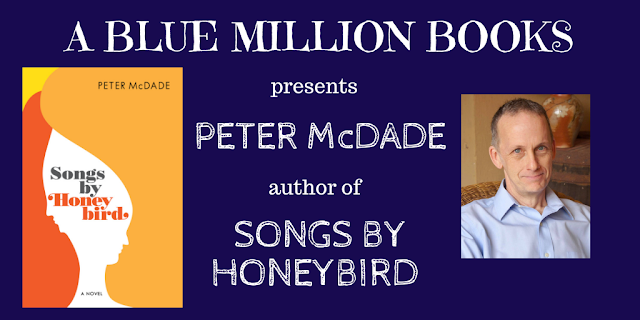
FEATURED AUTHOR: PETER McDADE


ABOUT THE BOOK


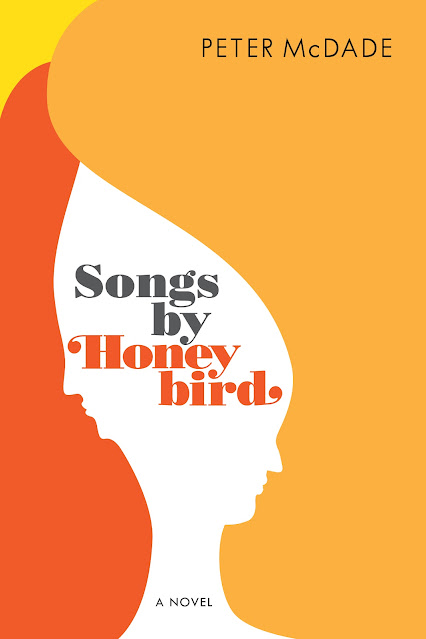
Atlanta couple Ben and Nina plan to move in together, but their relationship unravels when Ben dismisses Nina’s surprising claim that her dog can talk. Songs By Honeybird follows the pair as they move on without each other. Doctoral candidate Ben dives into research on the tragic story of Honeybird, the South’s first integrated rock band, while spiritual savant Nina searches for the elusive truth about her father’s death.

Will the buried secrets of the past bring Ben and Nina back together—or send them down entirely new paths?

Book Details

Title: Songs by Honeybird 

Author: Peter McDade

Genre: literary fiction

Publisher: Wampus Multimedia (March 29, 2022)

Print length: 341 pages


LOVE IT OR LEAVE IT WITH PETER McDADE


A few of your favorite things: my Technivorm coffee maker, my turntable, and my drum set.
Things you need to throw out: sheets and towels, sheets and towels. . . Live in the same house for 20 years and suddenly you have a closet of these things you think you will someday need? On the other hand, I am set if we suddenly wind up hosting 20 extra people for a few days.


Things you need in order to write: I was going to say “nothing particular,” but as I started to write that answer I realize I need to have my laptop. My third-grade teacher described my handwriting as “needing improvement,” and it's only gotten worse since then.
Things that hamper your writing: teenagers with sudden, impossible needs, and/or a sudden, inexplicable desire to fold those five loads of laundry I let pile up. 


Things you love about writing: creating characters. Finding a way to take the people wandering around my head and introducing them to the world is endlessly satisfying.
Things you hate about writing: it may sound like I'm lying, but there is little about the process I actually hate. I find first drafts harder than revision, but even then I don't hate it. Maybe it's because I've always enjoyed it, and have often turned to writing to escape things that are Not Fun. (Stuck in a biology class? Think up some story in your head about your fellow students. In the middle of an eight-hour drive on the way to your next gig? Return to that short story where people are running around doing things.) It also could be as simple as deciding to focus on things I enjoy doing, as I get older, and writing is high up on that list.


Things you love about where you live: walkability! We can walk to half a dozen good restaurants and (most crucially) a good coffee shop. The kids can also walk to all their schools.
Things that make you want to move: the summers can be hot, for sure, and winter tends to be dominated by grey and rainy days.

Things you never want to run out of: coffee, books, patience.
Things you wish you’d never bought: that fondue set we used once.

Favorite foods: oh, there are lots of foods I love—in fact, I'm a little wary of people who don't enjoy food and music and books. Baking projects have been given more time than usual recently, so off the top of my head I wonder, Can anything beat a homemade loaf of bread?
Things that make you want to throw up: anything whose key ingredient is mayonnaise.

Favorite music: I wouldn't even know where to start with this one. Music has been a central part of my daily existence for as long as I can remember, literally—from the early years, when I would swipe my sister's albums when she wasn't looking (Beatles, Queen, Heart), to this morning, when I cued up a Spotify playlist of new releases (Spoon, Lianne La Havas). In general, I tend to love most music with a strong melodic sense and an understanding of a groove
Music that make your ears bleed: I give my kids free reign of the car radio, but when Maroon 5 come on I deploy my veto power.

Favorite beverage: coffee.

Something that gives you a pickle face: I tried straight gin once. Once was enough.

Something you’re really good at: logistics. When our band first started touring and had no money for roadies, I was the one in charge of figuring out how to get places, and what we had to leave, and how we'd manage to do everything on a minimal budget. That translated well to getting toddlers out of the house more or less on time, usually with everything I needed in backpack.

Something you’re really bad at: dancing. Take my word for it.


Things you always put in your books: at some point someone is going to listen to, or play, music, and at some point people will sit down and have a big meal and talk a lot.

Things you never put in your books: detailed medical procedures. Oh, and so far no zombies, but let's see what the future holds.

Things to say to an author: “I still think about your book, and try to imagine what those characters did next.”

Things to say to an author if you want to be fictionally killed off in their next book: “You know, your book would have been much better if you had only x, y, and/or z.”

Favorite places you’ve been: Paris, Great Wall of China, Minneapolis.
Places you never want to go to again: Biloxi, 7th grade P.E.

Favorite things to do: play music in a room with other humans, sit around in our house with family on a lazy Sunday morning.

Things you’d run through a fire wearing gasoline pants to get out of doing: dangle from some scaffolding more than 20 feet in the air, 7th grade P.E.

Things that make you happy: listening/playing to music, reading/writing, running.

Things that drive you crazy: sitting in a slow-moving, crowded car on a highway with countless other slow-moving, crowded cars.

The last thing you did for the first time: I just put some cinnamon rolls in the oven, and have never tried making those before. Fingers crossed. 

Something you’ll never do again: have I mentioned 7th grade P.E. yet?


ABOUT THE AUTHOR  
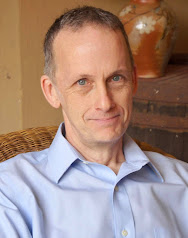

Peter McDade writes novels, teaches history, and plays the drums. After a childhood in New Jersey and years of touring the country with rock band Uncle Green, he has settled happily into domestic life in Atlanta.


Connect with Peter:

Website  |  Twitter  |  Goodreads


Buy the book:
Amazon


Sunday, March 20, 2022

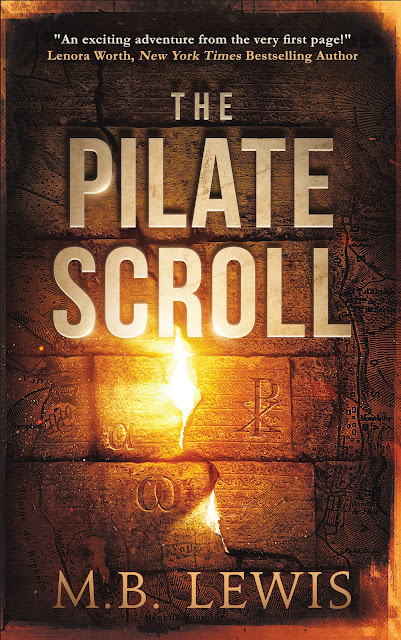
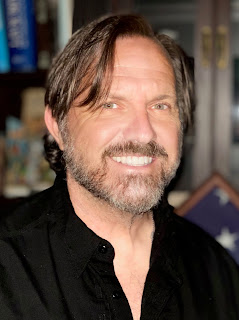
FEATURED AUTHOR: M.B. LEWIS


ABOUT THE BOOK


An artifact with untold power. An unlikely protector. Can she prevent the past from being used to destroy the future?

Kadie Jenkins lost her faith long ago. Traveling to Egypt as part of a research team battling a lethal virus, the talented scholar’s already weakened beliefs take a deadly dive when her colleague and mentor is murdered. With the man about to share a shocking finding before he met his demise, Kadie frantically gathers his papers… and barely escapes when the killer returns.

Fleeing by plane and forced into an emergency-landing in Israel, Kadie questions who in her group she can actually trust. And as the murderers close in, she’s stunned to discover they’re all hunting for an ancient relic that could change the course of history . . .

Will this headstrong academic lean on powers from above to keep the wicked from wreaking havoc on Earth?

The Pilate Scroll is a pulse-pounding Christian thriller. If you like complicated heroines, stunning twists, and divine light shining through the darkness, then you’ll love M.B. Lewis’s breakneck page-turner.


Book Details:

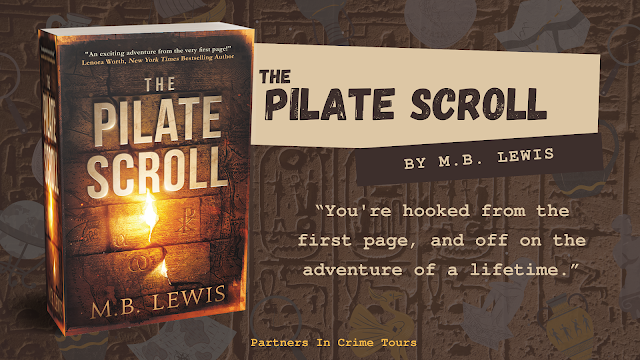
Title:The Pilate Scroll
Author: M.B. Lewis

Genre: Christian thriller

Publisher:  SATCOM Publishing (April 27, 2021)

Print length: 364 pages
The Jason Conrad Thriller Series


LOVE IT OR LEAVE IT WITH MB LEWIS


A few of your favorite things: new electronics.
Things you need to throw out: old electronics and incompatible power cords.


Things you need in order to write: coffee, coffee, and more coffee.
Things that hamper your writing: sleep.


Things you love about writing: the freedom to express ideas in an entertaining format.
Things you hate about writing: not enough hours in the day.

Easiest thing about being a writer: generating and organizing ideas.

Hardest thing about being a writer: marketing books.


Things you love about where you live: family close by, the beach, the people, the history.
Things that make you want to move: big crowds, lack of seasons, new surroundings.


Things you never want to run out of: ideas.
Things you wish you’d never bought: VHS tapes/DVDs.

Favorite foods: steak, pepperoni pizza, Buffalo wings.
Things that make you want to throw up: unfortunately, nothing.

Favorite beverage: water . . . followed closely by a nice Cabernet . . . 

Something that gives you a pickle face: pickles?

Something you’re really good at: flying airplanes.

Something you’re really bad at:  water skiing.


Something you wish you could do: play the piano.
Something you wish you’d never learned to do: there is some good in everything you learn whether you like it or not.

Things you always put in your books: characteristics of people I know.

Things you never put in your books: an exact replica of someone I know.

Things to say to an author: I left you a review!

Things to say to an author if you want to be fictionally killed off in their next book: I love your books, but I haven’t read any of them yet. (Yes, it happens)

Favorite places you’ve been: the Holy Land in Israel.

Places you never want to go to again: not that I don’t like Japan or Korea, but I’ve lived in Japan (Okinawa) and spent plenty of time in Korea. I’ve only got so much time left on this planet, I’d like to explore other places instead.

Favorite books: thrillers.

Books you would ban: well, banning books is not something I would promote, but there are age-inappropriate books that should be kept away from children.

Favorite things to do: fly, write, spend time with family.
Things you’d run through a fire wearing gasoline pants to get out of doing: pay income tax.

Most daring thing you’ve ever done: probably some of that combat stuff back in the day.

Something you chickened out from doing: talking about my first book in public as a new author. (Combat seemed like a better alternative.)


EXCERPT FROM THE PILATE SCROLL

Chapter 1

Port Said, Egypt
The Market District

Samuel Jacobson was a dead man. Or at least he thought so. His phone call had been erratic, anxious—almost in a panic.

“Brian, we have to go.” Kadie Jenkins stood and slid her iPhone back in the pocket of her tan 5.11 cargo pants. She grabbed her purse and rose from the table in the back of the tiny restaurant, dragging her nineteen-year-old brother out before they had a chance to order their dinner. The restaurant sat tucked between shops selling hookahs on one side and women’s clothes on the other. The aroma of fresh bread and grilled meats dissipated, replaced by the pungent scent of car exhaust and camel dung.

“It’s only a fifteen-minute walk back to the hotel,” Kadie said. “I bet we can make it in ten.”

Brian stumbled behind her as they hurried along dusty streets. They turned into the souk, or open-air market, the brick-laid section of the market that was pedestrian-only this time of night. While many of the shops had their “roll-up” metal security doors pulled down, the market bristled with life. 

Vendors waved items in their faces, children tugged on their pant legs, and beggars held their palms up hoping for a handout. Her eyes studied everyone who came close, gauging their intentions in a moment’s glance. She was one of only a few women in the market not wearing a hijab.

“Kadie slow down,” Brian said. His breathing came deep and awkward, despite being a regular participant in the Special Olympics.

“Sorry, Brian. We could get a cab at the other end of the market. But by the time we find one, describe our hotel, and negotiate a price, we could walk to the hotel.” While she relished the exercise, she worried her pace was too much for him. He was fit for a young man with Down syndrome, but she moved swiftly.

Their team had been in Egypt for almost three weeks. Starting in Cairo, the small group of seven from GDI, the Global Disease Initiative, had been scouring the city for clues to an ancient cure. Their quest had led them from the United States to Cairo, then to Port Said. Their four days here had not yet proven fruitful.

The goosebumps on her skin reminded her of Samuel’s phone call. His message was brief yet concise: his life was in danger because he knew what they were really searching for. What did he mean? Their team was one of four positioned across the Middle East in search of their goal. Now, for some reason, Samuel questioned what that was.

GDI had been contracted by the United States government to locate an ancient cure for an even older virus—the hantavirus. Kadie researched the topic before they left for Egypt. Rodents generally spread it, and this strain was a particularly virulent “Old World” virus that had proven resistant to modern medicine.

The Central Intelligence Agency learned that ISIS weaponized the hantavirus in aerosol form and planned to unleash it across the West. The virus was known at the CDC to cause hemorrhagic fever with renal syndrome. Initial symptoms include fever, chills, blurred vision, back and abdominal pain, and intense headaches known to bring a grown man to his knees. Later, those exposed would experience shock, low blood pressure, kidney failure, and vascular leakage—all in all, a nasty virus to thrust upon any population. The logistics involved in treating the virus were obvious.

The unique thing about the “Old World” hantavirus, was that it had predominantly appeared in Europe and Asia. GDI discovered that the virus had been eliminated in the Middle East, which was odd, as rodents were prevalent throughout the region.

Through one of their many connections, GDI learned of a legendary cure developed in ancient Israel around 30 A.D. The virus had a different name back then, but the symptoms were the same. The cure was a simple combination of plants and minerals. The formula was stored in a vase with Aramaic writing on the side and lay hidden for millennia. That was why she was here. Kadie was fluent in Latin, Greek, and Aramaic. The executive vice president for the Science and Technology Division of GDI had contacted her personally, telling her she was “uniquely qualified” for this job. Kadie was enthralled to join the team when the offer came.

Samuel was in his early sixties, and he and Kadie had struck up a friendship at the beginning of their journey. He became her mentor and father figure, occasionally giving her advice on what to do with her career. Samuel was the team’s expert on carbon dating. His equipment was state-of-the-art, but other than testing its functionality the day after they arrived, he hadn’t used it. So, what did he discover? What did he know that was worth killing for?

Halfway to the hotel, she mumbled something she shouldn’t have as she pulled out her phone and dialed. Her eyes darted toward her brother.

“Do not c-cuss,” Brian said between heavy breaths.

Brian. Her moral compass there to steer her back on course. She squeezed her brother’s hand. Brian always kept her grounded. What would she do when he was gone? But he was here now, and she needed to make sure he would be safe, something she had done for him since the day he was born.

“Sorry, Brian. I just remembered I need to call Curt. He’s probably on his way to the restaurant to meet us.”

“He is probably s-still wor—king.” Brian’s eyes darted back and forth. His speech impediment that made his ‘r’s sometimes sound like ‘w’s wasn’t nearly as bad as it was when he was younger, and his stutter only showed up when he was nervous.

Kadie grimaced. Curt didn’t answer his phone. He was GDI’s security man and the only full-time employee on their team. Kadie left a message, telling him she was sorry, but she had to leave the restaurant. They’d talk later.

Next, she called Samuel. He didn’t answer either. She slipped her phone back in her cargo pocket and glanced at her brother. He was doing all he could to keep up with Kadie and avoid the distractions of the numerous shops in the marketplace. Gasping, his jaw jutted forward, brow furrowed, and his eyes bulged. He had been reluctant to leave the restaurant; he must be starving. She had to plead with him to get him to budge.

“We did not stay—for food. I am hungry,” Brian said.

“I know. I’m sorry. I am, too.” Her eyes darted back and forth in search of something they could eat. A few moments later she smiled. Near the end of the market, a vendor baked and sold bread. They stopped next to the giant metal oven that extended back into a yellowing mud-brick building. The bread rolled out of the front like doughnuts at Krispy Kreme, and two men placed the warm food on a rack woven out of sticks to cool. Her limited vocabulary in conversational Arabic helped her in situations like this. Kadie bought two loaves of Aish Baladi, an Egyptian flatbread made with whole wheat flour, similar to a pita. Handing the bag of bread to Brian, they continued on their way.

The dust of the market peeled away as they rounded the corner, and their hotel came into sight. Well-lit against the black sky, it sat on the edge of the water where the Suez Canal merged into the Mediterranean Sea. An outdoor restaurant sat to her left; the numerous tables had their umbrellas open, lit candles centered on each table. To her right, a small mosque lay nestled amongst other buildings. This street was far less crowded than the souk.

“What do you think about Curt?” Her chestnut-brown hair bounced as she slowed her pace so Brian could keep up. She needed a conversation to take her mind off Samuel.

“He is okay.” Brian looked away when he answered. Kadie knew what that meant. Brian’s instincts on people were spot on, and he wasn’t very fond of Curt. She wasn’t sure why; she was still trying to figure him out herself. Curt was a few years older than her. He was handsome, dashing, and brave—former Delta Force. There was something to be said for that.

They entered the newly renovated hotel, leaving the Third World atmosphere behind them. Kadie sighed as they weaved through the crowded lobby and lumbered up the stairs to their room on the second floor. She dropped Brian off in their room before she went to check on Samuel.

“Don’t leave,” she said. “I’ll be back in a minute.”

“Okay.” Brian moved to the couch and pressed the big green button on the television remote.

Kadie closed the door; the hairs on the back of her neck bristled, and her heartbeat raced higher than usual. She hurried down the hall to Samuel’s room. Inside, she heard a loud crash and the sound of something hitting the wall, followed by a solid thud.

That’s not good, she thought.

Kadie tried the door handle. Locked. She pulled a small FOB out of her pocket. It was called a Gomer, a new device that opened almost any electronic lock. It had wreaked havoc on the hotel industry, but she had picked one up back in the States knowing she’d be living in hotels abroad for three months.

She was hesitant to use it. She shouldn’t just barge into his room. Then came a second thud, followed by a muffled cry.

Kadie swiped the FOB across the lock and pushed hard against the door. The door cracked open about two inches and abruptly stopped; the chain secured on the inside.

“Samuel?” She peered through the gap; a body lay on the floor. Oh my, he’s had a heart attack. Kadie lowered her shoulder and bulldozed the door. It started to give way. On the second try, the chain burst free from the wall and the door flew open.

Kadie gasped. In the center of the room, a large man stood over Samuel’s body, wearing a faded brown futa, the traditional Yemini male shirt, and black pants. A black keffiyeh covered his face, with only his eyes exposed.

The man stood over Samuel, the bloody knife in his hand dripping on the floor.

***

Excerpt from The Pilate Scroll by M.B. Lewis.  Copyright 2022 by Michael Byars Lewis. Reproduced with permission from Michael Byars Lewis. All rights reserved.


ABOUT THE AUTHOR 

M.B. Lewis is an Amazon #1 International Bestselling Author (as Michael Byars Lewis), and his books have also been on the Bestseller lists on Barnes and Noble Nook and Kobo platforms. The author of the award-winning Jason Conrad Thriller series has been on numerous author panels at writer’s conferences such as Thrillerfest, The Louisiana Book Festival, The Pensacola Book and Writers Festival, and Killer Nashville.

A 25-year Air Force pilot, he has flown special operations combat missions in Bosnia, Iraq, and Afghanistan in the AC-130U Spooky Gunship. Michael is currently a pilot for a major U.S. airline.

A proud Christian active in his community, Michael has mentored college students on leadership development and team building and is a facilitator for an international leadership training program. He has participated as a buddy for the Tim Tebow Foundation’s “Night to Shine” and in his church’s Military Ministry program. Michael has also teamed with the Air Commando Foundation, which supports Air Commando’s and their families’ unmet needs during critical times.

While his adventures have led to travels all around the world, Michael lives in Florida with his wife Kim.


Connect with the author:


Website  Facebook  |  Goodreads  |  Book trailer 


Buy the book:
Amazon  


Tuesday, March 15, 2022

FEATURED AUTHOR: SUSAN OUELLETTE


ABOUT THE BOOK


Revenge knows no deadline.

Although told to stand down now that the Chechen rebel who killed her fiancé is dead, CIA analyst Maggie Jenkins believes otherwise and goes rogue to track down the assassin. Soon it becomes clear that failure to find Zara will have repercussions far beyond the personal, as Maggie uncovers plans for a horrific attack on innocent Americans. Zara is the new face of terrorism-someone who doesn't fit the profile, who can slip undetected from attack to attack, and who's intent on pursuing a personal vendetta at any cost.

Chasing Zara from Russia to the war-torn streets of Chechnya, to London, and finally, to the suburbs of Washington, D.C., Maggie risks her life to stop a deadly plot.

Book Details:

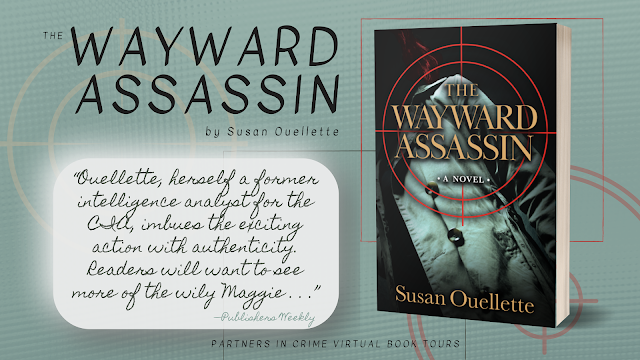
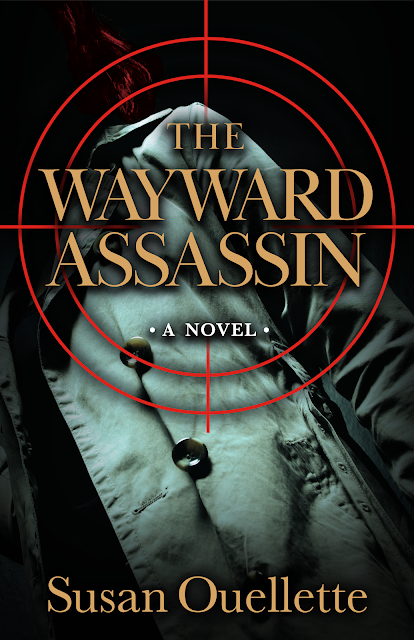
Title: The Wayward Assassin

Author: Susan Ouellette

Genre: spy thriller

Series: The Maggie Jenkins Wayward Series

Publisher: CamCat Books (March 15, 2022)

Print length: 371 pages


LOVE IT OR LEAVE IT WITH SUSAN OUELLETTE


A few of your favorite things: Coffee, fuzzy socks, a good workout, and my chickens.
Things you need to throw out: Old files (I keep everything!) and clothes I keep “just in case.” 


Things you need in order to write: my laptop, earbuds (so I can listen to white noise in order to drown out distractions), coffee/tea/soda/water so I don’t die of dehydration (or find an excuse to pop up every 20 minutes to get something to drink).
Things that hamper your writing: distractions including texts, social media, noise, conversation, and the cat begging to go outside/come inside every five minutes.


Things you love about writing: it is the only thing I do where I completely lose track of time. Sometimes I look up from the keyboard and hours have gone by like minutes.
Things you hate about writing: when I don’t know what is going to happen next in the story. It’s usually a fleeting sense of panic, but every time, I think, “Oh, no. Writer’s block!”

Things you love about where you live: I live on a farm with a lot of privacy and beautiful views. It’s very serene.
Things that make you want to move: I love the ocean, so moving closer to the coast is very appealing.

Favorite foods: any and all pasta.
Things that make you want to throw up: mushrooms, coconut, mayonnaise, shellfish.

Favorite beverage: coffee in the morning, wine in the evening.

Something that gives you a pickle face: whiskey.

Favorite smell: honeysuckle.

Something that makes you hold your nose: boiled lobster.

Things you’d walk a mile for: coffee.
Things that make you want to run screaming from the room: fingers on a chalkboard (do they make chalkboards anymore?).

Things to say to an author: Congratulations on finishing your book!

Things to say to an author if you want to be fictionally killed off in their next book: You should name a character after me.


EXCERPT FROM THE WAYWARD ASSASSIN


CHAPTER ONE

CIA Headquarters, August 16, 2004

Maggie Jenkins strode across the parking lot to the sidewalk that led her past the “Bubble,” the CIA’s white, dome-shaped auditorium. Just ahead, she paused at the bronze statue of Nathan Hale, the first American to be executed for spying for his country. A half dozen quarters lay scattered at his feet, left there by superstitious CIA employees hoping to garner good luck before deploying overseas. She fished around in her purse for a quarter, which she placed carefully atop Hale’s left shoe.

In just a few minutes, Maggie would learn whether her six-month deployment to the US embassy in Moscow had been approved. Even though Warner Thompson, the CIA’s deputy director for operations, had advocated on her behalf, there were several others, including an Agency psychiatrist and a team of polygraphers who were not convinced that she should be stationed overseas. She’s not ready yet, the shrink had opined, as if she were a piece of fruit not quite ripe enough for picking.

“Wish me luck,” she said to the statue as she turned for the entrance ahead. The CIA’s headquarters comprised two main buildings, both seven stories high, which were linked together by bright hallways with large windows overlooking a grassy courtyard. Maggie worked in the original headquarters building (OHB), which had been built some forty years earlier during the height of the Cold War. From the outside, OHB was a concrete monstrosity with no aesthetically redeeming value, at least in Maggie’s opinion. It reminded her of Soviet architecture—heavy on the concrete, light on the beauty.

And other than the expansive marbled foyer and the posh seventh-floor executive offices, OHB’s interior also was nothing to write home about. Every floor between the first and the seventh looked exactly the same—drab, hushed, windowless hallways lined with vault doors. Behind those heavily fortified doors sat rows of cubicles, a few conference rooms, and cramped offices here and there for mid-level managers.

Maggie pulled open the heavy glass entry door and ducked into a pristine lobby gleaming with white marble-clad walls. Ahead, the Agency’s bright blue logo covered a massive swath of the gray-and-white checked granite floor. To the right stood the Memorial Wall, which was emblazoned with black stars honoring dozens of Agency officers who’d perished in the line of duty. Maggie stopped and bit down on her lip.

The wall was an awesome, solemn reminder of lives given in the defense of freedom. Every time she walked past it, the sharp points of the eighty-fourth star—Steve’s star—ripped another gash in her heart. He’d been working under cover, so no outside friends or relatives had been invited to the ceremony. Warner had sat with her, stoic, as she clutched his hand and stared at the parade of speakers, not hearing a word they said.

She turned her gaze from the wall, slid her badge through the security turnstile, and offered a polite hello to the officer manning the front desk. She bypassed the elevator that she took every day to the fourth floor and made a beeline for the spacious employee cafeteria. In the far corner sat Warner Thompson, nose buried in the Washington Post.

“Morning,” she offered.

Warner rattled the paper and folded it lengthwise. “Coffee?” He pushed a Styrofoam cup across the quartz tabletop and smiled at her. His full head of hair had grayed considerably since last year, but it worked on him, enhancing his gray-flecked eyes and tanned complexion.

“Thanks.” Maggie sat.

“You ready?”

“I guess.” She sipped the coffee, still piping hot and perfectly sweetened. Warner knew her well. “What do you think they’ll say?”

“There’s no reason they should deny you the posting.”

“The psychiatrist thinks I’m obsessed with Zara.”

“He has a point.” Warner leaned forward, elbows on the table. “I told you not to bring her up in your evaluation sessions. If she’s still alive, we’ll find her, Maggie. I promise.”

“There’s no ‘if’ about it.” She waited until a man with a breakfast tray settled at a nearby table, then lowered her voice. “I saw her fleeing the farmhouse in Georgia. Who do they think set fire to the place after I escaped with Peter?”

Warner winced, obviously uncomfortable with the reminder of Peter, his former case officer, the one who’d been intimately involved in the murder of Steve, another case officer, and his protĂ©gĂ©, nine short months ago. That Steve also had been Maggie’s fiancĂ© made saying what he had to say all the more difficult. “The point is, the Agency needs to think that you’ve moved on from what happened in Georgia before they send you to such a sensitive overseas posting.”

“Moved on? Warner—”

He raised a hand to stop her. They’d had this discussion dozens of times since the previous November. Maggie had made it perfectly clear that there was no moving on, no closure, as people said these days, until she found Zara. “You know what I mean. You have to toe the party line and say you believe that everyone involved in Steve’s murder is dead. Period.”

“I still don’t understand why they won’t at least consider the possibility that Zara got away.”

Warner rubbed his forehead. “Because the Agency wants this to go away. A star operations officer was murdered by a terrorist and the terrorist is dead. It’s a simple, straightforward narrative. They don’t want the press finding out that another Agency employee and a senior US congressman were involved in Steve’s death. Everything is about the war on terror, Maggie. If the media found out that CIA and elected officials were mixed up with terrorists, there would be hell to pay.”

Maggie quoted the Biblical phrase inscribed on a wall in the CIA’s lobby. “The truth shall make you free.” She snorted. “The truth, unless it’s too embarrassing?”

Warner exhaled and shifted in his seat. “Both of us are lucky that the FBI investigation didn’t uncover . . . everything.”

He was right, of course. Last year, Maggie had destroyed classified documents and withheld other evidence from the FBI to protect them both. And Warner had been entangled, albeit unwittingly, with a Russian who had ties to both Zara and the congressman. Had the FBI known any of this, neither of them would be CIA employees today.

Maggie waved to a coworker who stared from the nearby coffee station. Warner didn’t frequent the employee cafeteria, so his appearance was sure to raise eyebrows. She’d grown accustomed to sidelong glances inside the Agency’s walls. Everyone recognized her. The media had splashed her face all over television and the internet after Congressman Carvelli’s death. There were some who whispered about her using her fiancĂ©’s death to advance her career. Fortunately, they were in the minority. Most who knew about her role in uncovering the terrorist plot considered her a hero, a designation she refused to embrace. Her actions may have saved thousands of lives, but her motivation had been personal—to clear Steve’s name.

He was no traitor, and she’d proven it.

Maggie glanced at her watch. “We’d better go.”

Warner nodded. They grabbed their coffees and headed for the elevator bank. “Remember, you believe Zara died in the fire at the farmhouse,” Warner reminded her on the way up to the fourth floor.

“That’s what I told the shrink last session, but then he talked to the polygraph people.” Since leaving the House Intelligence Committee to return to the CIA earlier this year, she’d endured three marathon polygraph sessions. Every time, the stupid machine registered deception in her response to questions about whether she intended to violate government policies for her own benefit. “Now he thinks I’m up to something.”

Warner shrugged. “Aren’t you?”

Maggie laughed despite herself. “Always.”

***

Excerpt from The Wayward Assassin by Susan Ouellette.  Copyright 2022 by Susan Ouellette. Reproduced with permission from CamCat Books. All rights reserved.


ABOUT THE AUTHOR  


Susan Ouellette is the author of The Wayward Spy (Camcat Books, 2021), winner of the Independent Publisher Book Award Gold Medal for Suspense/Thriller and a 2021 “Top 12 Book of the Year'' (“The Strand Magazine”). The sequel, The Wayward Assassin, launched March 15, 2022. The third book in the series, The Wayward Target, will be released in the spring of 2023. Ouellette’s books draw heavily on her academic studies of international relations and Russian language and culture at both Harvard University and Boston University. As the Soviet Union teetered on the edge of collapse, she worked as an intelligence analyst at the CIA, where she earned a commendation for her work done during the failed 1991 Soviet coup. Subsequently, Ouellette worked on Capitol Hill as a professional staff member for the House Permanent Select Committee on Intelligence (HPSCI). There, she participated in several overseas staff and congressional delegations focused on intelligence cooperation with allies and classified operations against adversaries. She later worked as a government contractor and freelance researcher, analyzing terrorism and weapons of mass destruction. 


Connect with Susan:
Website  Blog  |  Facebook Twitter  |  Goodreads  |  Book trailer

Buy the book:
Amazon  Barnes & Noble


Saturday, March 12, 2022

FEATURED AUTHOR: JON LAND


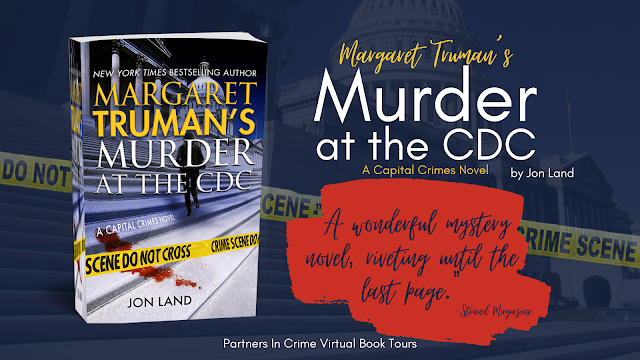
ABOUT THE BOOK


2017: A military transport on a secret run to dispose of its deadly contents vanishes without a trace.


The present: A mass shooting on the steps of the Capitol nearly claims the life of Robert Brixton’s grandson.


No stranger to high-stakes investigations, Brixton embarks on a trail to uncover the motive behind the shooting. On the way he finds himself probing the attempted murder of the daughter his best friend, who works at the Washington offices of the CDC.


The connection between the mass shooting and Alexandra’s poisoning lies in that long-lost military transport that has been recovered by forces determined to change America forever. Those forces are led by radical separatist leader Deacon Frank Wilhyte, whose goal is nothing short of bringing on a second Civil War.

Brixton joins forces with Kelly Lofton, a former Baltimore homicide detective. She has her own reasons for wanting to find the truth behind the shooting on the Capitol steps, and is the only person with the direct knowledge Brixton needs. But chasing the truth places them in the cross-hairs of both Wilhyte’s legions and his Washington enablers.

Book Details:

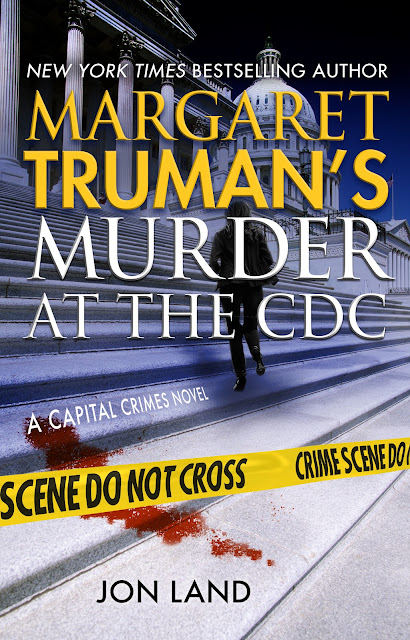
Title: Murder at the CDC

Author’s name: Jon Land

Genre: political thriller

Series: Capital Crimes

Publisher: Forge Books (February 15, 2022)

Print length: 304 pages


LOVE IT OR LEAVE IT WITH JON LAND


A few of your favorite things: working out, writing, reading, movies, TV, friends, Brown University football.
Things you need to throw out: my old way of thinking.


Things you need in order to write: a great story to tell, a room, a light and a computer.
Things that hamper your writing: distractions, emails, and phone calls.


Things you love about writing: the process and the freedom.
Things you hate about writing: making a consistent living.

Easiest thing about being a writer: telling people that’s what I am.

Hardest thing about being a writer: making a living.


Things you love about where you live: the non-extreme climate, the ocean, the convenience, the comfort, and the friends who surround me.
Things that make you want to move: to another country if Donald Trump wins in 2024.


Things you never want to run out of: ideas, ambition and passion.
Things you wish you’d never bought: the clothes I never wear.


Words that describe you: loyal, empathetic, reliable, ambitious, passionate, compromising, consensus builder.
Words that describe you but you wish they didn’t: obstinate, opinionated, outspoken, unyielding.

Favorite foods: steak, chicken, sword fish, lobster, salmon.
Things that make you want to throw up: lima beans, cauliflower, sushi.

Favorite music: 70’s and 80’s pop.
Music that make your ears bleed: Rap.

Favorite beverage: iced tea.

Something that gives you a pickle face: scotch or bourbon.

Favorite smell: fresh linen air freshener.

Something that makes you hold your nose: Polo by Ralph Lauren.

Something you’re really good at: telling a great story.

Something you’re really bad at: selling enough books.


Something you wish you could do: not worry about my finances.
Something you wish you’d never learned to do: ballroom dancing as a kid.

Something you like to do: working out.

Something you wish you’d never done: staying with Random House instead of moving to Warner Books.

People you consider as heroes:
Barack Obama.

People with a big L on their foreheads:
Donald Trump and anyone who supports him.


Last best thing you ate: a hamburger.

Last thing you regret eating: a TV dinner.

Things you’d walk a mile for: pick up a check, see a Brown football game, or go to the beach in summer.
Things that make you want to run screaming from the room: assholes.

Things you always put in your books: pace, suspense, twists, short chapters, cliffhangers, characters I love.
Things you never put in your books: sex.

Things to say to an author: I love your books.

Things to say to an author if you want to be fictionally killed off in their next book: Can I have a copy?

Favorite places you’ve been: it’s not where you go, it’s who you’re with.

Places you never want to go to again: anywhere outside the United States.

Favorite books: thrillers.

Books you would ban: not a single one.

People you’d like to invite to dinner: my friends
.
People you’d cancel dinner on: Republicans (unless they’re my friends).

Favorite things to do: write, work out, read, watch TV, go to the movies.

Things you’d run through a fire wearing gasoline pants to get out of doing: being somebody’s date for a wedding where I don’t know anybody else.

Things that make you happy: writing the perfect line, getting a great review, seeing my book in print for the first time, closing a deal.

Things that drive you crazy: when people don’t see things the same way I do.

Proudest moment: the day my first book was published.

Most embarrassing moment: telling someone who’d had both legs amputated to put their dancing shoes on.

Biggest lie you’ve ever told: I’m a New York Times bestselling author.

A lie you wish you’d told: I’m a multiple New York Times bestselling author.

Best thing you’ve ever done: being true to myself and my ideals.

Biggest mistake: believing in people who are full of shit.

Most daring thing you’ve ever done: became a writer.

Something you chickened out from doing: going to Fort Bragg to complete training for the Special Forces Reserves.

The last thing you did for the first time: wrote a song.

Something you’ll never do again: write a song.


EXCERPT FROM MURDER AT THE CDC

PROLOGUE

December, 2016

The tanker lumbered through the night, headlights cutting a thin swath out of the storm raging around it.


“I can’t raise them, sir,” said Corporal Larry Kleinhurst, walkie-talkie still pressed tight against his ear.

    “Try again,” Captain Frank Hall said from the wheel.

    “Red Dog Two, this is Red Dog One, do you read me? Repeat, do you read me?”

    No voice greeted him in response.

    Kleinhurst pressed the walkie-talkie tighter. “Red Dog Three, this is Red Dog One, do you read me? Repeat, do you read me?”

    Nothing again.

    Kleinhurst lowered the walkie-talkie, as if to inspect it. “What’s the range on these things?”

    “Couple miles, maybe a little less in this slop.”

    “How’d we lose both our lead and follow teams?”

    Hall remained silent in the driver’s seat, squeezing the steering wheel tighter. Procedure dictated that they rotate the driving duties in two-hour shifts, this one being the last before they reached their destination.

    “We must be off the route, must have followed the wrong turn-off,” Kleinhurst said, squinting into the black void around them.

    Hall snapped a look the corporal’s way. “Or the security teams did,” he said defensively.

    “Both of them?” And when Hall failed to respond, he continued, “Unless somebody took them out.”

    “Give it a rest, Corporal.”

    “We could be headed straight for an ambush.”

    “Or I fucked up and took the wrong turn-off. That’s what you’re saying.”

    “I’m saying we could be lost, sir,” Kleinhurst told him, leaving it there.

    He strained to see through the big truck’s windshield. They had left the Tooele Army Depot in Tooele County, Utah right on schedule at four o’clock pm for the twelve-hour journey to Umatilla, Oregon which housed the Umatilla Chemical Depot, destination of whatever they were hauling in the tanker. The actual final resting place of those contents, Kleinhurst knew, was actually the Umatilla Chemical Agent Disposal Facility located on the depot’s grounds, about which rumors ran rampant. He’d never spoken to anyone who’d actually seen its inner workings, but the tales of what had already been disposed of there was enough to make his skin crawl, weapons that could wipe out the world’s population several times over.

    Which told Kleinhurst all he needed to know about whatever it was they were hauling, now without any security escort.

    “We’re following the map, Corporal,” Hall said from behind the wheel, as if needing to explain himself further, a nervous edge creeping into his voice.

    He kept playing with the lights in search of a beam level that could better reveal what lay ahead. But the storm gave little back, continuing to intensify the further they drew into the night. Mapping out a route the old-fashioned way might have been primitive by today’s standards, but procedure dictated they avoid the likes of Waze and Google Maps out of fear anything web-based could be hacked to the point where they might be rerouted to where potential hijackers were lying in wait.

    Another thump atop the ragged, unpaved road shook Hall and Kleinhurst in their seats. They had barely settled back down when a heftier jolt jarred the rig mightily to the left. Hall managed to right it with a hard twist of the wheel that squeezed the blood from his hands.

    “Captain . . .”

    “This is the route they gave us, Corporal.”

    Kleinhurst laid the map between them. “Not if I’m reading this right. With all due respect, sir, I believe we should turn back.”

    Hall cast him a condescending stare. “This your first Red Dog run, son?”

    “Yes, sir, it is.”

    “When you’re hauling a shipment like what we got, you don’t turn back, no matter what. When they call us, it’s because they never want to see whatever we’re carrying again.”

    With good reason, Kleinhurst thought. Among the initial chemicals stored at Umatilla, and the first to be destroyed at the chemical agent disposal facility housed there, were containers of GB and VX nerve agents, along with HD blister agent. The Tooele Army Depot, where their drive had originated, meanwhile, served as a storage site for war reserve and training munitions, supposedly devoted to conventional ordnance. In point of fact, the military also stored nonconventional munitions there in secret, a kind of way station for chemical weapons deemed too dangerous to store anywhere else.

    The normal route from Tooele to Umatilla would have taken just over ten hours via I-84 west. But a Red Dog run required a different route entirely off the main roads in order to avoid population centers. The point was to steer clear of anywhere people resided to avoid the kind of attention an accident or spill would have otherwise caused, necessitating a much more winding route Hall and Kleinhurst hadn’t been given until moments prior to their departure. A helicopter had accompanied them through the first stages of the drive, chased away when a mountain storm the forecasts had made no mention of whipped up out of nowhere and caught the convoy in its grasp. Now two-thirds of that convoy had dropped off the map, leaving the tanker alone, unsecured, and exposed, deadly contents and all.

    Kleinhurst’s mouth was so dry, he could barely swallow. “What exactly are we carrying, sir?”

    Hall smirked. “If I knew the answer to that, I wouldn’t be driving this rig.”

    Kleinhurst’s eyes darted to the radio. “What about calling in?”

    “We’re past the point of no return. That means radio silence, soldier. They don’t hear a peep from us until we get where we’re going.”

    Kleinhurst watched the rig’s wipers slap at the pelting rain collecting on the windshield, only to have a fresh layer form the instant they had completed their sweep. “Even in an emergency? Even if we lost our escorts miles back in this slop?”

    “Let me give it to you straight,” Hall snapped, a sharper edge entering his voice. “The stuff we’re hauling in this tanker doesn’t exist. That means we don’t exist. That means we talk to nobody. Got it?”

    “Yes, sir,” Kleinhurst sighed.

    “Good,” said Hall. “We get where we’re supposed to go and figure things out from there. But right now . . .” His voice drifted, as he stole a glance at the map.

    Suddenly Kleinhurst lurched forward, straining the bonds of his shoulder harness to peer through the windshield. “Jesus Christ, up there straight ahead!”

    “What?”

    “Look!”

    “At what?”

    “Can’t you see it?”

    “I can’t see shit through this muck, Corporal.”

    “Slow down.”

    Hall stubbornly held to his speed.

    “Slow down, for God’s sake. Can’t you see it?”

    “I can’t see a thing!”

    “That’s it, like the world before us is gone. You need to stop!”

    Hall hit the brakes and the rig’s tires locked up, sending the tanker into a vicious skid across the road. He tried to work the steering wheel, but it fought him every inch of the way, turning the skid into a spin through an empty wave of darkness.

    “There!” Kleinhurst screamed.

    “What in God’s name,” Hall rasped, still fighting to steer when a mouth opened out of the storm like a vast maw.

He desperately worked the brake and the clutch, trying to regain control. He’d been out in hurricanes, tornados, even earthquakes. None of those, though, compared to the sense of airlessness both he and Kleinhurst felt around them, almost as if they were floating over a massive vacuum that was sucking them downward. He’d done his share of parachute jumps for his airborne training and the sensation was eerily akin to those first few moments in freefall before the chute deployed. He remembered the sense of not so much being unable to breathe, as being trapped between breaths for an absurdly long moment.

The rig’s nose pitched downward, everything in the cab sent rattling. The dashboard lights flickered and died, the world beyond lost to darkness as the tanker dropped into oblivion.

    And then there was nothing.

CHAPTER 1

“The hand of God is upon You! He is my shepherd and I shall not want!”

    Those were the last words high school sophomore Ben McDonald heard before the shooting started. He and the other students clustered around him from the Gilman School in Maryland were on a school field trip to the Capitol Building from their Baltimore prep school, the first such trip taken since academic life returned to a degree of normalcy following the endless coronavirus nightmare. Everyone had shown up in their school uniforms, the buses had left on schedule, and the students felt like pioneers, explorers blazing a trail back into the world beyond shutdowns and social distancing.

    The reduction in Capitol tour group size was still in force and had necessitated the two bus-loads of students to be divided into five groups of fifteen, give or take, three chaperones allotted to each. Ben and his twin brother Robbie’s group had gone first and they had found themselves lingering on the Capitol steps, taking pictures and chatting away with their local congressman and senator who’d come out to greet and mingle with the students on the steps at the building’s east front.

    “Why are you still wearing a mask?” one of them had asked the congressman, but Ben had already forgotten the answer.

    He remembered checking the time on his phone just before he heard the first shots. Ben thought they were firecrackers at first, realizing the truth a breath later when the screams began and bodies started flying.

    “I am doing the Lord’s work! I am a sacrifice to his word!”

    Somehow Ben gleaned those words through the screams and incessant hail of fire. The shots were coming so fast he wasn’t sure if the shooter was firing on semi or full auto. The boy never actually saw him as more than a shape amid the blur before him, enveloping his vision like a dull haze. The thin sheer curtain drawn over his eyes didn’t keep him from recording bodies crumpling, keeling over, tumbling down the steps. The force of a bullet’s momentum slammed a classmate into him, sparing Ben the ensuing fusillade that turned the other boy’s back into a pin cushion.

    My brother!

    The panic and shock of those initial seconds had stolen thought of Robbie from him. He wheeled about, covered in the blood of boy who had dropped off the scene.

    “Robbie!”

    Did he cry out his name or only think it? The steps around him looked blanketed in khaki and blue, pants and blazers that made up his Gilman uniform. The sound of gunfire continued to resound in his ears, but he wasn’t sure the shooter was still firing because no more bodies seemed to be falling. People were running in all directions, crying and screaming, Ben remaining frozen out of fear for his brother.

    “Robbie!”

    He saw his brother’s sandy blond hair draped down from one of the marble steps onto another. Nothing else at first, just the hair. Maybe he had dove atop a friend who’d been wounded to spare that kid more fire—that was Robbie. But there was no one beneath Him, and . . . And . . .

    He wasn’t moving, his arms stretched to the sides on angles that looked all wrong. Ben dropped to his knees next to Robbie, his pants sinking into pooling patches of blood which merged and thickened beneath him. He felt something pinching him along right side of his ribcage and saw his blue shirt darkening with a spreading wave of red in the last moment before he collapsed next to his brother.

***

Excerpt from MURDER AT THE CDC by Jon Land.  Copyright 2022 by Jon Land. Reproduced with permission from Jon Land. All rights reserved.


ABOUT THE AUTHOR 


Jon Land is the USA Today bestselling author of fifty-eight books, including eleven in the critically acclaimed Texas Ranger Caitlin Strong series, the most recent of which, Strong from the Heart, won the 2020 American Fiction Award for Best Thriller and the 2020 American Book Fest Award for Best Mystery/Suspense Novel. Additionally, he has teamed up with Heather Graham for a science fiction series that began with The Rising (winner of the 2017 International Book Award for best Sci-fi Novel) and continues with Blood Moon, to be published in November of 2022. He has also written six books in the Murder, She Wrote series of mysteries and has more recently taken over Margaret Truman's Capital Crimes series, with his second effort, Murder At The CDC, published in February of 2022. Jon is known as well for writing the film Dirty Deeds, a teen comedy starring Milo Ventimiglia and Zoe Saldana, which was released in 2005. A graduate of Brown University, he received the 2019 Rhode Island Authors Legacy Award for his lifetime of literary achievements.


Connect with Jon:
Website Facebook Twitter 

Buy the book:
Amazon


Tuesday, February 22, 2022

FEATURED AUTHOR: J.Q. ROSE


ABOUT THE BOOK


In 1975, budding entrepreneurs Ted and Janet purchase a floral shop and greenhouses where they plan to grow their dream.


Leaving friends and family behind in Illinois and losing the security of two paychecks, they transplant themselves, their one-year-old daughter, and all their belongings to Fremont, Michigan, where they know no one.


Will the retiring business owners nurture Ted and Janet as they struggle to develop a blooming business, or will they desert the inexperienced, young couple to wither and die in their new environment?


Most of all, can Ted and Janet grow together as they cultivate a loving marriage, juggle parenting with work, and root a thriving business?


Follow their inspiring story, filled with joy and triumphs and obstacles and failures experienced as they travel along the turbulent path of turning dreams into reality.


Book Details 

Title: Arranging a Dream: A Memoir

Author: J.Q. Rose

Genre: memoir
Publisher:  BWL Publishing (January 1, 2021)

Print length: 267 pages


LOVE IT OR LEAVE IT WITH J.Q. ROSE


A few of your favorite things: perusing our family photos taken when our kids and grandkids were little to today, my kindle, our newly renovated kitchen.

Things you need to throw out: delete blurry, ugly photos on my cell phone, the expired items in my bathroom medicine cabinet, old files on my computer.

Things you need in order to write: a cup of tea, my blue light glasses, M&M candies.

Things that hamper your writing: a beautiful day, malfunctioning laptop, Facebook scrolling.

Things you love about writing: when the words flow on the page to create delightful word pictures, my granddaughter thinking I’m “famous,” opportunities to meet so many caring and sharing authors and bloggers, discovering new-to-me words, buying more books to read and having the excuse that they are for my writing business.

Things you hate about writing: fishing for that elusive word in an ocean filled with possibilities, the wonder of where to place or not place commas, the isolation in order to get the work done.

Easiest thing about being a writer: blogging, creating graphics and book covers using canva.com, utilizing Grammarly for editing.
Hardest thing about being a writer: marketing, marketing, marketing.

Things you love about where you live: in Michigan I love the lakes, charming towns along Lake Michigan and fruit orchards, in Florida the lush foliage, flowers and fresh vegetables in the winter, socializing with friends with no threat of driving on  icy roads or snowstorms.
Things that make you want to move: the desire to experience new places and people, snowstorms, and hurricanes.

Things you never want to run out of: energy, thirst for learning, printer ink.

Things you wish you’d never bought: that ugly swimsuit, an electric pressure cooker,  books that did not hold my interest.

Favorite foods: pineapple upside down cake, anything chocolate, pot roast with potatoes and carrots, Wendy’s Frosties (soft ice cream).

Things that make you want to throw up: beef tongue boiling in a pot, sewer odor, blood sausage.

Favorite music: Celine Dion and Whitney Houston songs.

Music that make your ears bleed: rap and heavy metal, some karaoke performances.

Favorite beverage: Constant Comment tea brewed in the Christmas teapot my mother gave me for Christmas 52 years ago.

Something that gives you a pickle face: sour Skittles candy.

Favorite smell: roses.

Something that makes you hold your nose: ammonia.

Something you wish you could do: play a piano concert at Carnegie Hall.

Something you wish you’d never learned to do: laundry.

Things you always put in your books: always some good in a bad villain.
Things you never put in your books: open-door bedroom scenes, dirty language.

Things to say to an author: I couldn’t stop reading your book.

Things to say to an author if you want to be fictionally killed off in their next book: Your punctuation and spelling needs to more work.

Favorite places you’ve been: Mackinac Island in Michigan, driving through the Rocky mountains in Canada in autumn.

Places you never want to go to again: London, England.

Favorite things to do: play Pegs and Jokers board games, watch the sunsets both in Michigan and Florida,  travel to a place I have always heard about e.g., the Grand Canyon.

Things you’d run through a fire wearing gasoline pants to get out of doing: washing windows.

Things that make you happy: dining out at the Silver Dolphin with my hubby, eating popcorn every Sunday afternoon, enjoying a Netflix or Free YouTube while relaxing in our recliners, spending time with friends and/or family, attending church services and Bible studies.

Things that drive you crazy: speeding cars, the phrase “each and every one,” pop-up” ads on my computer screen.

Proudest moment: A standing ovation when “kicking up my heels” as a Hoover bum in the chorus line in the community theater production of Annie.

Most embarrassing moment: During my freshman year of high school—falling down the school steps on Dress-Up-Day due to wearing high heels—not just once but three times!


ABOUT THE AUTHOR 


Whether the story is fiction or non-fiction, J.Q. Rose is “focused on story.”  She offers readers chills, giggles and quirky characters woven within the pages of her romantic suspense novels and provides entertainment and information with articles featured in books, newspapers, and online magazines.

Using her storytelling skills for writing mysteries and her experience in non-fiction, J.Q. penned her memoir, Arranging a Dream.

Blogging, taking photos of their garden, nature and family, Pegs and Jokers board games, travel and presenting workshops on life storytelling are the things that keep JQ out of trouble. She and her husband spend winters in Florida and summers up north with their two daughters, two sons-in-law,  four grandsons, one granddaughter, two grand dogs, four grand cats, and one great-grand bearded dragon.

Connect with the author:

Blog  |  Facebook  |  Goodreads  

Buy the book:

Amazon  |  Barnes & Noble

Monday, February 21, 2022

FEATURED AUTHOR: SCOTT KAUFFM


ABOUT THE BOOK


After his wife's death, reporter Jeremy Michaels concentrates on writing news stories that try to bring justice to the underdogs of the world, until an announcement by Buckingham Palace shatters his glass cocoon. The village hermit from the hometown Jeremy fled is to be knighted for still-classified services during World War II, a man Jeremy knows well from a certain childhood adventure. The editor of the newspaper Jeremy writes for sends him back home to find out why, but he is scooped by the hometown paper's revelation that the man worked inside the French Resistance. Yet the knighthood is refused, and Jeremy's chance to save his job—and an old friendship—lies in discovering the truth.


Book Details

Title: Saving Thomas

Author: Scott Kauffman

Genre: historical suspense

Publisher: The Wild Rose Press (February 21, 2022)

Print length: 306 pages


LOVE IT OR LEAVE IT WITH SCOTT KAUFFMAN


A few of your favorite things: books, Van Gogh prints hanging on my walls, collection of fountain pens, house plants (I go in for the jungle look).
Things you need to throw out: all those annoying letters from the IRS. They really need to think about saving the trees.

Things you need in order to write: coffee, quiet, my writer’s sweaters, music.
Things that hamper your writing: noise.

Things you love about writing: how I transport myself into another world.
Things you hate about writing: never enough time.

Easiest thing about being a writer: letting my imagination soar.
Hardest thing about being a writer: ignoring criticism.

Things you love about where you live: Southern California along the coast probably has the best weather in the world. Seldom above 80 degrees or below 40 in winter. Usually in the 60s and 70s with 300 days of sunshine. More rain, however, would be welcome. Humidity usually very moderate except when the summer monsoons drift over the mountains up from Mexico. Then there is the Hollywood connection: off my patio I can see Shirley Temple’s house later sold to Buddy Ebsen (think The Beverly Hillbillies) who in turn sold it to Joey Bishop, member in good standing of Frank Sinatra’s Rat Pack. Humphrey Bogart once harbored his boat here. A house over on Balboa Island was featured in the movie Jaws. John Wayne and Nicholas Cage both once owned homes in the same gated community where John Wayne every afternoon walked his granddaughter across Pacific Coast Highway for ice cream. Not a mile from my writing office I can see Kobe’s house up in the hills of Newport Coast.
Things that make you want to move: cost of living, congestion, lack of civility.

Things you never want to run out of: coffee, whiskey.
Things you wish you’d never bought: I’m pretty conservative when it comes to money (some nay sayers would call me cheap) so I give a lot of thought before opening my wallet.

Words that describe you: quiet, thoughtful, open.
Words that describe you but you wish they didn’t: impatient.

Favorite foods: pizza and beer.
Things that make you want to throw up:  nothing really. I’m pretty easy-going.

Favorite music: classical, especially sacred choral music from the baroque and renaissance eras.
Music that make your ears bleed: rap will do it.

Favorite beverage: Irish whiskey.

Something that gives you a pickle face: liver.

Favorite smell: the smell of horse.
Something that makes you hold your nose: someone who hasn’t bathed for the last seven days so I try to make sure I at least bathe every six days.

Something you’re really good at: I don’t know if I am a good writer but it is something I work very hard at and enjoy.
Something you’re really bad at: housecleaning.

Something you wish you could do: play the violin.
Something you wish you’d never learned to do: nothing. Good judgment is the result of bad judgment that comes from the mistakes we’ve made along the way.

Something you like to do: drive north on Pacific Coast Highway through the Central Coast and Big Sur.
Something you wish you’d never done: nothing. I’ve learned from it all.

Things you’d walk a mile for: a cup of coffee if my percolator went on the fritz first thing in the morning.
Things that make you want to run screaming from the room: snakes.

Things you always put in your books: the only subjects worth writing about are love, loss and death.

Things you never put in your books: erotica.

Things to say to an author: constructive criticism is always welcome.

Things to say to an author if you want to be fictionally killed off in their next book: “I gave you a one-star review and was being generous at that.”

Favorite places you’ve been: California Central Coast and Big Sur.

Places you never want to go to again: with a few exceptions, just about anywhere in Los Angeles.

Favorite things to do: writing, reading, listening to music, horseback riding. Rock climbing back in the days when I was young and stupid.

Things you’d run through a fire wearing gasoline pants to get out of doing: housecleaning.

Things that make you happy: writing.
Things that drive you crazy: not being able to write.

Proudest moment: getting admitted to law school.
Most embarrassing moment: one (or more) too many glasses of Champaign at our wedding reception.

Biggest lie you’ve ever told: “Of course I love you.”
A lie you wish you’d told: “Of course I love you.”

Best thing you’ve ever done: giving hours and hours of pro bono legal services with no hope of payment.
Biggest mistake: being too impatient to listen.

Most daring thing you’ve ever done: rock climbing without a rope.
Something you chickened out from doing: skydiving.

The last thing you did for the first time: baking cookies.
Something you’ll never do again: baking cookies.


ABOUT THE AUTHOR  


Scott is an attorney in Irvine, California, where his practice focuses upon white-collar crime with his clients providing him endless story fodder. His short story “Cat Dance” was short-listed for the 2018 Adelaide Literary Award. He is the author of the coming-of-age novel Revenants, The Odyssey Home (Moonshine Cove Publishing) and the legal-suspense novel, In Deepest Consequences (Medallion Press) and is the recipient of the Mighty River Short Story Contest and the Hackney Literary Award. His short fiction has appeared in Big Muddy, Adelaide Magazine, and Lascaux Review.

Connect with Scott:
Website  |  Blog  |   Facebook  |  Twitter  |   Goodreads

Buy the book:
Amazon  |  Barnes & Noble
Tuesday, February 15, 2022

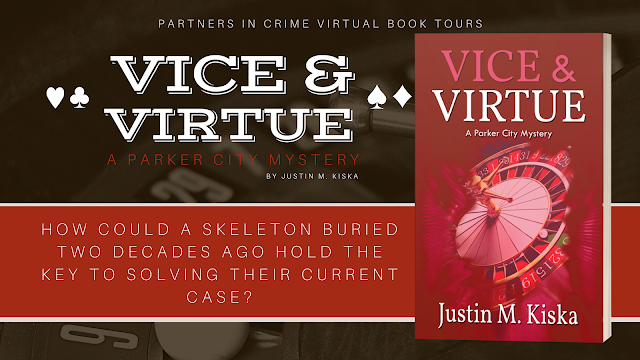
FEATURED AUTHOR: JUSTIN M. KISKA


ABOUT THE BOOK


Parker City, 1984 . . .

Three years after the Spring Strangler case rocked the historic Western Maryland city nestled at the foot of the beautiful Blue Ridge Mountains, life has returned to normal for Detective Ben Winters and his partner, Tommy Mason. With a new chief now leading the department and the city slowly crawling out of its economic distress, everything seems to be moving in the right direction. Until one sweltering summer day, a killer begins targeting police officers. Ben and Tommy find themselves once again leading an investigation the likes of which Parker City has never seen. The detectives quickly come to realize that until the shooter is found, everyone wearing a badge is in danger.

To complicate matters even further, when a recently unearthed skeleton mysteriously connects to the string of police homicides, Ben and Tommy begin to think their current case may be tied to events twenty years earlier. But how could a skeleton buried two decades ago hold the key to solving their current case?

    Book Details:

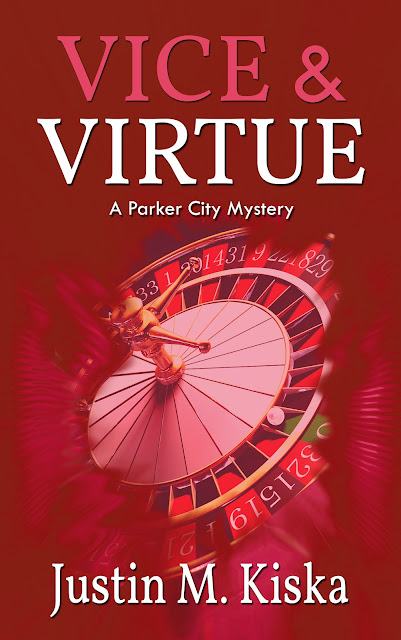
Title: Vice & Virtue

Author: Justin M. Kiska

Genre: traditional mystery/police procedural

Series: Parker City Mysteries
, book 2
Publisher: Level Best Books (February 15, 2022)

Print length: 288 pages


LOVE IT OR LEAVE IT WITH JUSTIN M. KISKA


Things you need in order to write: a nice hot cappuccino, quiet, and time.
Things that hamper your writing: BritBox! There are just too many great shows to get sucked into!


Things you love about writing: I’m a bit of a control-freak, so I love to have complete control of everything that happens in the story.
Things you hate about writing: making sure that the things I want to happen in the story make sense. One of the things I say to my wife all the time comes from my favorite television show: “Don’t ruin my story with your logic.”

Easiest thing about being a writer: for me, coming up with the stories and the mysteries that go along with them. But sometimes I have too many ideas, so it’s also hard paring it down and picking one good mystery to write. 

Hardest thing about being a writer: finding the time and discipline to actually sit down, focus, and write.


Favorite foods: I could probably eat pizza every day if my wife and doctor would let me. Same with Krispy Kreme Donuts!
Things that make you want to throw up: peppers! I don’t care what color they are or where they come from, they are all evil!  

Favorite music: as a theatre producer, I listen to showtunes all the time. Thankfully, I like showtunes. I always have. I’m also a fan of oldies. Golden oldies from the ‘50s and ‘60s, to be precise. I realize the definition of “oldies” is changing.
Music that make your ears bleed: I wish I could say I was one of those people who like all music, but I’m not. Heavy metal . . . not my thing.

Favorite beverage: caramel iced coffee.  I’m addicted. 

Something that gives you a pickle face: I know it isn’t a drink, but celery. I just don’t see the point.

Something you’re really good at: sarcasm. I have an advanced degree.

Something you’re really bad at: making pancakes. I always burn them. Always.


Things you always put in your books: since my background is actually as a theatre producer, I always like to have a line or two from a play or musical in my books as a little Easter egg to theatre-lovers or performers who’ve been in a show I’ve directed or produced. 

Things you never put in your books: over-the-top, gratuitous violence. I’ve never been a fan of slasher/horror films or unnecessary blood and guts.

Things to say to an author: “I really enjoyed your book. You had me guessing who the killer was up until the very end.”

Things to say to an author if you want to be fictionally killed off in their next book: “What you should have done is . . .”

Favorite places you’ve been: New Orleans. I loved the city, the food, the atmosphere.

Places you never want to go to again: New Orleans. No city should be that hot and humid!

Favorite genre: good old-fashioned mysteries.

Books you would ban: young adult fantasy fiction . . . don’t get me started.

Favorite things to do: first and foremost, travel. I would live on a cruise ship if I could. But if we’re talking about favorite things to do on a daily basis . . . at the end of the day I love to relax by reading a good book. 

Things you’d run through a fire wearing gasoline pants to get out of doing: watching Christmas movies on the Hallmark Channel.

Best thing you’ve ever done: married my wife.

Biggest mistake: married my wife before I found out how much she loved Christmas movies on Hallmark.


EXCERPT FROM VICE & VIRTUE

Tall and athletic, Tommy Mason always reminded Ben of Tom Selleck’s Magnum P.I. character from television. Tommy always had that whole ruggedly handsome thing going for him. Mixed with a little bit of a “bad boy” vibe and he drove the women wild.

Next to Ben’s clean-cut, buttoned-down appearance, their pairing caused many to do a doubletake. At first glance, they appeared to be complete opposites. But as one got to know them, they were very much alike. Each brought out the best in the other and at the end of the day, it was all about getting the job done. Sure, each had his own style, but that’s what made them such a formidable team.

Tommy’s apparent willingness to skirt the rules was always offset by Ben’s ability to find ways to use the rules to their benefit. Just as Ben’s refusal to play the internal politics game allowed Tommy to use his charm to keep too many feathers from getting ruffled amongst the powers-that-be. They each knew the other’s strengths and weaknesses and how to adapt them to their own, which is why they’d been so impressive in getting the PCPD’s Detective Squad off the ground.

“What are you doing here?” Ben asked, more than a little surprised to see his partner.

“Shirley from Dispatch called me. She thought I’d be interested,” Tommy explained. “And before you say anything about what I’m wearing, I just want to remind you, it is our day off, so I didn’t think I needed to get dressed up to come to a potential crime scene. Especially when we don’t actually know this is a crime scene yet.”

He was referring to the fact he had on a T-shirt and comfortable pair of jeans, as opposed to the full suit and tie Ben was wearing.

“Besides, now you don’t have to worry about getting your fancy suit muddy. I have no problems getting down there in the dirt,” Tommy smiled, pointing at the fresh mud stains on his knees. With that, he knelt back down to take another look at the exposed skeletal remains under the floorboards.

“So, tell me. What do we have?” Ben asked, crouching next to Tommy so he could get a better look.

“You can see there’s a pretty big cavity here under this part of the floor,” Tommy pointed out. “It’s got to be a good ten by ten area where the ground has been eaten away, even though it’s not too deep, less than a foot in some places. It’s definitely because of water…there’s a lot of mud down there. As the earth under the floor eroded, it uncovered the skeleton. Partway, at least. Of course, no one could see what was happening under here until our friend Mr. Haggarty had the unfortunate experience of stepping on a board that was rotted through and it snapped, sending him falling through the floor. You can see where he landed in the mud.

“And right there,” Tommy pointed, “you see the skull and top portion of the skeleton sticking out of the ground.”

“You came face-to-face with that thing, man?” Tommy looked over at the construction worker who was leaning against the wall. “Not a good way to start the day.”

“Yeah. You’re telling me,” Haggarty answered.

Turning back to the skeleton, Tommy said, “I’m no expert, but that hole in the skull right there…see it, it looks like it could be a GSW from a pretty heavy caliber gun.”

Leaning down and twisting his head so he could try and get a better look at the skull, Ben saw the hole and wondered if his partner was right. Finding a skeleton buried under the floor was one thing. Finding a skeleton buried under the floor with a bullet hole in its skull was something else. It took everything to a different level.

Standing and stretching their legs, Tommy said, “When Shirley first called me, I thought this was going to have been some kind of prank. Some kids snuck into the site on a dare and left a skeleton for the crew to find.”

“You thought kids somehow buried a skeleton under this building in the hopes someone would fall through the floor and find it?” Ben asked, raising an eyebrow. “Not to mention having to figure out how to bury the thing under the floor?”

“In my defense,” Tommy started, raising a finger and shaking it at his partner, “I didn’t know the skeleton was buried under the warehouse. I just knew they’d found a skeleton at the warehouse.”

The first thing that needed to happen was to get the skeleton out of the ground. That would be up to the crime scene techs. Even though he could easily reach in and pull the skull out to get a better look, Ben didn’t want to disturb anything more than it already had been when Lance Haggarty crashed through the floor. Thankfully, he hadn’t actually landed on the skull itself.

“So much for our day off,” Ben said, looking at his watch, wondering where the crime scene guys were.

***

Excerpt from Vice & Virtue by Justin M. Kiska.  Copyright 2022 by Justin M. Kiska. Reproduced with permission from Justin M. Kiska. All rights reserved.


ABOUT THE AUTHOR 


When not sitting in his library devising new and clever ways to kill people (for his mysteries), Justin can usually be found at The Way Off Broadway Dinner Theatre, outside of Washington, DC, where he is one of the owners and producers. In addition to writing the Parker City Mysteries Series, he is also the mastermind behind Marquee Mysteries, a series of interactive mystery events he has been writing and producing for over fifteen years. Justin and his wife, Jessica, live along Lake Linganore outside of Frederick, Maryland.


Connect with Justin:
Website  |  Facebook  |  Twitter Goodreads 

Buy the book:
Amazon