Showing posts with label romantic suspense. Show all posts

Thursday, February 10, 2022

FEATURED AUTHOR: KELLY IRVIN


ABOUT THE BOOK


When her best friend is murdered the same way her brother was, who can she possibly trust?

A decade ago, Delaney Broward discovered her brother’s murdered body at the San Antonio art co-op he founded with friends. Her artist boyfriend, Hunter Nash, went to prison for the murder, despite his not-guilty plea.

This morning, Hunter walks out of prison a free man, having served his sentence.

This afternoon, Delaney finds her best friend dead, murdered in the same fashion as her brother.

Stay out of it or you’re next, the killer warns.

Hunter never stopped loving Delaney, though he can’t blame her for not forgiving her. He knows he’ll get his life back one day at a time, one step at a time. But he’s blindsided to realize he’s a murder suspect. Again.

When Hunter shows up on her doorstep, asking her to help him find the real killer, Delaney’s head says to run away, yet her heart tells her there’s more to his story than what came out in the trial. An uneasy truce leads to their probe into a dark past that shatters Delaney’s image of her brother. She can’t stop and neither can Hunter—which lands them both in the crosshairs of a murderer growing more desperate by the day (hour?).

In this gripping romantic suspense, Kelly Irvin plumbs the complexity of broken trust in the people we love—and in God—and whether either can be mended.

Book Details:

Title: Trust Me
Author: Kelly Irvin

Genre: romantic suspense

Publisher: Thomas Nelson (February 8, 2022)

Print length: 384 pages


LOVE IT OR LEAVE IT WITH KELLY IRVIN


A few of your favorite things: my heated blanket and flannel pajamas, my copy of The Secret Garden, the 2,000-piece Lego typewriter my son and daughter-in-law gave me.
Things you need to throw out: the clothes in my closet that I keep because I might gain back the weight I lost, as well as the ones I keep in case I lose that additional 10 pounds.


Things you need in order to write: a quiet room, a fast computer, time to daydream.
Things that hamper your writing: health issues, loud music, barking dogs.


Things you love about writing: when new characters/plot twists appear out of nowhere.
Things you hate about writing: realizing I’m 10,000 words over my contracted word count and still have story to tell.

Easiest thing about being a writer: spending time with my characters every day.
Hardest thing about being a writer: bad reviews.


Things you love about where you live: my office’s big windows, the view from my office of an open field with lots of trees, no traffic, the bay window in the kitchen that allows me to eat my breakfast while watching the Cardinals and hummingbirds eat theirs at the birdfeeders.
Things that make you want to move: the long drive into town, barking dogs.


Things you never want to run out of: crunchy peanut butter, apple-cinnamon-spice tea, patience, story ideas.
Things you wish you’d never bought: nothing comes to mind.


Words that describe you: writer, novelist, introvert, creative, a daydreamer.
Words that describe you but you wish they didn’t: disabled, cancer patient, impatient.

Favorite foods: my husband’s homemade pizza, chicken enchiladas in green sauce, tater tot casserole, praline sweet potato pie.
Things that make you want to throw up: kale, hominy, liver and onions.

Favorite music: Zach Williams and Dolly Parton’s “There Was Jesus.,” country music, Fleetwood Mac, Bryan Adams, Bruce Springsteen, contemporary Christian music.
Music that make your ears bleed: heavy metal, rap.

Favorite beverage: decaf iced tea, decaf coffee with almond milk & stevia.

Something that gives you a pickle face: any soda.

Favorite smell: because of health issues, I have no sense of smell. I miss the smell of cilantro, fresh cut grass, popcorn, and coffee brewing.

Something that makes you hold your nose: I don’t miss beer breath, bathroom smells, and the smell of my cats’ litter box.

Something you’re really good at: making up stories.

Something you’re really bad at: math.


Something you like to do: read, eat, sleep.

Something you wish you’d never done: drank one too many beers one too many times.

People you consider as heroes: oncologists, cancer researchers, ALS patients, ALS caregivers and researchers, young people such as Greta Thurberg, Simone Bile, and Amanda Gorman who step up for what they believe in in a big way, first responders and healthcare professionals who continue to work tirelessly as we begin year three of this pandemic.

People with a big L on their foreheads: conspiracy theorists, journalists who perpetuate fake news, people who sue social media to beat up others for their beliefs, racists, bigots, white supremacists, misogynists, and people who would ban books because they don’t agree with their content.


Last best thing you ate: my husband’s homemade chicken and dumplings soup.

Last thing you regret eating: too many roasted brussel sprouts–bad bellyache!

Things you’d walk a mile for: if I could walk a mile (unfortunately I can’t): spending time with my 3 grandchildren and my daughter. They live on the east coast while I’m in South Texas.
Things that make you want to run screaming from the room: reality TV, especially The Bachelor & The Bachelorette.

Things you always put in your books: my characters almost always have pets, using dogs and/or cats, I try to represent characters with disabilities in my books.

Things you never put in your books: graphic sex scenes.

Things to say to an author: What a great fulltime job. You must be living your dream.

Things to say to an author if you want to be fictionally killed off in their next book: What a fun hobby. I’d write a book too, but I don’t have time. Or “you must be rich now.”

Favorite places you’ve been: Costa Rica and Maui.

Places you never want to go to again: Florida.

People you’d like to invite to dinner (living):  Michael Connelly, Laura Lippman, John Sanford, Sara Paretsky, James Lee Burke, Meg Gardiner, JA Jance, William Kent Krueger. (I’d have a potluck with mystery/suspense writers and we’d sit around and talk writing all night so I could pick their brains and soak up their knowledge. It would be fun to see what dishes they bring too.)

People you’d cancel dinner on: without getting political, a number of politicians from both sides of the aisle, but especially those currently representing my adopted home state of Texas.

Favorite things to do: read, play with my grandkids.
Things you’d run through a fire wearing gasoline pants to get out of doing: going to parties given by people I hardly know.

Things that make you happy: watching movies with my husband, reading, writing.

Things that drive you crazy: waiting forever in waiting rooms for doctors’ appointments.

Proudest moment: when I saw my first published book on a bookstore shelf and then on a library shelf.
Most embarrassing moment:
I worked as a newspaper reporter covering city hall in Laredo, Texas. One night the zipper on my sundress broke and my dress gaped open from the back so everyone behind me could see.


Best thing you’ve ever done:
married my husband. Decided to get serious about writing on my 45th birthday and wrote a novel, got an agent, & then a publisher.

Biggest mistake: Waiting until I turned 45 to start seriously writing fiction.


EXCERPT FROM TRUST ME


CHAPTER 1

APRIL 22, 2010
SAN ANTONIO ART CO-OP
SOUTHTOWN, SAN ANTONIO

The cloying stench of pot told the same old story.

With an irritated sigh Delaney Broward quickened her pace through the warehouse-turned-art-co-op toward her brother’s studio at the far end of the cavernous hall. On his best days Corey had little sense of time. Add a joint to the mix and he lost his sense not only of time but of responsibility. It also explained why he didn’t answer his phone. When he got high and started painting, he wanted no interruptions. His lime-green VW van was parked cattywampus across two spaces in the lot that faced Alamo Street just south of downtown San Antonio. He might be physically present, but his THC-soaked mind had escaped its cell.

Marijuana served as his muse and taskmaster. Or so he’d said.

The soles of her huarache sandals clacking on the concrete floor sounded loud in Delaney’s ears. “Corey? Corey! You were supposed to pick us up at Ellie’s. Come on, dude. She’s waiting.”

No answer.

At this rate Delaney would never get to Night in Old San Antonio, affectionately known to most local folks as NIOSA. Everyone who was anyone knew it was pronounced NI-O-SA, long I and long O, the best party-slash-fundraiser during the mother of all parties where her boyfriend would be waiting for her. “Hey, bro, I’m starving. Let’s go.”

Delaney’s phone rang. She slowed and dug it from the pocket of her stonewashed jeans. Speaking of Ellie. “I’m at the co-op now. He’s here.”

Share as little info as possible.

“He’s stoned again, isn’t he? I’m sick of this.” Ellie’s shrill voice rose even higher. “I swear if he stands me up again— ”

Us. Stands us up.”

“Stood us up again. That will be it. I’m done. I’m done waiting around for him. I’m done playing second fiddle to his self-destructive habits. I’m done with his starving-artist, free-spirit, pothead schtick. The man is a walking stereotype. I’m done with him, period.”

Delaney mouthed the words along with her friend. She knew the lyrics of this lovesick song by heart. The childish rejoinder “It takes one to know one” stuck in her throat. “We’ll be there in twenty. You can tell him yourself.”

Ellie would and then Corey would kiss her until she took it all back. With a final huff Ellie hung up.

The door to his studio— the largest and with the best light because the co-op was Corey’s dream child— stood open. “Seriously, Corey. Think of someone besides yourself once in a while, please.” Delaney strode through the door, ready to ream her brother up one side and down the other. “You are so selfish.”

Delaney halted. At first blush it didn’t make sense. Twisted and smashed canvases littered the floor. Along with paints, brushes, beer bottles, and Thai food take-out cartons.

Wooden easels were broken like toothpicks and scattered on top of the canvases. Someone had splattered red paint over another finished piece— a woman eating a raspa in front of a vendor’s mobile cart, the Alamo in the background.

Delaney’s hands went to her throat. The metallic scent of blood mingled with the odor of human waste gagged her. A fiery shiver started at her toes and raced like a lit fuse to her brain. Her mind took in detail after detail. That way she didn’t have to face the bigger picture staring her in the face. “Please, God, no.”

Even He couldn’t fix this.

She shot forward, stumbled, and fell to her knees. Her legs refused to work. She crawled the remainder of the distance to Corey across a floor marred by still-wet oil paint, beer, and other liquids she couldn’t bear to identify.

He sat with his back against the wall. His long legs clad in paint-splattered jeans sprawled in front of him. His feet were bare. His hands with those thin, expressive fingers lay in his lap. Deep lacerations scored his palms and fingers.

Her throat aching with the effort not to vomit, Delaney forced her gaze to move upward. His T-shirt, once white, now shone scarlet with blood. His blood. Rips in the shirt left his chest exposed, revealing stab wounds— too many to count.

Delaney opened her mouth. Scream. Just scream. Let it out.

No sound emerged.

She crawled alongside her big brother until she could lean her shoulder and head against the wall. “Corey?” she whispered.

His green eyes, fringed by thick, dark lashes that were the envy of every woman he’d ever dated, were open and startled. His skin, always pale and ethereal, had a blue tinge to it.

Delaney drowned in a tsunami of nausea. “Come on, Corey, this isn’t funny. I need you.”

Her teeth chattered. Hands shaking, she touched his throat. His skin was cold. So cold.

Too late, too late, too late. The words screamed in her head. Stop it. Just stop it. “You can’t be dead. You’re not allowed to die.”

Mom and Dad had died in a car wreck a week past her eighth birthday. Nana and Pops had taken their turns the year Delaney turned eighteen. Everybody she cared about died.

Not Corey. Delaney punched in 9–1–1.

The operator’s assurance that help was on the way did nothing to soothe Delaney. She sat cross-legged and dragged Corey’s shoulders and head into her lap. She had to warm him up. “Tell them to hurry. Tell them my brother needs help.”

“Yes, ma’am. They’re en route.”

“Tell them he’s all I’ve got.”

CHAPTER 2

TEN YEARS LATER
NASH RESIDENCE, SAN ANTONIO

Real men didn’t cry. Not even during a reunion with a beloved truck.

Swallowing hard, Hunter Nash wrapped his fingers around the keys, concentrating on the feel of the metal pressing into his skin. He cleared his throat. “Thanks, Mom. For keeping it all these years.”

His mom didn’t bother to try to hide her tears. She wiped her plump cheeks on a faded dish towel, offered him a tremulous smile, and bustled down the sidewalk that led from the house on San Antonio’s near west side where Hunter had grown up to the detached two-car garage in the back. It had housed his truck for the past eight years. Almost ten if he counted the two years it took for his case to go to trial. He had no place to go in those years when he’d allegedly been innocent until proven guilty. His friends no longer friends and his job gone, he had no need for transportation.

The door to the garage was padlocked. Mom handed him the key. “My hands are shaking. You’d better do the honors.” She stepped back. “I still can’t believe you’re here.”

“I did my time, Ma.” As a model prisoner he’d earned time off for good behavior. It was easy for a guy to behave when he spent his days and nights scared spitless.

“I know. All those nights I’ve lain in bed worrying about you in that place, whether you were safe, if you were hurt, if you were sick.” Her voice broke. “I can’t believe it’s over.”

“Me neither.”

It wasn’t over. In fact, it was just beginning, but she didn’t need to know that. His determination to prove his innocence would only worry her more. A divorced mother of four, she’d raised her kids on a teacher’s salary and an occasional child support check from the crud-for-brains ex-husband who showed up once every couple of years in an attempt to make nice with his kids. She deserved a break.

The aging manual garage door squeaked and protested when Hunter yanked on the handle. He needed to do some work around here, starting with applying some WD-40. The smell of mold and old motor oil wafted from the dark interior. Hunter slipped inside and waited for his eyes to adjust. A layer of dust covered the 2002 midnight-blue Dodge RAM 1500, but otherwise it remained in the pristine condition in which he’d left it the night he said goodbye and promised he’d be back. “My baby.”

More tears trickling down her face, Mom chuckled softly. “After you finish reintroducing yourself, come back inside. I’m making your favorite chicken-fried steak, mashed potatoes, gravy, pineapple coleslaw, and creamed corn. Your brother and sisters are coming over after work. Shawna’s bringing a carrot cake with cream cheese frosting. Melissa’s contribution is three kinds of ice cream, including rocky road. She said it seemed appropriate. I hope you haven’t lost your sense of humor. And you know Curtis. He’s all about the beer.”

The last thing Hunter wanted to do was celebrate with his sibs. Mel and Shawna had visited faithfully at first, but less as the years rolled by. Curtis never showed, even though Fabian Dominguez State Jail was only a few miles down the road from San Antonio.

Nor did Hunter want to explain why he’d sworn off alcohol. The conditions of his parole included monthly pee tests— no alcohol or drugs, but that part of his life was over anyway. It had been easy to comply in prison, obviously. Whether he could maintain his sobriety in the beer drinking capital of the country remained to be seen. He’d do AA if necessary. “Mom— ”

“No buts. They’re family. They love you. You need to live life, enjoy life, make up for all you’ve missed. You haven’t even met most of your nieces and nephews. Did you know Mel is expecting another baby in August?”

“Yes, I— ”

“Today we celebrate your new job and your new life.”

His bachelor of fine arts with an emphasis in drawing and painting from Southwest School of Art might once have allowed him to teach art in one of the school districts, but not anymore.

It didn’t matter. The prison chaplain had hooked him up with Pastor James. The preacher ran a faith-based community center that served at-risk youth. He’d hired Hunter to teach art to those who’d already had their first brush with the law. He figured Hunter could teach life lessons at the same time he introduced them to art as a way to channel their anger at the hand life had dealt them. Learning what happened when a guy got off track would be the lesson.

Even though Hunter hadn’t gotten off the track. He’d been shoved off it. By an eager-beaver, newbie detective; a green-as-a-Granny-Smith-apple public defender; and an assembly-line justice system.

He would get by in this world that had hung him out to dry. Especially knowing Mom had his back. She had that don’t-mess-with-me teacher look in her burnt-amber eyes. Like her sixth graders, Hunter knew better than to argue. It felt good to know she remained in his corner. When everyone else had hit the ground, scattering in opposite directions, she never budged in her belief that son number two could not be a murderer. She’d brought him up better than that.

“You’re right. Give me a few minutes.”

She patted his chest and stretched on her tiptoes to plant a kiss on his cheek. Her lips were chapped, and the wrinkles had deepened around her mouth and eyes. Her long hair had gone pure white during his years away. “Take your time, sweetheart.”

Hunter gritted his teeth. After years of looking over his shoulder, bobbing and weaving around hard-core convicts who’d as soon shank a guy in the shower as look at him, he didn’t know how to cope with nice. With sweet. With love tempered with wisdom and a hard life.

“One day at a time.” That’s what the prison chaplain had told him. “Get through the next minute, the next hour, the next day.” That’s how he did eight years at Dominguez. This couldn’t be any harder. He opened the truck’s door and slid into the driver’s seat. The faint odor of pine air freshener greeted him. And citrus.

More likely that was his imagination. Delaney’s perfume simply could not linger that long. Move on. She has. She did. To her credit Delaney held on as long as she could— until the guilty verdict. Then she was forced to move on. She couldn’t be blamed for that.

Hunter picked up the sketch pad on the passenger seat. In those days he kept one everywhere. Just in case. The first page. The second. The third. All drawings of Delaney. Sweet Laney eating a slice of watermelon at a Fourth of July celebration. Laney rocking Hunter’s newborn nephew in a hickory rocker on the front porch. Laney in a bathing suit sitting on the dock at Medina Lake. Laney with her soulful eyes, long sandy-brown hair, and air of sad vulnerability worn like a pair of old jeans that fit perfectly. That too-big nose, wide mouth, and pointed chin. Corey might have been the angelic beauty— totally unfair— but Delaney’s face had character. She had a face Hunter never ceased to want to draw and paint.

And kiss.

He turned the pages slowly, allowing the memories to have their way with him. Meeting at a party Corey had thrown when Delaney was a senior in high school. Their first date, ribs and smoked chicken with heart-stopping creamed corn, potato salad, coleslaw, and jalapeƱos at Rudy’s Country Store and Bar-B-Q followed by dancing at Leon Springs Dance Hall.

She had danced with the abandon of a small child. As if she didn’t care who watched. Her face glowed with perspiration. Her green eyes sparkled with happiness. His two left feet couldn’t keep up, but she didn’t mind. She twirled her peasant skirt as she flew around him, her hands in the air, her curves beckoning.

Hunter closed his eyes. Her softness enveloped him. Her sweetness surrounded him.

He needed to see her again. He needed to talk to her. Somehow he had to prove to her that she was wrong about him. Whatever it took. He laid the sketchbook aside. “Come on, dude, let’s take a ride.”

He stuck the key in the ignition and turned it.

Nothing. Not even a tick-tick-tick. He tried a second time. Nada. “I’m an idiot.” He patted the steering wheel. “Not your fault, man.”

The truck hadn’t been driven in years. The battery was dead. He might be able to jump it, but more likely he’d need a new one. Batteries cost money.

One thing at a time. He’d waited this long.

Hunter slid from the truck and eased the door closed. “I’ll be back when I get my act together.”

In the kitchen Hunter found his mom peeling potatoes. She pointed the peeler at him. “You can’t imagine how good it feels to have you home.”

“You can’t imagine how good it feels to be here.” He landed a kiss on her soft hair. She smelled of Pond’s cold cream. The same old comforting scent. Life had changed but not her. “I’m gonna take a walk. I need to blow the prison stink off.”

“Enjoy. They redid the walking trail at the lake and installed new outdoor fitness equipment.” She waved the paring knife in the air. “But don’t stay too long. You have company coming.”

“Yes, ma’am.” He pantomimed a mock salute and headed for the front door.

One thing at a time. One step at a time. That’s how he’d get his life back.

***

Excerpt from Trust Me by Kelly Irvin. Copyright 2022 by Kelly Irvin. Reproduced with permission from Thomas Nelson. All rights reserved.


ABOUT THE AUTHOR 
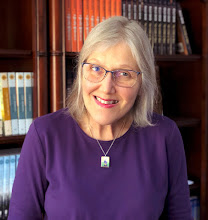

Bestseller Kelly Irvin is the author of thirty books and novellas, including romantic suspense and Amish romance novels. Publishers Weekly calls her latest release, Trust Me, “a whirlwind romantic thriller,” and “an emotional rollercoaster.” The two-time ACFW Carol finalist worked as a newspaper reporter for six years writing stories on the Texas-Mexico border. Those experiences fuel her romantic suspense novels set in Texas. A retired public relations professional, Kelly now writes fiction full-time. She lives with her husband, photographer Tim Irvin, in San Antonio. They are the parents of two children, three grandchildren, and two ornery cats.


Connect with Kelly:

Website  |  Facebook Twitter 

Buy the book:

Amazon   |  Barnes & Noble:


GIVEAWAY


Wednesday, April 14, 2021

FEATURED AUTHOR: COLLEEN COBLE


ABOUT THE BOOK

Book three in the gripping romantic suspense series from USA TODAY bestselling author Colleen Coble.

A chilling murder.

Chief of Police Jane Hardy plunges into the investigation of a house fire that claimed the life of a local woman as well as one of the firefighters. It’s clear the woman was murdered. But why? The unraveling of Jane’s personal life only makes the answers in the case more difficult to find.

Her son’s arrest.

Then Jane’s fifteen-year-old son is accused of a horrific crime, and she has to decide whether or not she can trust her ex, Reid, in the attempt to prove Will’s innocence—and whether she can trust Reid with her heart.

Her stolen memories.

Three days of Jane’s past are missing from her memory, and that’s not all that has been stolen from her. As she works to find the woman’s murdered and clear her son’s name, finding out what happened in those three days could change everything.

It all started with one little lie. But the gripping truth is finally coming out.


Book Details:
Title: Three Missing Days
Author: Colleen Coble
Genre: romantic suspense
Series: Pelican Harbor, book 3
Publisher: Thomas Nelson (April 6, 2021)
Print length: 350 pages


TWENTY QUESTIONS/ONE WORD ANSWERS WITH COLLEEN COBLE


1.     Where is your cell phone? With me.
2.     Your hair? Layered.
3.     Your workplace? Recliner.
4.     Your other half? Wonderful.
5.     What makes you happy? Grandkids.
6.     What makes you crazy? Rudeness.
7.     Your favorite food? Mexican.
8.     Your favorite beverage? Coffee.
9.     Fear? Spiders.
10.  Favorite shoes? Sneakers.
11.  Favorite way to relax? Read.
12.  Your mood? Happy.
13.  Your home away from home? Arizona.
14.  Where were you last night? Bed.
15.  Something that you aren't? Blond.
16.  Something from your bucket list? Australia.
17.  Wish list item? Pottery.
18.  Where did you grow up? Indiana.
19.  Last thing you did? Showered.
20.  What are wearing now? Nightgown


.


EXCERPT FROM THREE MISSING DAYS

“I know what you did.”

The muffled voice on her phone raised the hair on the back of Gail Briscoe’s head, and she swiped the perspiration from her forehead with the back of her hand. “Look, I’ve reported these calls. Don’t call me again.”

She ended the call with a hard finger punch on the screen and stepped onto her front porch. The late-May Alabama air wrapped her in a blanket of heat and humidity, and she couldn’t wait to wash it off. She should have left the light on before she went for her predawn run. The darkness pressing against her isolated home sent a shudder down her back, and she fumbled her way inside. Welcome light flooded the entry, and she locked the door and the dead bolt with a decisive click that lifted her confidence.

She stared at the number on the now-silent phone. The drugstore again. Though there weren’t many pay phones around anymore, the old soda shop and drugstore still boasted a heavy black phone installed back in the sixties. The caller always used it, and so far, no one had seen who was making the calls. The pay phone was located off an alley behind the store by a Dumpster so it was out of sight.

The guy’s accusation was getting old. Counting today, this made seven calls with the same message. Could he possibly know about the investigation? She rejected the thought before it had a chance to grow. It wasn’t public knowledge, and it would be over soon. She clenched her hands and chewed on her bottom lip. She had to be vindicated.

But who could it be, and what did he want?

Leaving a trail of sweaty yoga shorts and a tee behind her, she marched to the bathroom and turned the spray to lukewarm before she stepped into the shower. The temperature shocked her overheated skin in a pleasant way, and within moments she was cooled down. She increased the temperature a bit and let the water sluice over her hair.

As she washed, she watched several long strands of brown hair swirl down the drain as she considered the caller’s accusation. The police had promised to put a wiretap on her phone, but so far the guy hadn’t stayed on the phone long enough for a trace to work. And it was Gail’s own fault. She should have talked with him more to string out the time.

She dried off and wrapped her hair in a turban, then pulled on capris and a top. Her phone vibrated again. She snatched it up and glanced at the screen. Augusta Richards.

“I got another call, Detective. Same phone at the drugstore. Could you set up a camera there?”

“I hope I’m not calling too early, and I don’t think that’s necessary. The owner just told me that old pay phone is being removed later today. Maybe that will deter the guy. It’s the only pay phone in town. He’ll have to use something else if he calls again.”

“He could get a burner phone.”

“He might,” the detective admitted. “What did he say?”

“The same thing—‘I know what you did.’”

“Do you have any idea what it means?”

Gail flicked her gaze away to look out the window, where the first colors of the sunrise limned the trees. “Not a clue.”

“Make sure you lock your doors and windows. You’re all alone out there.”

“Already locked. Thanks, Detective.” Gail ended the call.

Ever since Nicole Pearson’s body had been found a couple of months ago, no one needed to remind Gail she lived down a dirt road with no next-door neighbors. No one wanted to buy the neighboring place after such a lurid death, so the area remained secluded other than a couple of houses about a mile away and out closer to the main road.

She stood back from the window. It was still too dark to see. Was someone out there?

Pull back the reins on your imagination. But once the shudders started, they wouldn’t stop. Her hands shaking, she left her bedroom and went to pour herself a cup of coffee with a generous splash of half-and-half from the fridge. She had a stack of lab orders to process, and she couldn’t let her nerves derail her work.

The cups rattled as she snatched one from the cupboard. The coffee sloshed over the rim when she poured it, then she took a big gulp of coffee. It burned all the way down her throat, and tears stung her eyes as she sputtered. The heat settled her though, and she checked the locks again before she headed to her home office with her coffee.

No one could see in this tiny cubicle with no window, but she rubbed the back of her neck and shivered. She’d work for an hour, then go into the lab. The familiar ranges and numbers comforted her. She sipped her coffee and began to plow through the stack of papers. Her eyes kept getting heavy. Weird. Normally she woke raring to go every morning.

Maybe she needed more coffee. She stretched out her neck and back and picked up the empty coffee cup.

Gail touched the doorknob and cried out. She stuck her first two fingers in her mouth. What on earth?

The door radiated heat. She took a step back as she tried to puzzle out what was happening, but her brain couldn’t process it at first. Then tendrils of smoke oozed from under the door in a deadly fog.

Fire. The house was on fire.

She spun back toward the desk, but there was nothing she could use to protect herself. There was no way of egress except through that door.

If she wanted to escape, she’d have to face the inferno on the other side.

She snatched a throw blanket from the chair and threw it over her head, then ran for the door before she lost her courage. When she yanked it open, a wall of flames greeted her, but she spied a pathway down the hall to her bedroom. Ducking her head, she screamed out a war cry and plowed through the flames.

In moments she was in the hall where the smoke wasn’t so thick. She pulled in a deep breath as she ran for her bedroom. She felt the cool air as soon as she stepped inside and shut the door behind her. Too late she realized the window was open, and a figure stepped from the closet.

Something hard came down on her head, and darkness descended.

***

Excerpt from Three Missing Days by Colleen Coble.  Copyright 2021 by Thomas Nelson. Reproduced with permission from Thomas Nelson. All rights reserved.


ABOUT THE AUTHOR


USA Today bestselling author Colleen Coble's novels have won or finaled in awards ranging from the Best Books of Indiana, the ACFW Carol Award, the Romance Writers of America RITA, the Holt Medallion, the Daphne du Maurier, National Readers' Choice, and the Booksellers Best. She has 4 million books in print and writes romantic mysteries because she loves to see justice prevail. Colleen is CEO of American Christian Fiction Writers. She lives with her husband Dave in Indiana.


Connect with Colleen:
Website  |  Facebook  |  Twitter  |  Goodreads
 
Buy the book:
Amazon  |  Barnes & Noble

Friday, February 26, 2021

FEATURED AUTHOR: MALLY BECKER


ABOUT THE BOOK


Recently widowed, Rebecca Parcell is too busy struggling to maintain her farm in Morristown to give a fig who wins the War for Independence. But rumors are spreading in the winter of 1780 that she’s a Loyalist sympathizer who betrayed her husband to the British—quite a tidy way to end her disastrous marriage, the village gossips whisper.


Everyone knows that her husband was a Patriot, a hero who died aboard a British prison ship moored in New York Harbor. But “everyone” is wrong. Parcell was a British spy, and General Washington—who spent that winter in Morristown—can prove it. He swears he’ll safeguard Becca’s farm if she unravels her husband’s secrets. With a mob ready to exile her or worse, it’s an offer she can’t refuse.


Escaped British prisoner of war Daniel Alloway was the last person to see Becca’s husband alive, and Washington throws this unlikely couple together on an espionage mission to British-occupied New York City. Moving from glittering balls to an underworld of brothels and prisons, Becca and Daniel uncover a plot that threatens the new country’s future. But will they move quickly enough to warn General Washington? And can Becca, who’s lost almost everyone she loves, fight her growing attraction to Daniel, a man who always moves on?

 Book Details:           

Title:  The Turncoat’s Widow

Author’s name: Mally Becker

Genre: Historical mystery/suspense with elements of romance

Series: Revolutionary War mystery, book 1        

Publisher: Historia/Level Best Books (February 16, 2021)

Print length: 300 pages


LOVE IT OR LEAVE IT WITH MALLY BECKER


A few of your favorite things: the first Valentine’s Day gift my husband gave me. A drawing my son made for me in pre-school. My mom’s wooden recipe box.
Things you need to throw out: ouch. All the unfinished craft projects that have been banished to the guest room closet. Turns out, I’m not as craftsy as I thought!

Things you need in order to write: coffee, sunlight, and more coffee.
Things that hamper your writing: perfectionism. The day’s creativity dries up if I stop to search for the perfect phrase or sentence, especially while writing a first draft.

Things you love about writing: I love when the characters take over and the story heads in a direction I didn’t foresee. Yes, that happens occasionally.
Things you hate about writing: there’s almost nothing I hate about writing, nothing except proofreading. By that stage of the game, I’ve read what I’ve written so often that I skip right over missing punctuation and words.

Things you love about where you live: New Jersey gets such a bad rap, but I love it here. My husband and I are an hour from the ocean, an hour from New York City and even closer to rivers, lakes and hiking trails. Most important, though, is that our son, my siblings, my dad and friends all live close by.
Things that make you want to move: New Jersey’s weather is pretty grim in February.  In fact, all of us here in New Jersey are pretty grim in February.

Things you never want to run out of: I never want to run out of laughter, love, or reruns of old Mel Brooks movies.
Things you wish you’d never bought: beautiful notebooks. Although they make me melt, I buy too many. I’ll never get around to using them all.

Favorite foods: chocolate anything and everything, except for . . .
Things that make you want to throw up:  . . . chocolate wine. Yes, there is such a thing.

Favorite smell: I love the scent of pine and spruce trees. It’s a wonderful Christmas smell, but you’ll also catch that scent if you breathe deeply while hiking in the Adirondacks on a sunny summer day.
Something that makes you hold your nose: burned popcorn, because the scent lasts all day.

Something you’re really good at: appearing calm in an emergency.

Something you’re really bad at: being calm in an emergency.


Things to say to an author: “I thought about your story today.” A librarian was kind enough to read a draft of The Turncoat’s Widow a few months ago. She told me that she thought about my main character when she drove by a place I’d described in my book. The fact that my story stayed with her as she was going about her day was tremendously flattering.

Things to say to an author if you want to be fictionally killed off in their next book: “Would you like a few constructive suggestions about your last book?” Someone actually said that to one of my author friends.

Favorite places you’ve been: I’ve been visiting Lake Placid, New York, since I was a kid. That part of the world is my happy place. I also love Paris, and I’m hoping that the third book in my American Revolution series will take place there.
Places you never want to go to again: I am relieved that I will never again have to visit my son’s extremely large regional high school. He loved that school. But I have a terrible sense of direction. After four years, I still got lost on “back to school” night.  

People you’d like to invite to dinner (living): oh, good. A dinner party! Ask Louise Penny and Lyndsay Faye, Barack and Michelle Obama, Stephen Colbert, and film producer Sam Pollard (“MLK/FBI”) if they’re free next Sunday at 7 pm. No need to dress up.

People you’d cancel dinner on: anyone who talks only about themselves and interrupts others as they speak.

Favorite things to do: COVID’s made me even more appreciative of my family. Spending time with any of them is my favorite thing. 

Things you’d run through a fire wearing gasoline pants to get out of doing: taking my car to have its oil changed. I dread hearing, “Well, little lady. Your car also needs an ….” expensive widget I’ve never heard of.

The last thing you did for the first time: sign a publishing contract for my debut novel, The Turncoat’s Widow.

Something you’ll never do again: ride down the Grand Canyon on the back of a mule. I needed to do that once, but once was enough.


EXCERPT FROM THE TURNCOAT'S WIDOW

Chapter One

Morristown – January 1780

There was a nervous rustling in the white-washed meeting house, a disturbance of air like the sound of sparrows taking wing.

Becca Parcell peered over the balcony’s rough, wood railing, blinking away the fog of half-sleep. She had been dreaming of the figures in her account book and wondering whether there would be enough money for seed this spring.

“I didn’t hear what ….” she whispered to Philip’s mother.

Lady Augusta Georgiana Stokes Parcell, known simply as Lady Augusta, covered Becca’s hand with her own. “Philip. They’re speaking of Philip.”

Becca couldn’t tell whether it was her hand or Augusta’s that trembled.

“The Bible says, if thine eye offend thee, pluck it out and cast it from thee, does it not?” The preacher’s voice was soft, yet it carried to every corner of the congregation. “They’re here. Amongst us. Neighbors who toast the King behind closed doors. Neighbors with no love of liberty.”

Philip was a Patriot. He had died a hero. Everyone knew. Minister Townsend couldn’t be talking about him.

The minister raised his eyes to hers. With his long thin arms and legs and round belly, he reminded her of a spider. She twisted her lips into the semblance of a smile as if to say “you don’t scare me.” But he did.

“Which of your neighbors celebrates each time a Patriot dies?” Townsend’s voice rose like smoke to the rafters, took on strength and caught fire. “Their presence here is an abomination.” He rapped the podium with a flat palm, the sound bruising in the quiet church. “Then cast them out. Now.”

Men pounded the floor with their feet.

Becca flinched. It wouldn’t take much to tip the congregation into violence. Everyone had lost someone or something to this endless war. It had been going on for almost five years.

Townsend’s thin arm rose, pointing to her.

Becca’s breath caught.

“And what of widows like Mrs. Parcell? Left alone, no longer guided by the wise direction of their husbands.”

Guided? Becca pulled her hand from Augusta’s. She rubbed her thumb along the palm of her hand, feeling the rough calluses stamped there. She had learned the rhythm of the scythe at the end of the summer, how to twist and swing low until her hands were so stiff that she’d struggle to free them from the handle. She’d fallen into a dreamless sleep each night during the harvest too exhausted even to dream of Philip. She, Augusta and their servant Annie were doing just fine.

“He hardly slept at home, as I hear it,” a woman behind her sniffed to a neighbor.

Becca’s spine straightened.

“No wonder there were no babes,” the second woman murmured.

Becca twisted and nodded a smile to Mrs. Huber and Mrs. Harrington. Their mouths pursed into surprised tight circles. She’d heard them murmur, their mouths hidden by fluttering fans: About her lack of social graces; her friendship with servants; her awkward silence in company. “What else could you expect from her?” they would say, snapping shut their fans.

Relief washed through Becca, nonetheless. This was merely the old gossip, not the new rumors.

“Some of you thought Mr. Parcell was just another smuggler.” The pastor’s voice boomed.

A few in the congregation chuckled. It was illegal to sell food to the British in New York – the “London Trade” some called it — but most turned a blind eye. Even Patriots need hard currency to live, Becca recalled Philip saying.

“He only married her for the dowry,” Mrs. Huber hissed.

Becca’s hand curved into a fist.

Augusta cleared her throat, and Becca forced herself to relax.

“Perhaps some of you thought Mr. Parcell was still a Tory,” the minister said.

The chuckling died.

“He came to his senses, though. He was, after all, one of us,” Minister Townsend continued.

One of us. Invitations from the finer families had trickled away after Philip’s death.

“We all know his story,” Townsend continued. “He smuggled whiskey into New York City. And what a perfect disguise his aristocratic roots provided.” The minister lifted his nose in the air as if mimicking a dandy.
“The British thought he was one of them, at least until the end.” The minister’s voice swooped as if telling a story around a campfire. “He brought home information about the British troops in the City.”

Becca shifted on the bench. She hadn’t known about her husband’s bravery until after his death. It had baffled her. Philip never spoke of politics.

Townsend lifted one finger to his chin as if he had a new thought. “But who told the British where Mr. Parcell would be on the day he was captured? Who told the Redcoats that Mr. Parcell was a spy for independence?”

Becca forgot to breathe. He wouldn’t dare.

“It must have been someone who knew him well.” The minister’s gaze moved slowly through the congregation and came to rest on Becca. His eyes were the color of creosote, dark and burning. “Very, very well.”
Mrs. Coddington, who sat to Becca’s left, pulled the hem of her black silk gown close to avoid contact. Men in the front pews swiveled and stared.

“I would never. I didn’t.” Becca’s corset gouged her ribcage.

“Speak up, Mrs. Parcell. We can’t hear you,” the minister said in a singsong voice.

Townsend might as well strip her naked before the entire town. Respectable women didn’t speak in public. He means to humiliate me.

“Stand up, Mrs. Parcell.” His voice boomed. “We all want to hear.”

She didn’t remember standing. But there she was, the fingers of her right hand curled as it held the hunting bow she’d used since she was a child. Becca turned back to the minister. “Hogwash.” If they didn’t think she was a lady, she need not act like one. “Your independence is a wickedly unfair thing if it lets you accuse me without proof.”

Gasps cascaded throughout the darkening church.

From the balcony, where slaves and servants sat, she heard two coughs, explosive as gun fire. She twisted. Carl scowled down at her in warning. His white halo of hair, fine as duckling feathers, seemed to stand on end. He had worked for her father and helped to raise her. He had taught her numbers and mathematics. She couldn’t remember life without him.

“Accuse? Accuse you of what, Mrs. Parcell?” The minister opened his arms to the congregation. “What have we accused you of?”

Becca didn’t feel the chill now. “Of killing my husband. If this is what your new nation stands for – neighbors accusing neighbors, dividing us with lies – I'll have none of it. “Five years into this endless war, is anyone better off for Congress’ Declaration of Independence? Independence won’t pay for food. It won’t bring my husband home.”

It was as if she’d burst into flames. “What has the war brought any of us? Heartache, is all. Curse your independence. Curse you for ….”

Augusta yanked on Becca’s gown with such force that she teetered, then rocked back onto the bench.

The church erupted in shouts, a crashing wave of sound meant to crush her.

Becca’s breath came in short puffs. What had she done?

“Now that’s just grief speaking, gentlemen. Mrs. Parcell is still mourning her husband. No need to get worked up.” The voice rose from the front row. She recognized Thomas Lockwood’s slow, confident drawl.
She craned her neck to watch Thomas, with his wheat-colored hair and wide shoulders. His broad stance reminded her of a captain at the wheel. He was a gentleman, a friend of General Washington. They’ll listen to him, she thought.

“Our minister doesn’t mean to accuse Mrs. Parcell of anything, now do you, sir?”

The two men stared at each other. A minister depended on the good will of gentlemen like Thomas Lockwood.
The pastor blinked first. He shook his head.

Becca’s breathing slowed.

“There now. As I said.” Lockwood’s voice calmed the room.

Then Mr. Baldwin stood slowly. Wrinkles crisscrossed his cheeks. He’d sent his three boys to fight with the Continental Army in ’75. Only one body came home to be buried. The other two were never found. He pointed at Becca with fingers twisted by arthritis. “Mrs. Parcell didn’t help when the women raised money for the soldiers last month.”

A woman at the end of Becca’s pew sobbed quietly. It was Mrs. Baldwin.

“You didn’t invite me.” Becca searched the closed faces for proof that someone believed her.

“Is she on our side or theirs?” another woman called.

The congregation quieted again. But it was the charged silence between two claps of thunder, and the Assembly waited for a fresh explosion in the dim light of the tired winter afternoon.

With that, Augusta’s imperious voice sliced through the silence: “Someone help my daughter-in-law. She’s not well. I believe she’s about to faint.”

Becca might be rash, but she wasn’t stupid, and she knew a command when she heard one. She shut her eyes and fell gracelessly into the aisle. Her head and shoulder thumped against the rough pine floorboards.

Mrs. Coddington gasped. So did Becca, from the sharp pain in her cheek and shoulder.

Women in the surrounding rows scooted back in surprise, their boots shuffling with a shh-shh sound.

“Lady Augusta,” Mrs. Coddington huffed.

Independence be damned. All of Morristown seemed to enjoy using Augusta’s family title, her former title, as often as possible.

“Lady Augusta,” she repeated. “I’ve had my suspicions about that girl since the day she married your son. I don’t know why you haven’t sent her back to her people.”

“She has no ‘people,’ Mrs. Coddington. She has me,” Augusta’s voice was as frosty as the air in the church. “And if I had doubts about Rebecca, do you think I’d live with her?”

Becca imagined Augusta’s raised eyebrows, her delicate lifted chin. She couldn’t have borne it if her mother-in-law believed the minister’s lies.

Augusta’s featherlight touch stroked her forehead. “Well done,” she murmured. “Now rise slowly. And don’t lean on me. I might just topple over.”

“We are eager to hear the rest of the service on this Sabbath day, Minister Townsend. Do continue,” Thomas Lockwood called.

Becca stood, her petite mother-in-law’s arm around her waist. The parishioners at the edges of the aisles averted their eyes as the two women passed.

As they stepped into the stark, brittle daylight, one last question shred the silence they left behind: “Do you think she turned her husband over to the British?”

Someone else answered. “It must be true. Everyone says so.

***

Excerpt from The Turncoat's Widow by Mally Becker.  Copyright 2021 by Mally Becker. Reproduced with permission from Mally Becker. All rights reserved.


ABOUT THE AUTHOR  

Mally Becker became fascinated with the American Revolution when she peeked into the past as a volunteer at the Morristown National Historical Park, where George Washington and the Continental army spent two winters. A former attorney, volunteer advocate for foster children, and freelance writer, Becker and her husband raised their wonderful son in New Jersey where they still live. The Turncoat’s Widow, featuring Becca Parcell, is her first novel.

Connect with Mally:
Website  |  Facebook  |  Twitter  |  Goodreads

Buy the book:
Amazon   |  Barnes & Noble 


a Rafflecopter giveaway

Tuesday, November 17, 2020

FEATURED AUTHOR: SAGE WEBB


ABOUT THE BOOK


After fleeing the crush of a partnership at a large Chicago criminal-defense firm and a professional breakdown, Devlin Winters just wants to be left alone with a couple sundowners on the deck of her dilapidated mahogany trawler on Galveston Bay. But when an old flame shows up on the boardwalk with a mysterious little boy in tow and an indictment on his heels, fate has other plans, and Devlin finds herself thrust onto a sailboat bound for St. Kitts and staring down her demons in the courtroom, as she squares off against an obsessed prosecutor with a secret of his own.


Book Details:

Title: The Venturi Effect

Author: Sage Webb

Genre: legal thriller

Series: A Devlin Winters Novel

Publisher: Stoneman House Press, LLC (November 15, 2020)

Print length: 329 pages
On tour with: Partners in Crime Virtual Book Tours


LOVE IT OR LEAVE IT WITH SAGE WEBB


A few of your favorite things: books! Books! Books and maxi dresses!
Things you need to throw out: see above! No, I’d never throw out no-longer-needed books or dresses; I’d donate them. But living on a boat means enforced minimalism, and I know I need to cull the heard a bit!


Things you love about where you live: my husband and I live on a 40’ sailboat in a marina off Galveston Bay. I love it. We spend weekdays docked, so “the bosun” can go to work (mostly, I can work from my laptop wherever I am), and on the weekends, we anchor the boat in the bay and enjoy the quiet of being on the water. People dream of sailing to far-off islands, and there’s something to be said for that, but “sailing local” keeps it stress free while providing all the good times of being at anchor, taking the dinghy to the beach, enjoying meals at harborside dives under palapas, and generally taking in boat life.
Things that make you want to move: I like the heat, but the Houston-Galveston area is really hot in the summer—like really, really hot. And I have lupus, which means the sun is not my friend . . . at all!

Words that describe you: adventurous, caring, loves cats (and dogs!), jokes around.
Words that describe you but you wish they didn’t: OCD!, easily stressed, moody, judgmental.

Favorite music: my husband spends a goodly portion of his free time as a local Texas red-dirt-country singer-songwriter, so there’s only one right answer to this question for me: his music is my favorite! Before I moved to Texas (and before I met my husband), I didn’t much like country, but now I love it. I like the story-telling nature of many of the songs, the genre’s general danceability, and the emotion of some of the ballads.
Music that make your ears bleed: Yung Gravy (with all due respect to his fans, he’s just not my brand of vodka!)

Favorite smell: salt air, cut grass, this apple-cinnamon air freshener we use, and (I know! I know! guilty face) some of the fiberglass-maintenance chemicals one encounters during boat work.

Something that makes you hold your nose: a big ol’ puff of diesel exhaust when I’m hooking up a camping trailer to a diesel tow vehicle. (We like to RV, too!)

Last best thing you ate: I appreciate good bread pudding, and I live in Texas, so it’s not hard to find. There’s a little waterfront restaurant in a neighboring marina, and sometimes when we’re feeling festive, we’ll walk over there and they have scrumptious bread pudding! We made this little evening passeggiata the other night and treated ourselves to the bread pudding. 

Last thing you regret eating: I suffer from food envy at almost every meal we eat out. Whatever my husband orders always ends up looking better than what I got, so I often regret my culinary choices. (It’s not that bad, really, but he teases me about it a lot!)

Things you always put in your books:
my writing often contains boats! I luv ’em, so they tend to sneak in. There’s usually some law, too.

Things you never put in your books: I can’t do a whole lot of violence or sex. Just too much for me. Nor do I tend to venture into areas that are completely foreign. I agree with people who say that the idea of “write what you know” has limits, but I also tend to use what I know as a springboard.

Favorite places you’ve been: I love Guatemala. I’ve gotten to go there a couple times, and it’s beautiful! It offers some great experiences in the realm of history, architecture, art, scenery, and food. I also love Michigan’s Mackinac Island (no cars allowed! only horses and bikes!); caves in general (gimme a “wild cave tour” any day!); and Rome (what’s not to love about the Eternal City???).

Places you never want to go to again: well, there was this awful truck stop along highway . . . ! I love road trips, and I love RVing, so there have been a number of dirty, sketchy, stops! I’m also not an L.A. person and can only take Vegas in very short bursts.

Things that make you happy: nothing feels quite as good as sitting in the cockpit of an anchored boat on a warm day, under a canvas awning, reading a good book . . . with a salty dog or cat at hand. 

Things that drive you crazy: deadlines have literally caused my hair to fall out (well, lupus caused my hair to fall out, but stress may or may not have provided a trigger!). I live with a lot of nonnegotiable deadlines and they can cause a ton of frustration!


EXCERPT FROM THE VENTURI EFFECT


Chapter 1
Carny 

Red metal boxes lined the wood-railed tourist boardwalk, giving children access to fish food if the kids could finagle quarters from parents wilted and forlorn in the triple-digit Gulf Coast heat. With the food, kids could create great frenzies of red drum, snook, spotted sea trout, or whatever fish species gathered at the boardwalk’s pilings in agitated silver vortices. Devlin Winters lifted her ballcap and wiped a sleeve across her brow. She favored long-sleeved t-shirts for just this reason—their mopping properties . . . and to protect her from the Galveston Bay sun in its unrelenting effort to grill her and the other boardwalk barkers. In the two years she’d been on the boardwalk, she’d never fed the fish. 

A kid stopped beside one of the boxes. 

“Can I have a quarter, mommy?” the boy asked. 

He looked about eight or nine, though Devlin had little interest in guessing accurately the ages of the pint-sized patrons fueling her income stream.

“I’m not sure I have one,” the mom replied. 

She appeared a bit younger than Devlin, maybe late twenties. 

Once upon a time, Devlin would have looked at a mother like that and made a snide remark about crib lizards and dead ends, but nine bucks an hour in the sun makes it awfully hard for a carny to judge others. Lacking a more interesting subject, Devlin watched the woman paw through a backpack-sized purse. The chick produced a quarter and handed it to the kid, who dropped it into the box’s payment slot and ground the dial, catching in his miniature palm a limited portion of the fish food that spilled out of the machine when he lifted the metal flap. The majority of the pellets rained down onto the wooden boardwalk planks, bounced, and disappeared through the cracks between the planks. 

Devlin fancied she could hear the tiny fish-food BBs hitting brown water: plink, plink, plink. Once upon another time, when she was still at Sondheim Baker, but toward the end, she would go outside in the middle of the day. Instead of sitting at her desk, drafting appellate briefs for the Seventh Circuit, she would ride the elevator down to La Salle, down seven hundred feet of glass and stainless steel and terribly expensive architecture. She would drop down those elevator cables at random times, at times rich, successful attorneys should have been at their desks. And she would turn left out of that great glass building the color of the sky and walk over to the river, that nothing-like-the-Styx river that mankind had turned back on itself, contrary to nature. 

She would stand and look down into the water, which was sometimes emerald, sometimes the color of jeans before they are ever washed. Once or twice, she had reached into her purse (expensive purses, Magnificent Mile purses from Burberry and Gucci and HermĆØs) and she had dug around until she’d found a penny. She’d dropped the penny into the river and, even now, on the sauna-hot boardwalk with the whistle of the kid-sized train behind her and the pulses of unimpressive pop music overhead, she was sure she could hear those pennies hit the Chicago River, hit and sink down, down, and farther down.  

Plink. Plink. Pli—

“You want to try this one?”

The fish-feeding entertainment had run its course and the mother stood in front of the water-gun game Devlin guarded. She gestured toward Devlin and the row of stools in front of their narrow-barreled water guns.

“Is it hard?” The kid looked up at his mom, and the mom turned to Devlin.

“He can do it, right?” she asked. “I mean, he can figure it out, right?”

“Sure, it’s easy.” Devlin lifted her cap for another mop across her hairline, and then wiped perspiration away from her eyes under her sunglasses. “It’s fun, little dude,” she said to the kid in his obviously secondhand clothes. 

She wanted to care, wanted to be “affable” or whatever it is a carny should be toward summer’s ice-cream-eating cash-crop flux of kids. But wanting alone, without effort, is never enough.

The mom held out a five-dollar bill.

“You both wanna do it? I gotta have more than one person to run it for a prize.” Devlin rubbed the top of her right flip flop and foot against her left calf.

“Oh,” the woman said, “I wasn’t planning to play. I’m no good at these things.”

“Um,” Devlin stepped out of the shade of the game’s nook and cast her eyes up and down the boardwalk, “we’ll find some more kids.” She took the woman’s money without looking away from the walkway and the beggarly seabirds.

A young couple, likely playing hooky from jobs in Houston, held the hands of a girl sporting jet-black pigtails and lopsided glasses.

“Step right up, princess. You wanna win a unicorn, right?” Devlin reached back into her game nook and snatched a pink toy from the wall of unicorns, butterflies, bees, and unlicensed lookalikes of characters from movies Devlin had never heard of. She dangled the thing in the girl’s direction.

“Would you like to play, habibti?” The mom jiggled the girl’s arm.

“Tell ya what.” Devlin turned to the mom. “The whole family can play for five bucks. We’re just trying to get some games going, give away some prizes to these cuties.” She turned back to the first mother. “And don’t worry, I’ll give him three games for the fiver.”

“Hear that, Vince? You’ll get to play a few times. Is that cool?”

Vince picked at his crotch. Devlin looked away. 

“Yes, we’ll all play,” the second mother said. The dad pulled a twenty out of a pocket and Devlin started to make change while Vince’s mom hefted Vince onto a stool.

“Just a five back,” the father said. “We’ll play a few times.”

“Sure thing,” Devlin replied. Then she raised her voice to run through the rules of the game, to explain how the water guns spraying and hitting the targets would raise plastic boats in a boat race to buzzers at the top of the game contraption. She offered some tired words of encouragement, got nods from everyone, and counted down. “Three, two, one.” 

She pushed the button and the game loosed a bell sound across the boardwalk. 

A guy in waiter’s livery hurried past, hustling toward one of the boardwalk’s various restaurants, with their patios overlooking the channel and Galveston Bay. He’d be serving people margaritas and gimlets in just a few more steps and minutes. Devlin wanted a gimlet.

She drew a deep breath, turned back to her charges. “Close race here, friends.” 

An ’80s-vintage Hunter sailboat slid past in the channel, leaving Galveston Bay and making its way back to one of the marinas up the waterway on Clear Lake. 

When Devlin turned back to her marksmen, the girl’s mother’s boat had almost reached the buzzer. 

“Looks like we’ve got a leader here. Come on, madam. You’re almost there.”

Devlin checked her watch. She’d be off in less than an hour. She’d be back on her own boat fifteen minutes after that, with an unopened bottle of Bombay Sapphire and a net full of limes rocking above the galley sink.

The buzzer blared.

“Looks like we have a winner. Congratulations, madam.” Devlin clapped three times. “Now would you like a unicorn, a butterfly, or,” Devlin pulled a four-inch-tall creature from the wall, not knowing how to describe it, “this little guy?” She held it out for the woman’s inspection.

Habibti, you pick.” The mom patted her daughter’s back. The kid didn’t say anything, just pointed at the butterfly.

“Butterfly it is, beautiful.” Devlin unclipped the toy from the wall of plush junk and handed it to the girl. “Well, we’ve got some competition for this next one, folks, now that you’re all warmed up. Take a breather. We’ll start the next game when you’re ready.”

“Can I try?” A boy pulled at a broad-shouldered man’s hand, leading the guy toward the row of stools. It was hard to tell parentage with these kids and their mixed-up step- and half- and melded-in-other-ways families, and with this one, the kid’s dark curls and earnest eyes contrasted with the dude’s Nordic features and reminded Devlin of a roommate she’d had in undergrad, a girl from Haiti who’d taught Devlin about pikliz. Devlin hadn’t thought about Haitian food in ages. She decided she would google it later and see what she could find in Houston. A drive to discover somewhere new to eat would do her good.

Any chance at plantains and pikliz would have to wait, though. The kid and the dude now stood in front of Devlin. Ultra-dark sunglasses hid the guy’s eyes, and a ballcap with a local yacht brokerage’s logo embroidered on it cast a shadow over his face. Devlin cocked her head. She narrowed her eyes and hoped her own sunglasses were doing as good a job of being barriers. He reminded her of— 

“Still time to add another player?” The dude pulled out a wallet and handed Devlin a ten.

“Sure,” she said. “Is this for both of you? You should give it a try, too. This’ll get you both in on the next two games.”

She didn’t wait for confirmation. She shoved the money in the box beside her control board of buzzer buttons and waved the guy and his kid toward stools on the far side of the now-veteran players already seated. 

“Uh, sure,” the guy said, putting a hand on the kid’s back and guiding him to a seat.

Running through the rules again, Devlin envisioned those gimlets awaiting her. With Bombay Sapphire dancing before her, she counted down and then pushed the button to blast the bell and launch the game. The buzzer over the newcomer father’s boat’s track rang moments later. What kind of scummy guy just trounces a kid like that? Devlin rolled her eyes behind the obscuring lenses. 

“Looks like our new guy is the winner, ladies and gentlemen. Now, would you like a unicorn, a butterfly, or this little dude?” Devlin again proffered the hard-to-describe creature, walking it over for the fellow to examine.

“What is it?” the guy asked.

Devlin shrugged. “What do you get when you cross an elephant and a rhino?”

The guy’s sunglasses gave away nothing. But something she couldn’t articulate made her feel like he was studying her.

“An ’el-if-I-know,” she said.

Still nothing . . . except that feeling of scrutiny. 

“Dude, I’ve got no idea,” she replied to her reflection in the lenses.

“Grant, which one do you want?” The guy turned away and handed the unnamed creature to the kid, and then gestured at the identifiable unicorns and butterflies hanging on the wall over Devlin’s control station.

“Those are for girls,” Grant said, waving at the recognizable plushes on the wall.

“So is this one okay?” The guy patted the thing in the kid’s hand.

Grant wrinkled his nose. “Yeah, I guess so.”

“All right, folks. You’ve all got another game coming here. Competition is fierce. Who’s gonna take this last one?” Devlin strode back to her place at the control board.

“Deep inhale, everyone. Relax. All right, here we go. Three, two, one.” She pushed the starting button. 

Up shot the new guy’s boat again. What a bastard. Poor Grant. This patriarchal showmanship would be worth about five or ten grand at the therapist’s in twenty-five years. 

Out in the channel, two jetskis purred past, headed toward the bay. The day’s heat had cracked and the sky hinted at evening. Behind her, the victory whistle sounded. She turned. The dude with the sunglasses sat patting Grant’s shoulder, with Grant’s boat at the top of its track. So the guy wasn’t a complete fool.

“A new winner here, ladies and gentlemen.” She walked to Grant’s stool. “Now, little man, because you’ve won two prizes today, you can trade that one you’ve got and this one you’re going to get for one bigger one. You can pick from these if you want.”

She pointed at a row with only-slightly-bigger caterpillars, ambiguous characters, and a dog in a purple vest.

“That one,” Grant said, pointing at the dog.

“That one it is, good sir.” Devlin retrieved the dog, taking back the first creature and returning it to the wall in the process.

As she retraced her steps to Grant, the dog in her hand, fuzzy pictures coalesced in a fog and mist of bygone memories. 

Devlin handed the dog to Grant. “There you go.” 

She looked at the guy again, focusing on him for longer than she should have, feeling him perhaps doing the same to her. Yes, she had it right: it was him. She pushed a flyaway strand of bleached hair back into place beneath her cap and turned away.

“Thanks for playing this afternoon, folks,” she called. “Enjoy your evening on the boardwalk.”

The parents gathered their kids, and Devlin walked back toward her control board. Waiting for Grant and him to head off down the row of games and rides, she fussed with the cashbox and then lifted her water bottle to her lips. She could feel him and the kid lingering, feel them failing to move along, failing to leave her to forget what once was and to focus on thoughts of gimlets at sunset on the deck of a rotten old trawler.

“Um.” His voice sounded low and halting behind her. A vacuum, all heat and silence, followed and then a masculine inhale . . . and then the awkward pause. 

He cleared his throat. 

“Sorry to interrupt, but are you from Chicago?”

***

Excerpt from The Venturi Effect by Sage Webb.  Copyright 2020 by Sage Webb. Reproduced with permission from Sage Webb. All rights reserved.


ABOUT THE AUTHOR 


Sage Webb practiced criminal defense for over a decade before turning to fiction. She is the author of two novels and the recipient of numerous literary awards in the U.S. and U.K., including second place in the Hackney Literary Awards. Her short stories have appeared in Texas anthologies and literary reviews. In 2020, Michigan’s Mackinac State Historic Parks named her an artist in residence. She belongs to International Thriller Writers and PEN America, and lives with her husband, a ship’s cat, and a boat dog on a sailboat in Galveston Bay. 


Connect with Sage:
Website  |  Blog  |  Facebook  |  Twitter  |  Goodreads

Buy the book:
Amazon 


Friday, June 26, 2020

FEATURED AUTHOR: KELLY IRVIN


ABOUT THE BOOK


A serial killer bent on revenge . . . and striking too close to home.

Teagan O’Rourke has always loved murder mysteries. In her job as a court reporter, she has written official records for dozens of real-life murders. She’s slapped evidence stickers on crime scene photos. She’s listened to hours of chilling testimony. But she’s never known the smell of death. And she never thought she might be a victim.

Until now.

A young police officer is murdered just inches away from her, and then a man calling himself a serial killer starts leaving Teagan notes, signing each with the name of a different murderer from her favorite mystery novels.

Panicked, Teagan turns to her friend Max Kennedy. Max longs for more than friendship with Teagan, but he fears she’ll never trust someone with a past like his. He wonders how much of God’s “tough love” he can take before he gives up on love completely. And he wonders if he’ll be able to keep Teagan alive long enough to find out.

As Teagan, Max, and Teagan’s police officer father race to track down the elusive killer, they each know they could be the next victim. Desperate to save those she loves, Teagan battles fears that once haunted her in childhood. Nothing seems to stop this obsessed murderer. No matter what she does, he seems to be getting closer . . .


Book Details:


Author: Kelly Irvin


Genre: romantic suspense


Publisher: Thomas Nelson (June 9, 2020)


Print length: 343 pages


LOVE IT OR LEAVE IT WITH KELLY IRVIN


A few of your favorite things: my grandkids, chocolate, reading mysteries, hubby.
Things you need to throw out: old magazines, research for previous books.


Things you need in order to write: my computer and time.
Things that hamper your writing: my health, not sleeping well, too much noise.


Things you love about writing: when characters simply show up and start talking.
Things you hate about writing: when my behind starts to ache from sitting too long!

Easiest thing about being a writer: making things up for a living.

Hardest thing about being a writer: trying to always write better, wondering if the story is any good.


Things you love about where you live: it’s quiet, peaceful, lots of wildlife, lots of trees.
Things that make you want to move: poor internet connection.

Words that describe you: introvert, creative, Christian, wife, mother, grandmother.
Words that describe you but you wish they didn’t: stubborn, socially awkward, cancer patient.

Favorite foods: my husband’s homemade pizza, pie, cookies (any kind of dessert).
Things that make you want to throw up:  hominy, kale, grits, eggplant.

Favorite music or song: faith music, country music.
Music that make your ears bleed: rap, heavy metal.

Favorite beverage: iced tea.

Something that gives you a pickle face: soda.

Something you’re really good at: writing.

Something you’re really bad at: math.


Things you’d walk a mile for: a frosted brownie.
Things that make you want to run screaming from the room: TV shows like The Bachelor.

Things you always put in your books: pets, especially dogs.

Things you never put in your books: graphic bedroom scenes.

Things to say to an author: What you do for a living is hard. I respect it.

Things to say to an author if you want to be fictionally killed off in their next book: You’re just writing romances. It’s not like you’re writing the great American novel.

Favorite things to do: write, read, play with my grandkids, sit in the yard at dusk & watch fireflies.

Things you’d run through a fire wearing gasoline pants to get out of doing: going to a party where I don’t know anyone, going to a party where I know people.

Best thing you’ve ever done: marry my husband.

Biggest mistake: too numerous to mention.


EXCERPT FROM CLOSER THAN SHE KNOWS

“We’re almost there, Ms. O’Rourke.” Officer Moreno came to a full stop at the corner of Park and Academic Court, where the glass-covered police department recruitment center and property room facilities glinted in the late-afternoon sun.
A smile brought out dimples on Moreno’s cherub-cheeked face. Her assignment to escort a court reporter and the evidence to the property room was almost to the halfway point. Teagan had told Moreno to call her by her first name, but the patrolwoman couldn’t seem to manage it. “I’ll get us through security, we’ll stow the evidence, and I’ll have you back to your car in a jiffy.”
Did people still say “in a jiffy”? Teagan’s grandma might, but this woman was no more than twenty-four. A couple of years younger than Teagan. She studied the officer’s face as she turned onto Academic Court and accelerated. The woman was for real. A straight shooter determined to be successful in a man’s world.
Teagan smiled, but Moreno had already returned her gaze to the road, hands at the proper ten and two positions on the wheel. “I know there’s plenty of other things you’d rather do than babysit evidence—”
The driver’s side window exploded.
The force knocked Teagan’s head against her window. Sudden pain pricked her face. Fragments of glass pierced her cheeks and forehead.
The car swerved, jumped the curb, and crashed into the wrought-iron fence that protected the academy.
Was this what Mom felt the day she died? The inevitability of it?
Air bags ballooned.
Teagan slammed back against her seat.
I’m sorry, Max.
I’m sorry I never said it.
A second later the bag deflated. The smell of nitrogen gases gagged her. Powder coated her face. The skin on the back of her hands burned.
Time sped up in an odd, off-kilter tick-tock.
Teagan struggled to open her eyes. Pain pulsed in her temple. Her stomach heaved. Waves of adrenaline shook her body as if she’d grasped a live electrical wire.
I’m alive. Today’s not my day to die.
The evidence. Protect the evidence.
***
Excerpt from Closer Than She Knows by Kelly Irvin.  Copyright 2020 by Kelly Irvin. Reproduced with permission from Thomas Nelson. All rights reserved.


ABOUT THE AUTHOR 

Bestseller Kelly Irvin is the author of eighteen books, including romantic suspense and Amish romance. Publisher’s Weekly calls Closer Than She Knows a “brisk, smoothly written thriller.” She’s also the author of Tell Her No Lies and Over the Line. The two-time ACFW Carol finalist worked as a newspaper reporter for six years writing stories on the Texas-Mexico border. Those experiences fuel her romantic suspense novels set in Texas. A retired public relations professional, Kelly now writes fiction full-time. She lives with her husband, photographer Tim Irvin, in San Antonio. They are the parents of two children, three grandchildren, and two ornery cats.


Connect with Kelly:
Website Facebook  |   Twitter  |  Goodreads

Buy the book:

Amazon  |  Barnes & Noble