Showing posts with label nonfiction. Show all posts

Wednesday, February 2, 2022

FEATURED AUTHOR: BOB RICH


ABOUT THE BOOK

From Depression to Contentment: A Self-Therapy Guide is a course of therapy in your pocket. You can be your own therapist, changing the way you see yourself and your world. Not only does this save lots of money, it also is 100% confidential. The book starts with first aid, provides an understanding of the nature and causes of suffering, instructs you in research-based techniques for dealing with your problems and, finally, teaches you an actual cure for depression.

•    Every tool in this book is based on research, but presented in an easy to understand, easy to apply manner.
•    With homework assignments, you will find your inner strengths, uncover the true source of happiness and develop great resilience.
•    Learn how to put the philosophies of all great religions to practical use, even if you are an atheist.
•    This program can help you start a new life - one of meaning, positivity and purpose.
•    Unlike instructional books, this book is not only useful but also enjoyable.

"If you're depressed and need someone who 'gets' you, who has been there and who can walk you through the journey toward a life worth living, then From Depression to Contentment will be your new best friend. Bob meets you where you are and can lead you home to yourself."
-- Petrea King, CEO and founder of Quest for Life Foundation

Book Details

Title: From Depression to Contentment: A self-therapy guide
Author: Bob Rich, Ph.D.
Genre: psychology self-help
Publisher: Loving Healing Press 2019
Print length: 155 pages


INTERVIEW WITH BOB RICH


How long have you been writing, and how did you start?

I became a writer because in 1980 a bunch of teenagers kidnapped me. They were playing a boys vs. girls soccer game, and needed one more male, so told me I had to help out. I was making mudbricks (adobe) at the time, and went with them, muddy boots and all.
Not surprisingly, I slipped and tore the cartilage in my knee. Let me tell you, that’s not a good idea.|
In hospital, I was bored out of my mind, so borrowed the office typewriter, (remember those?) and wrote a how-to article for Earth Garden magazine and became their owner-building expert, with a byline column for 40 years. This led to my first book, The Earth Garden Building Book: Design and build your own house. That went through 4 editions and sold hundreds of thousands of copies between 1986 and 2018.
|Later, I decided to train as a nurse, and this meant 5 nights a week in a nurses’ home where gorgeous 18-year-olds surrounded me. I had to choose between making a fool of myself or doing something creative, so I wrote short stories. The first I entered won a prize—and I was hooked. You can read this story here.

What inspired you to write this book?

I was born with the ability to heal with words. It is a karmic thing. Even in school, all the kids with problems cried on my shoulders. Trouble was, I had too much empathy, and often worried more about other people’s problems than they did.
Nursing toughened me up (the first lesson in nursing is: “It’s not your pain. You are not there to share it, but to relieve it.” In therapy, it’s even further: you are there to empower your client to relieve it.)
So, in the late 1980s I did an additional course, and I then had a psychotherapy practice until 2013.
It may shock and surprise you, but relieving suffering gives me great joy. I am odd that way. Since about 1999, I have been answering cries of desperation posted on various websites, and now people track me down thanks to many of my q&a posts in the public domain.
In fact, one of my earlier books is 50 such single-session email therapy exchanges .
I may have grown old, but I am still silly enough to be idealistic, and to make a difference. My book From Depression to Contentment: A self-therapy guide is a tool for transforming your life. I want it to work for as many people as I can.

How long did it take you to write this book?


Fiction is far more fun to write than nonfiction. I knew I needed a book to help with depression 15 years ago, and sort of started it, but it gathered dust inside my computer, with me occasionally adding to it. Then once I decided to, I whipped it into shape in 3 months, and sent it off to my publisher.
It was 95,000 words long, and he told me (well, emailed me) that people won’t read self-help books above 50,000 words. So, he forced me to amputate much of it. I managed this in two ways: in the book I set homework tasks (you change your life by DOING, not by KNOWING), much of which includes additional reading, and I used the excised parts as the start of a companion volume, Lifting the Gloom: Antidepressant writings.

What do you hope readers will get from this book?

It is a course of therapy in your pocket. If you faithfully and conscientiously do the program, you will grow spiritually (which is the purpose of life), gain immense inner strength and resilience, and survive anything, even Bob Rich’s humor.

How did you come up with the title of your book?

I am a fan of Carolyn Howard-Johnson and her how-to books on writing. I have edited most of them, which is a very frugal way of reading. Her advice on titles for a nonfiction book is to have it brief and pithy saying exactly what the book is about, then have a long subtitle that includes the keywords your target audience is likely to use in searches.

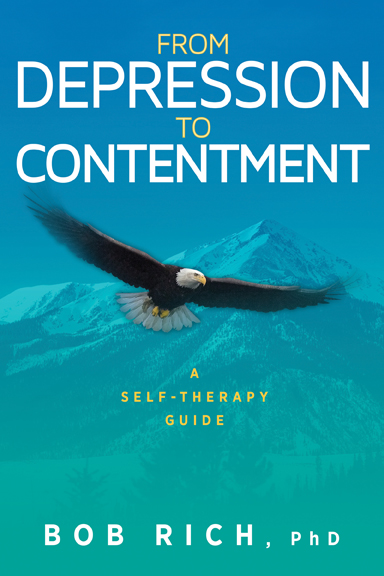
How did you come up with your cover art?

It’s actually designed by my publisher’s cover-art expert, but the concept is mine.
Birds are among my favorite people on this planet, and the wedgetail eagle is the favorite of favorites. You can read a guided imagery script about her here.
So, that’s what I wanted on the cover. But the only print-quality pic we could find was of a foreigner: an American bald eagle. (Actually, I am far more bald than they are.)

Do you have a routine for writing? Do you work better at night, in the afternoon, or in the morning?

I participate in a monthly round robin organized by a wonderful lady who teaches writing at a university, Rhobin Courtright. One of my essays is exactly on this topic.

Name one thing you couldn’t live without.

Oxygen.

Where do you call home?

I am a citizen of the Universe. All sentient beings are my family. Right now in this life I live on a tiny rock planet in orbit around a below-average yellow dwarf star in a fairly typical galaxy.
This planet is mostly water, and there are magnificent, intelligent aquatic creatures, but no, I am not one of them, but a land crawler. Most of the land on this mudball is currently in its northern hemisphere, though the blobs of land do move around. However, the best part is in the south, called Australia, which means Southern Land in some language.
There is a place called Melbourne, which has a population of about four and a half million land crawlers (as distinct from the cetacean owners of the planet). This is an outlying settlement of Healesville, which is 50 miles to its east. That gives me magnificent sunsets, thanks to the air pollution so many people cause.

What’s one of your favorite quotes?

Only one? That’s harsh. Being constitutionally unable to follow instructions, I give you a selection from the people I admire the most:
Dalai Lama: “My religion is kindness. The aim of enlightenment is to be of service.”
Mother Teresa: “Help one person at a time, and start with the one nearest to you.”
Greta Thunberg about the Glasgow climate talkfest: “Blah blah blah.”

For what would you like to be remembered?

Only two things matter in life: what you take with you when you die, and what you leave behind in the hearts of others. Everything else is Monopoly money.
What can you take with you: Lessons learnt, gained wisdom--or the opposite: hate, bitterness, blame and the like. So, you either advance in spiritual development, or go backward, or of course a bit of each. Look after the heart, the Love, and you can let go of everything else.

What scares you the most?

We are NOW in the 6th extinction event of Earth. When we have unraveled the web of life, we also fall though the hole. This is why I have been an environmental activist since 1972.

Are you an introvert or an extrovert?

Whatever organization I join, I soon become the convener of the Antisocial Committee, which refuses to meet, as a matter of principle.
For some lucky people, conversation is lubrication. Then there is my kind. For us, it is information. Tell me to have a chat with Amy and I’ll sit beside you like a dummy, unless you ask the right questions.
I am the genuine, patented party-pooper.
In answer to your question, I give you three guesses.

What is the most daring thing you've done?

Being born. In a past-life recall, I’ve learned that in this life, either I am doomed to witness the extinction of humanity, or be part of the team saving us. This is set out in my fictionalized autobiography, Sleeper, Awake.

What is the stupidest thing you've ever done?

See previous answer.

What are you working on now?

Much of my work is environmental, humanitarian and political activism. I am here to change the world, and am doing my best. So, I am very active in the political party The Australian Greens. Australia’s voting laws are different, and voting for a small party does not prevent you from still choosing among the two dinosaurs. One are conservatives, mis-labeled “Liberal,” the others are Labor, whose policies are Liberal Lite.
Part of this is a fundraising activity for the Greens candidate in my local electorate. I currently run weekly online sessions in positive psychology, training participants to use the tools within From Depression to Contentment and Lifting the Gloom.

Oh, you mean WRITING projects?
I am well into a book on grief, working title If You Have Lost a Loved One: How to cope with grief.
I have posted snippets on my blog already. Sadly, it is greatly needed.
Four short stories, and one partly finished, are ready for a new anthology, REAL Human Nature, focusing on all that’s good about people.
My publisher has a series of “101 tips about...” and wants me to write one on depression, so that’s on the way.
There is the start of a book focusing on positive psychology, Above Normal, and several unfinished short stories that don’t fit the specs of the anthology-in-waiting.
But my major project is a 5-volume science fiction series, "The Doom Healer.” I am currently pestering agents and publishers with the first volume. All I want to say about it here is that my hero, Bill Sutcliffe, will one day be beside Harry Potter.

Finally, from Bob:

I will make sure to answer any comments, and one week after publication date of this interview, will randomly select one commenter to receive a free electronic copy of a book. Again, you have three guesses regarding title.


ABOUT THE AUTHOR
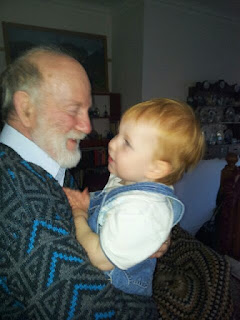
Bob Rich, Ph.D. earned his doctorate in psychology in 1972. He worked as an academic, researcher, and applied scientist until “retiring” the first time at 36 years of age. Later, he returned to psychology and qualified as a Counseling Psychologist, running a private practice for over 20 years. During this time, he was on the national executive of the College of Counselling Psychologists of the Australian Psychological Society (APS), then spent three years as a Director of the APS. He was the therapist referrers sent their most difficult cases to.

Bob retired in 2013, but still does pro bono counseling over the internet. This has given him hundreds of “children” and “grandchildren” he has never met, because many of these people stay in touch for years. His major joy in life is to be of benefit to others, which is why he wrote a book that’s in effect a course of therapy.

You can get to know him well at his blog, Bobbing Around.

Connect with Bob:
Website  |  Blog  |  Facebook  |  Twitter  |  Goodreads

Buy the book:
Amazon  |   Barnes & Noble  |  More


Monday, June 28, 2021

FEATURED AUTHOR: BARRY SHORE


ABOUT THE BOOK


The Joy of Living: How to Slay Stress and Be Happy is your passport to being healthier, wealthier, and happier in a time of unease and misgiving. Part journal, part memoir, part activity book, it's a timely guide to slay stress, beat burnout, and cope with life, post-pandemic. Author Barry Shore reveals eleven strategies that you can use to relieve stress and be happy . . . no matter the circumstance. Imagine standing up in the morning fully healthy and in the hospital that evening completely paralyzed—and not from a car accident or a spinal injury, but from a rare disease. You’ll join the journey as Barry moves from paralysis to now swimming two miles per day, six days a week. All with a SMILE.

Book Details

Title: The JOY of Living: How to Slay Stress and Be Happy

Author: Barry Shore (known as the “Ambassador of Joy”)
Genre: healthy living, emotions and mental health, journal/workbook, memoir, motivational self-help, nonfiction, self-improvement.
Publisher: Joy of Living Institute Publishing (May 11, 2021)

Page count: 132 pages


LOVE IT OR LEAVE IT WITH BARRY SHORE


A few of your favorite things: waking up in the morning, seeing my wife, singing , dancing, swimming.
Things you need to throw out: LOL. Tough Q: magazines over 11 years old; clothes over 8 years old that haven’t been worn more than twice in 8 years!! Tie Dye T-shirts . . . (We just moved from our home of 42 years so this was a REAL exercise . . . 18,000 pounds moved . . . 6,320 pounds thrown or given away!)   :)

Things you need in order to write: quiet, 55 minutes of dedicated time, pen(cil) and paper as well as keyboard, a good swim.

Things that hamper your writing: not quiet, snatching time, no pen(cil)/paper handy.

Things you love about writing: the flow of the muse, the mot juste, the voice.

Things you hate about writing: nothing, because hate doesn’t work with expressing . . . the “block” that just won’t budge is the worst part . . . writing drivel . . .

Easiest thing about being a writer: touching someone’s heart/head.

Hardest thing about being a writer: touching someone’s heart/head.

Things you love about where you live:  LOL!! Just moved after 45 years in southern California minutes from the beach to . . . the desert! Henderson, Nevada, minutes away from Las Vegas strip )OMG!) What we LOVE about being here: NEW community; small town feel (Henderson IS a small town despite the proximity to the mighty Strip), our son/daughter (in-law) and two grandsons ages 4 and 1; lovely home; great aquatic facilities close by, and friends, some old and looking forward to making new ones.

Things that make you want to move: we decamped from Venice Beach CalIifornia, one of the hippest most-visited places in all of SoCal. We left because of family and the political environment which invited vagrants and mentally unstable people to camp on the beach and in neighborhoods!! The past 2 years were very challenging. :(

Things you never want to run out of:
love, joy, my wife’s smile. 

Things you wish you’d never bought: the time share. The boat. The fractional ownership in a race horse.

Words that describe you: JOY-FUl. Sense of wonder (that of an 8-year-old). Giving and generous. Helpful. Caring. Exuberant.

Words that describe you but you wish they didn’t: Loud. Boisterous. Mr-Know-All.

Favorite foods: artichoke with my wife’s special white sauce. Morning tea with Turmeric/Ginger/Cinnamon (my own blend). Special breakfast prepared lovingly  by my wife Naomi (btw . . . of 44 years!) with yogurt, dates, gigs, blueberries, almonds, sunflower seeds (carefully arranged.) :)

Things that make you want to throw up: durian. Double cheeseburger.

Favorite music or song: Song: “Stuff that Works” Guy Clark, “Hallelujah” Leonard Cohen covered by almost any artist,  “Always be Humble and Kind” Tim McGraw, “Whatta Wonderful World” Louis Armstrong, “Feelin Groovy” Simon & Garfunkle . . . Basically upbeat positive lyrical songs/music.

Music that make your ears bleed: “heavy metal,” atonal ‘compositions,’ loud without a reason.

Favorite beverage: Raspberry Lime Rickey.

Something that gives you a pickle face: sour pickles!!

Favorite smell:
jasmine or lilac.

Something that makes you hold your nose: too much patchouli.
 
Something you’re really good at: LAUGHING.

Something you’re really bad at: (currently) running.

Something you wish you could do: play piano or any instrument WELL.

Something you wish you’d never learned to do: Great Q: have thus far in life found that everything has been of benefit somehow . . .  

Something you like to do: visit with a few friends.

Something you wish you’d never done: gone to jail.

Last best thing you ate: my special breakfast.

Last thing you regret eating: the last 5 pieces of watermelon after I KNEW I was FULL.

Things you’d walk a mile for: to see my wife, my kids, and grandkids.

Things that make you want to run screaming from the room: ill-informed people discussing a subject that I KNOW they know little or nothing about.

Things you always put in your books: becoming paralyzed overnight from a rare disease.

Things you never put in your books: jail time.

Things to say to an author: WRITE!

Things to say to an author if you want to be fictionally killed off in their next book: stop WRITING!!

Favorite places you’ve been: Venice Beach from 1975-2019; Amsterdam from 1969-1972; Yugoslavia in 1972-73, Italy from 1971-73; Israel from 1979-2019; Bangkok Thailand from 1979-1999; CapeTown RSA 1996-1999; et al.

Places you never want to go to again: Bulgaria. Russia.

Favorite things to do: read, learn, speak with friends/family, write, make videos about JOY.

Things you’d run through a fire wearing gasoline pants to get out of doing: meetings without an agenda OR meetings with an agenda where the agenda is clearly geared to causing dissension.

Things that make you happy: life, singing/dancing, learning, swimming.

Things that drive you crazy: mean people posing as sweet people.

Proudest moment: swimming one mile on my back after being paralyzed for over 2 years.

Most embarrassing moment: I was in an “adult book store” and a friend walked in!


Biggest lie you’ve ever told: that I won $11,000 in poker game (I won $1,000).

A lie you wish you’d told: that I saved a woman from drowning.

Best thing you’ve ever done: married my amazing wife Naomi.

Biggest mistake: selling most of my stock in my first start up . . . left $25 million on the table!

Most daring thing you’ve ever done: went to Europe in 1969 on a one-way ticket with $200 in my pocket.

Something you chickened out from doing: stealing a Ferrari.

The last thing you did for the first time: shared a YoutTube of Rin Tin Tin with my 4-year-old grandson :) It was black and white and very hokey (I LOVED it growing up). I wanted to see if it could hold his attention for more than 5 minutes . . . just on the edge . . . he’s s used to watching full color fast action “stuff.’ It was very interesting to observe.

Something you’ll never do again: reached out my hand to a cactus to test the needles and learned that it was a JUMPING cactus. My hand was full of needles necessitating a visit to an emergency room. :(


ABOUT THE AUTHOR  

“Ambassador of JOY” Barry Shore is a mental health activist, philanthropist, multi-patent-holding entrepreneur, speaker, author, podcaster, and former quadriplegic. After a rare disease paralyzed Shore from the neck down, he created the JOY of LIVING Institute™ (a platform that teaches people to live in joy, no matter the situation), Keep Smiling (a movement that has reached multiple celebrities and distributed millions of "Keep Smiling" cards worldwide), and Changebowl (a philanthropic platform featured in Oprah Magazine.) Barry's podcast, The JOY of LIVING, is heard globally and has over two million downloads.
Barry’s latest book, The JOY of Living: How to Slay Stress and Be Happy is available on Amazon and Apple Books.

Connect with Barry:
Website  |  Blog  |  Facebook  |  Goodreads  |  Instagram  |  YouTube

Buy the book:

Amazon  |  Apple Books

Tuesday, May 18, 2021

FEATURED AUTHOR: DR. ROBERT KILTZ

ABOUT THE BOOK


Living Your Best Life: How to Think, Eat, and Connect your Way to a Better Flow will provide the resources necessary to help create the ideal you by focusing not only on the body but on the mind and the soul as well. Dr. Kiltz applies a holistic approach to medicine, working collaboratively on his patients’ physical being as well as their emotional and spiritual selves. In his book, Dr. Kiltz provides guidance on various self-help techniques such as the power of mediation, eliminating stress, the benefits of yoga, and listening to your inner voice.

Book Details


Title: Living Your Best Life: How to Think, Eat, and Connect your Way to a Better Flow


Author: Dr. Robert Kiltz

Genre: nonfiction, health and wellness, mental health, motivation, self-help, holistic lifestyle, nutrition, diet


Publisher: Waterside Productions (April 21, 2021)


Print length: 252 pages


LOVE IT OR LEAVE IT WITH DR. ROBERT KILTZ


A few of your favorite things: my guitar, my potter’s wheel, but also my partner, my relationship, and my dedication to the work I love to do as a physician, artist, and father.

Things you need to throw out: somedays I think I need to throw out most everything in my closet for sure, but old clothes and stuff in drawers and on my desk that I haven’t touched or seen in way too long.

Things you need in order to write:
a quiet space, but mostly inspiration—thoughts and ideas that I learn from reading, listening to, and watching others. Then I can conceive of ideas that might be a little different or I can just twist and turn them around a little bit. 

Things that hamper your writing: distractions and being tired. When I’m tired, I’m a little distracted also. I just need to lay down, take a nap and rest and relax. Quite often even then I need to listen, watch or read something else to re-inspire me.

Things you love about writing: freeing my thoughts and ideas and expressing them help me to better understand myself and life in general. It’s like any other piece of art—my pottery and my painting—it’s an expression, but it lets those feelings flow and gives creativity to my life. 

Things you hate about writing: writer’s block and the fear and worry that my thoughts and ideas have little value and maybe won’t be liked. But I’m working on getting over that one.

Easiest thing about being a writer: nothing. Being a writer isn’t easy because there are all of those fears and worries we carry. But it’s not really a difficult job. It’s not digging a ditch or fighting in a war zone. 

Hardest thing about being a writer: the hardest thing may be conveying the real thoughts and feelings and finding the right words and ideas, but learning through practice and patience, those skills come too.

Things you love about where you live: I live on a lake in Upstate New York in Skaneateles. It’s the lake and nature that draw me. I think it’s the quiet nature of the area. Growing up in Los Angeles, there were (and still are) a lot more crowds, traffic, smog, and concrete. Although I did spend time at the ocean. I grew up in Newport Beach and in LA. I guess you take all of the good and the bad and learn from it. The beauty is all there in everything. But what I really love about Upstate New York is the greenery, the lakes, and the land.  

Things that make you want to move: not much, because I really love where I live. At times the winters can be a little cold and long, leaving me aspiring for a little sunlight and warmth, which is why I go down to Florida for a little bit in the winter too. So we can solve those problems quite easily.

Things you never want to run out of: life and enthusiasm, but I think we never really run out of any of that stuff. It’s always there.

Things you wish you’d never bought: that’s a hard one. I’m not sure I know of anything I wish I never bought. I typically don’t have any regrets of anything I’ve done or bought or experienced.

Words that describe you: energetic, enthusiastic, joyful, hardworking, and focused.

Words that describe you but you wish they didn’t: selfish and egocentric. But really that part of me is always focused on finding thoughts and ideas to help others, so that’s the conundrum.

Favorite foods: rib-eye steak. Pittsburgh blue sliced. The fattiest one you can find. Ice cream. Kiltz’s Ice Cream. Cream, egg, vanilla, a little bit of sugar. It’s the very best. But fresh is best.

Things that make you want to throw up: a merry-go-round. Spinning motion. I’m not good at that. And maybe a little goulash. Maybe it’s the word. I’ve never actually had it.

Favorite music: I love jazz, flamenco, Herb Alpert & the Tijuana Brass. I love most music, but I really love most music without words. I love the repetition of the guitar, piano, trumpet, and the wind sounds. Mostly when it’s positive and uplifting. Occasionally the sorrow and sadness of a song or music can get to your heart and help you dig deep into the feelings and bring about the understanding of our human-ness, our faithfulness, and our connection to the vibrations and energy of the universe.

Music that makes your ears bleed: I don’t particularly like heavy metal, but maybe it’s just the loudness and it’s just not my vibration.

Favorite beverage: coffee has been my favorite beverage for a long time, but I’ve been off coffee for a few weeks now trying to detoxify, so sparkling water or plain water.

Something that gives you a pickle face: pickle juice and tart lemonade.

Favorite smell: jasmine. The night-blooming jasmine that sat right outside our front door at our house in Los Angeles in Silver Lake. My mother loved that plant. I loved the smell. From time to time it comes to my mind and brings back fond memories of growing up in LA.

Something that makes you hold your nose: I don’t hold my nose for much because I have to get into some dirty stuff as a physician, but rotten eggs is a good answer.

Something you’re really good at:
pottery, flying, and being a fertility physician. Those are the things I’m good at, but I always say I need more practice and learning. There’s nothing we are perfect at. We need to keep working to be better at the thing and that takes practice, practice, practice.
Something you’re really bad at: in-the-line drawings. That means staying in lines. Most of my painting and pottery is kind of throwing mud or paint, not in the lines. Any time I try to draw something exactly how it looks, I go very abstract.

Something you wish you could do: singing better and reading music. I just need to decide to put my time and energy to it. Anything you really want to do, just do it. 
Something you wish you’d never learned to do: drink alcohol is about the only one.

Something you like to do: sit at the potter’s wheel making pottery and also in front of a canvas making paintings or free-writing in my journal, listening, reading, and being inspired by others. The thing that gives me the most meditative joy is sitting at the potter’s wheel making pottery.

Something you wish you’d never done: complained about anyone or anything. I’d like to get rid of the complaints I’ve lived in life.

Last best thing you ate: steak, lobster with butter and salt, and some really crispy French fries (fried in duck grease) and dipped in mayonnaise.
Last thing you regret eating: I don’t typically eat things I’m going to regret, but I guess it might have been the salad and vegetables I ate at the restaurant Tia and I went to over Easter. It was one of those six-course meals, and they had all of these fancy vegetables. I promised Tia I would eat everything on my plate, and I did. But it caused me a little ogida the next day. It’s all good. I survived and thrived.

Things you’d walk a mile for: to spend time with my partner, Tia, and my daughter, Pilar.

Things that make you want to run screaming from the room: too much loud noise and distractions.

Things you always put in your books:
stories of success.

Things you never put in your books: stories of failure, but only because I look at stories of failure absolutely as stories of success. The more you do, the more you learn and get creative, you find those stumbling blocks are really stepping stones.

Favorite places you’ve been: Cabo San Lucas with Tia or traveling through Paris, Rome, and London with all of the amazing life, art, people, and creativity in all of these inspiring places.
Places you never want to go to again: I don’t really have many places like that. There are great people in the Dominican Republic, but we just had an experience in an all-inclusive resort that wasn’t the greatest. I typically don’t think about things that way though.

Favorite things to do: fly my plane or jet, sit at the potter’s wheel, paint a canvas, and spend some time with Tia or Pilar.
Things you’d run through a fire wearing gasoline pants to get out of doing: maybe making the bed?

Things that make you happy: seeing others happy, seeing others succeed, seeing those patients suffering from infertility conceive and deliver that beautiful baby, and building families.
Things that drive you crazy: not spending time with my daughter or Tia.

Proudest moment: becoming a doctor and seeing my parents’ pride in that and, of course, becoming a father.
Most embarrassing moment: 
when I didn’t match for my residency in OB/GYN in my fourth year of medical school, that was an embarrassing moment, but I think I took it in stride and ultimately it was one of the best things that happened to me. It gave me the gift of something different that I learned from and grew from. It created even more for me. So, I don’t look at it as truly embarrassing because the more I’m embarrassed, the more I grow and learn and let it go.

Biggest lie you’ve ever told: ultimately, I am less or I am imperfect or I am a failure. And I realized that lie was always perpetuating what I thought about. But it was part of the energy that brought me to the truth that I am everything, God is everything, and we all are here doing our best every day.
A lie you wish you’d told: maybe it’s the part that God is all of us. But in fact, I recognize that it’s not really the lie, it’s the truth. But our brain still has a fighting nature with all of that. And so all things essentially in the lies I told are all perfect in the way they were told, but you’ve got to understand the truth when it comes for whatever reason.

Best thing you’ve ever done: become a father.
Biggest mistake: I make mistakes every day, but none of them are ultimately the “big one.” They are all small in the nature of the universe. We make them “big” or we make them “small” in our thinking.

Most daring thing you’ve ever done: learning to fly an airplane and a jet.
Something you chickened out from doing: dedicating my life to doing a better job when I was younger. And understanding the power of God. Had I begun to listen and learn when I was much younger, then maybe I would have learned new and different things at a younger age. But maybe my big “chicken out” thing today was to get in a helicopter and jump off onto a skill hill [heloskiing]. I’m staying away from that one!


OTHER BOOKS BY DR. ROBERT KILTZ

Daily Inspirations

The Fertile Feast


ABOUT THE AUTHOR


Dr. Robert Kiltz is a board-certified OB/GYN and reproductive endocrinologist, and Founder and Director of CNY Fertility, one of the largest and most dynamic fertility centers in the country, featured in the Wall Street Journal, Today Show, and CNBC for helping shape the future of fertility medicine. Dr. Kiltz has earned recognition outside of the fertility world for pioneering the holistic health movement and the keto lifestyle. He is the author of several books including The Fertile Feast and Daily Inspirations, and his latest, Living Your Best Life: How to Think, Eat, and Connect your Way to a Better Flow which released April 2021. In addition to his own media outlets, Dr. Kiltz appears regularly on numerous popular blogs and has shared his views as a TEDx speaker.


Connect with Dr. Kiltz:
Website  |  Blog  |  Facebook  |  Twitter  |  Instagram  |  Youtube  |  Goodreads 


Buy the book:
Amazon


Saturday, March 6, 2021

FEATURED AUTHORS: CENDRINE MARROUAT & DAVID ELLIS


ABOUT THE BOOK


The medium of limitless possibilities that is photography has been with us for almost 200 years.

Despite its great advancements, its early days still influence and dazzle a majority of professional photographers and artists. Such is the case of Cendrine Marrouat, Hadiya Ali, and David Ellis, three members of the PoArtMo Collective.

The result? Seizing the Bygone Light: A Tribute to Early Photography. This unique collection of artistic styles brings together different innovative concepts of both gripping writing and stunning visual imagery.

In the first part of the book, photographer and painter Ali introduces us to two of her favorite photographers by reimagining and recreating images in the nature of her photographic idols — Irving Penn and Karl Blossfeldt.

In the second part, photographer, poet, and author Marrouat shares a selection of her reminigrams, a digital style that she personally created to honor and pay homage to the early days of photography.

Author and poet Ellis rounds things off with a series of pareiku poems (the poetry form he co-created with Marrouat), offering fresh outlooks for his sincere, heartfelt adoration of photography of the past.

A fascinating and compelling book, Seizing the Bygone Light: A Tribute to Early Photography will leave you with a deep sense of appreciation and a greater understanding of photography.

PoArtMo Collective is a gathering of inspirational artists, writers, and photographers that combine their talents to produce positive, mixed media projects that stimulate the minds of the people who delve into them.


INTERVIEW WITH CENDRINE MARROUAT AND DAVID ELLIS


1. What is your book, Seizing the Bygone Light: A Tribute to Early Photography, about, and why did you decide to publish it?


Cendrine Marrouat: Seizing the Bygone Light: A Tribute to Early Photography is PoArtMo Collective’s new book. As the title indicates, this co-authored project (authors: Hadiya Ali, David Ellis and Cendrine Marrouat) pays homage to old photography, which has greatly influenced us as artists.

The book is divided into three parts. In part 1, Hadiya has “recreated” the timeless photographic styles of Irving Penn and Karl Blossfeldt. Part 2 features some of my reminigrams, a type of digital image that I created years ago. Finally, in part 3, David shares a series of pareiku poems, our own visual poetry form. Each piece is inspired by archival images.

The beginnings of photography were mostly marked with the documentation of the minutiae of everyday life. Seizing the Bygone Light: A Tribute to Early Photography looks at that triviality with a refreshed and positive outlook. That’s what makes our project unique and why we wanted to share it with the world.


2. What type of reader do you hope to appeal to with Seizing the Bygone Light: A Tribute to Early Photography?

David Ellis: We hope to capture the attention of a wide variety of readers. The ultimate goal for us when we created this project was to have an amalgamation of artistic influences, along with a blending of visual and written material. You get to appreciate the skills of the photographers of the past and we try to frame that with homage, inspiration and poetic nuance that celebrates the uniqueness of all that is around us.

These frozen-in-time capsules are magnificent in their stature, I sincerely hope that any reader will take the time to have a detailed look and find themselves bathed in magical nostalgia. Perhaps they will be motivated to take pictures in a similar fashion or write poetry themselves and that would be a really wonderful outcome for the book!


3. Tell us about PoArtMo Collective.

Cendrine Marrouat: I co-founded PoArtMo Collective in 2019 with photographer Isabel Nolasco, who left last year.

PoArtMo Collective currently has four members: Hadiya Ali (photography and paintings), David Ellis (poetry), Azelle Elric (drawings), and myself (photography, poetry and digital art).

Despite our diverse backgrounds, we believe that good art is all about memorable storytelling. Our goal is to create and release inspirational, positive and uplifting art and artistic projects, including ebooks.


4. In 2019 you founded Auroras & Blossoms. What is its purpose?


David Ellis: The purpose of Auroras & Blossoms is to provide a platform for positive, inspirational art across a variety of mediums. We are encouraged to share the wonderful gifts that people have submitted to us with people who are keen to be uplifted constantly by the art that they read, write and create. It is through our magazines, anthologies, guides, journals, poetry forms, marketing books, artistic movements, and support of the artistic community that we genuinely hope to bring joy and happiness to people when they need it the most.

Auroras & Blossoms is about everyone, about giving people a chance to express themselves and ultimately about making the world a better place through our art and our utmost respect for it.  

5. How did Auroras & Blossoms come about?

Cendrine Marrouat: In early 2019, David and I were discussing the frustrating process of submitting to magazines and journals. We were getting tired of the way many publications heavily factored an artist's credentials and publishing credits into their selective processes. Further, positivity in the arts was not encouraged enough.

We wanted to change the status quo, so we decided to create a platform that would promote positive, uplifting and inspirational written and visual art; and give artists (ages 13 and over) of all levels a place where they could showcase their work and build their publishing credits.

Auroras & Blossoms officially launched in October 2019 and has grown by leaps and bounds since then. We run a magazine, regular submission calls for anthologies, a monthly show, an artistic movement (PoArtMo), PoArtMo Collective, and a series of guides for authors and artists. We have also created several poetry forms. Also, we pay ongoing royalties to artists whose work has been selected to appear in our magazine and anthologies.


6. What is Auroras & Blossoms looking for in submissions?

David Ellis: We are looking for any material that is positive, uplifting in nature and leaves the reader in a better place than when they first started admiring the art.

Our submission guidelines are extremely detailed and specific, so you will be able to find all of the different art types that we accept in our general submission FAQ.
 
Our anthologies sometimes have specific themes when it comes to submissions, but we will accept any regular submissions that take us on a journey (it can be sad or nostalgic) that winds up giving us a positive overall message.

Finally, I can definitely tell you what we don’t want! We are a family-friendly platform, and do not want any swear words or dirty words. We also do not want any erotica or anything to do with politics.


7. What is included in your Auroras & Blossoms Creative Literary Journal?

David Ellis: In our Auroras & Blossoms Creative Literary Journal, we accept poetry all the time, but we are giving priority to six-word stories, short stories, flash fiction, essays, drawings, paintings, and photography, which we would like to see more of in the future.


8. What is included in your guides and workbooks?

David Ellis: In our guides and workbooks, you can find a myriad of ways to market yourself as an artist, plenty of writing/art prompts to stimulate your creative juices, social media tips and how to improve your own efforts in your given craft too!


9. How did the two of you meet?

Cendrine Marrouat: We met online in the mid-2010s. At the time, I was looking for blogs to promote one of my books. David’s warm and (very) professional response impressed me.

After he had interviewed me for his blog, we stayed in touch and developed a friendship. David has great business ethics and acumen. He is also the best business partner I have ever worked with.

 
10. What’s next for you as a team?

David Ellis: So many things! We would love to recruit more members into our PoArtMo Collective and create artistic projects with them where they can earn royalties and be proud to be associated with fellow artists.

Cendrine & I are constantly looking at new genres for us to be able to release books into. We are both still extremely passionate about our writing and poetry but we want to continue putting our positive, inspirational philosophy out into the art/writing communities in as many different ways that we possibly can!


11. Is there anything else you’d like readers to know about you, your site, or your book?

Cendrine Marrouat: David and I have more than three decades of combined experience as authors, writers, artists, and marketers. Our goal has always been to educate and inspire people, as well as encourage artists to create meaningful work.

We believe that Auroras & Blossoms and PoArtMo Collective offer much needed alternatives to many of the online platforms focusing on the “15-minute fame” motto. And we are confident that you will agree.


ABOUT THE AUTHORS


Cendrine Marrouat is a French-born Canadian photographer, poet, and the multi-genre author of more than 30 books. In 2019, she co-founded the PoArtMo Collective with Isabel Nolasco, and Auroras & Blossoms with David Ellis. A year later, Ellis and she launched PoArtMo (Positive Art Month and Positive Art Moves) and created the Kindku / Pareiku, two forms of poetry. Cendrine is also the creator of another poetry form (the Sixku) and a type of digital image (the Reminigram).

Cendrine writes both in French and English and has worked in many different fields in her 17-year career, including translation, language instruction, journalism, art reviews, and social media.


David Ellis lives in Tunbridge Wells, Kent in the UK. He is an award-winning poet, author of poetry, marketing
workbooks/journals, humourous fiction and music lyrics. He is also a co-author and co-founder of Auroras & Blossoms, and the co-creator of PoArtMo (Positive Art Month and Positive Art Moves) and the Kindku / Pareiku.
David’s debut poetry collection (Life, Sex & Death) won an International Award in the Readers’ Favorite Book Awards 2016 for Inspirational Poetry Books.

David is extremely fond of tea, classic and contemporary poetry, cats, and dogs but not snakes. Indiana Jones is his spirit animal.


Hadiya Ali is a 19-year-old Pakistan-born artist who now lives in Oman. A keen observer of people, she noticed at a very young age how talented market workers were at what they did – but that they seemed unaware of their own talent. So she decided to capture their stories with her camera. Before she knew it, her project had attracted attention and she had been booked for her first professional photoshoots, suddenly realizing that she, too, had been unaware of her own talent all this time.

Hadiya works on projects that capture unique stories and themes. Some of her photography is featured in The Auroras & Blossoms PoArtMo Anthology: 2020 Edition.


Connect with the authors:
Website   |  Blog  |   Facebook  |  Twitter  |  Instagram  |  YouTube   |  Goodreads

*Buy the book:
Books2Read

*Book to be released mid-March

TRAILER


Tuesday, April 28, 2020

FEATURED AUTHOR: JANET LoSOLE


ABOUT THE BOOK


Embarking on a homeschooling field trip to Central America is stressful enough, but add in perilous bridge crossings, trips to the hospital, and a lack of women’s underwear, and you have the makings of an Adventure by Chicken Bus.
Buckling under a mountain of debt, Janet LoSole and her family are at their wits’ end. Determined to make a drastic change, they sell all worldly possessions and hit the road. With only a few items of clothing, a four-person tent, and little else, the family visits a sleepy island backwater in Costa Rica to save endangered sea turtles. In Panama, they bounce around like turnips in the back of a vegetable truck to reach an isolated monkey sanctuary. In Guatemala, they scale the ancient Mayan temples of Tikal.
In between tales of begging rides from total strangers and sleeping overnight in the jungle with an indigenous family, Janet endorses community-based travel—supporting local businesses and favoring public transportation called chicken buses. She also writes candidly about what it takes to travel long-term with two little girls amid the chaos of border crossings, erratic drivers, and creepy crawlies lurking at the edge of the jungle.


Book Details: 


Title: Adventure by Chicken Bus: An Unschooling Odyssey through Central America


Author: Janet LoSole


Genre: nonfiction (memoir)


Publisher: Resource Publications (Dec 11, 2019)


Print length: 226 pages


LOVE IT OR LEAVE IT WITH JANET LoSOLE


Things you need in order to write: a good night’s sleep, tea, comfortable chair.
Things that hamper your writing: lack of sleep.


Things you love about writing: getting my ideas down and crafting a sentence.
Things you hate about writing: how draining it is mentally.

Easiest thing about being a writer: working from home, until I start to feel isolated, then I go out and meet people for coffee.
Hardest thing about being a writer: isolation, and editing.

Something you like to do: learn foreign languages . . . when we arrange vacations, I build in time to visit places where I can practice speaking the language.

Something you wish you’d never done: listened to someone tell me I couldn’t write.

Favorite places you’ve been: Nicaragua – the people are so warm and generous.

Places you never want to go to again: Amsterdam – way too crowded and chaotic.

Favorite things to do: travel, read.

Things you’d run through a fire wearing gasoline pants to get out of doing: getting up early.

Best thing you’ve ever done: Homeschool my kids.

Biggest mistake: staying too long in toxic relationships.

Most daring thing you’ve ever done: backpacked through Central America with two young daughters.

Something you chickened out from doing: joining a francophone Toastmasters meeting in order to improve my French.


ABOUT THE AUTHOR 


Janet LoSole is a freelance writer living in Ontario, Canada. She holds a Bachelor of Arts Degree in French Linguistics from York University in Toronto and a Bachelor of Education Degree from Nipissing University. She is a certified TESOL instructor and has taught ESL internationally since 1994. She began homeschooling her daughters in 1997. She writes about traveling with children and homeschooling. Her work has been published in: Canada’s Education Magazine, Natural Parent Magazine, The Alliance for Self-Directed Education, Outdoor Families Online, Unravel, and elsewhere.


Connect with Janet:
Website   |  Twitter


Buy the book:

Amazon  |   Barnes & Noble

Saturday, April 21, 2018

FEATURED AUTHOR: JENNY Q


ABOUT THE BOOK

In January of 2014, the village’s beloved herbalist fell dramatically ill. The shock of this event brings the community of Joshua Tree together, each member using their own form of wit, practical magic and spiritual wisdom, in a desperate effort and race against time to save the life of their beloved Jenny Q. 

A close-knit desert community takes center stage in this unique book. A woven compilation of letters, prose and poems tell the story of the power of love to overcome adversity, death, coma and amputation.

While the words of her community tell the story from an outside perspective, Jenny Q’s own insightful writings provide a fascinating window into a range of rare experiences–from the worlds encountered inside a coma, to being ravaged by sepsis, the absolute alteration of losing one’s legs, the subtle venom of PTSD, and the nightmare of opiate withdrawal.

Though Held Together ruthlessly explores dark and fearful places, it is also a celebration of the human will and the power of love.


Book Details:

Title: Held Together

Author: Jenny Q

Genre: Narrative nonfiction

Publish date: June 1, 2018

Page count: 500


INTERVIEW WITH JENNY Q


Jenny, how long have you been writing and how did you start?
I have been writing most of my life.

What inspired you to write this book?

Right after I got home from the hospital, many people asked me to write a book about this event. While I loved the idea, I was still so sick, it seemed like an impossible feat. I had a couple of close friends, and my wife, as cheerleaders that gave me the courage. I asked my community for their stories, and as they came in, I felt my life get patched back together, being gifted memories I had no access to, as I was so far gone into coma, pain, and painkillers for much of a year.

How long did it take you to write this book?
It took me three years to write this book, but there was a lot of time when I was too sick to give it much time.

What do you hope readers will get from Held Together?
I really want to reach out to other disabled/alter-abled folks and others struggling to get off their reliance on opioids and other addictive substances. When I came home from the hospital, I felt so lonely. I felt like the only disabled person in the world.  I am not saying that I intellectually thought that, but emotionally felt that way.

Also, I wanted to tell the whole story, the down-and-dirty, painful journey and the gifts received. So much wisdom was gained. But mostly, I wanted to speak of the love from my family and community. That love kept me alive and kept those that love me sane. It really is a miraculous tale of how we weave our own story, and my community did just that. They refused to let me die, they willed me alive with their love and prayers.

How did you come up with the title?
My wife thought it up! Well, really, there was much discussion and meditation surrounding that. For a while, I thought about calling it Yoga on Stilts, as I spent much time in asanas meditating on how my whole life had become what felt like a balancing act. But this book is written by and about a community that holds each other together emotionally and physically.

Do you have a day job?
I am an herbalist and own an apothecary, called Grateful Desert in Joshua Tree.
I am a mom and homeschool my beautiful twelve-year-old daughter, and I am the wife of a miraculous and gifted singer and songwriter, Myshkin Warbler.

How would you describe your book in a tweet?
Love letters & intimate revelations tell the true story of a Joshua Tree community and a mother’s battle to overcome death, coma, and amputation, for love.

How did you come up with your cover art?
My dear friend Georganne Deen is a renowned artist who lives in Joshua Tree. When I was still in the hospital, she heard a story about me asking for a scotch on the rocks right after emerging from a coma. She painted this idea and sold it to Danny Elfman in a benefit to financially support my family while I was away.

I commissioned her to paint my first vacuum prostheses with symbols that relate to my life.
I’ve done my best to find the beauty in this very difficult experience. I feel like this is well illustrated by these prosthesis, which are such a hardships to wear but are beautiful.

The beauty of her art combined with the reality of an amputee was a powerful combination for the cover of this book. These painted legs illustrate the beauty and hardship that is my life.

What was your favorite childhood book?
Madeleine L’Engle’s A Wrinkle In Time. That book really shaped my life. I still live by science embedded in magical beliefs.

What book are you currently reading and in what format?
I hadn’t had a chance to read a novel in so long! I have been so entrenched in writing this book that all my free time was spent on my own work. That being said, I just picked up a book by Sue Grafton. I love her series, a good who-done-it that is not too gory. Plus, you can’t help but fall in love with her characters.

Do you have a routine for writing?
My life is so full: parenting, family, community, people coming and going through our home much of the day. So it is no wonder that I get up at 4:30 in the morning to have quiet, uninterrupted time. I make myself an espresso and get out my journal. Much of my book comes from these pages.

Name one thing you couldn’t live without.
My community.

Where would your dream office be?
Well, in truth, I would have a few of them. One of the perks, and curses, of having traveled is dreaming of many places. I would have an office in Scotland, in Hawaii, in Tuscany, and of course right where I am, in Joshua Tree.

If you had a swear jar, would it be full?
Unfortunately, yes. My poor daughter . . .

Are you an introvert or an extrovert?
I think almost everyone I know would call me an extrovert, though I have introvert tendencies. I like the word my friend Sue used the other day . . . ambivert. I am definitely that.

What's your favorite treat for movie night?

Popcorn with curry and nutritional yeast.

What is the most daring thing you've done?
Chose to live.

What do you like to do when you’re not writing?
Losing limbs and extremities has forced me to find alternative ways to do things. I love to crochet and knit. I just picked up embroidery. And I have always been a music devotee. After I lost my legs and many fingers, I picked up the cello and fell in love with my new instrument.

Do you sweat the small stuff?
Perspective is a beautiful thing. I didn’t work this hard to survive to be sad and frustrated all the time.

How long is your to-do list?
Don’t even get me started.


READ AN EXCERPT


One

the meeting (excerpt from Held Together by Jenny Q)
foggy times.. not much of reality to grasp a hold of.. in and out.. people around me..
doctor after doctor after doctor.. 
confusion, pain, hallucinations, fear..
starting to recognize people around me.. the nurses, the doctors..
watching nurses do their jobs, taking vitals, administering meds, dressing wounds,
looking for pulses..
there is to be a meeting.. it is talked about.. 
i remember it because it was mentioned over and over..
the meeting, everyone will be there, a big deal..
a party almost.. this is not correct, i know, but they are talking about it with such anticipation and preparing me for it as though there will be cake and candles..
everyone will come! all your doctors and nurses and family! 
let’s clean you up and prepare you!
everyone is there.. they are all around me.. in a wide arch around the room, squeezed in because there are endless surgical teams.. colorectal, wound, infectious disease.. what else? social workers?  my sister joyce is there, and my brothers johnny and jimmy, mom, dad and myshkin.. 
as a matter of fact, it does feel like a party: doctors sitting on stools, people perched on my bed.. everyone talking and looking at me..
it is long and i drift in and out.. they are talking about my health, speaking of my progresses and declines..  i sleep a little, i think..
then sharp focus to doctor bernal.. she is talking about my legs.. they are not getting better..
they will need to be amputated..
everyone is looking at me.. holding their breath it seems, and staring..
i know i need to hold them up, let them know i can do this..
i somehow know that this is my job...
so i let out a deep breath and say confidently, “let’s do it!” and start to cry..
everyone in the room is crying..


ABOUT THE AUTHOR

Jenny Q was born in Southern California to Palestinian immigrants. Her love of herbs
began in her teens while on the road following the Grateful Dead. After exploring many heart
homes, she set her roots in Joshua Tree, California, where she opened Grateful Desert, the
local apothecary.

Joyously sharing her life with her tight-knit desert community, Jenny lives with her
beloveds~ Yazzy, her daughter and Myshkin, her wife.

Connect with Jenny:
Website  |  Blog  |  Facebook

Buy the book:
Coming in June!


Wednesday, March 2, 2016

FEATURED AUTHOR: ERIC BURKHART


ABOUT THE BOOK

This is the story of a young American who would eventually fulfill his dream of becoming a CIA Case Officer, only to have a promising career cut short after having been purposely poisoned by a contact.

Eric Burkhart was raised in Europe in a bilingual household, and accepted a job in Africa right out of college. Upon his return to the United States, he was hired as an Immigration Agent in Laredo, Texas, working Inspections on one of the busiest port-of-entries connecting the United States and Mexico. This experience is detailed in this humorous, occasionally heartbreaking memoir about choosing to be a survivor.

In 2000, Burkhart accepted a position as a Case Officer with the Central Intelligence Agency. The book includes details of both the notoriously arduous hiring process and the rigorous training program, including Burkhart's eventual successful completion of the Espionage Course taught at the famous "Farm." Burkhart's first overseas working experience was in war-torn Kosovo, where he was unwittingly poisoned by an unstable intelligence contact. Burkhart would struggle with the repercussions of this episode for the remainder of his career, and eventually be obliged to accept full medical retirement from the CIA.

However, before retiring, Burkhart completed tours in Iraq and Africa. His time spent in the Green Zone almost immediately following the occupation of Baghdad, constitutes the majority of this enlightening book. Burkhart exposes the reader to the human element within the CIA, and we are introduced to a variety of characters, some who will seem familiar, and some who reveal the eccentricities we expect with this kind of occupation.

Follow Burkhart through the battlefields of Iraq, past the Iraqi Insurgency, and to his next assignment in Africa. Burkhart leaves no emotion unexpressed as he details his medical struggles with the horrific damage caused to his body from Toxic Exposure. Wracked by pain, Burkhart reaches the point where he must consider quality of life issues, and has to accept retirement as a necessary decision. Burkhart has a story to tell, and leaves no stone unturned during this turbulent time both in his life, and in our history.


INTERVIEW WITH ERIC BURKHART


Eric, how did you get started writing?

I have always been a reader. I can't remember the last time that I wasn't in the middle of a book. Along with reading, I've always enjoyed writing, but never considered becoming an author until I was facing medical retirement. It was difficult accepting full retirement at my age, but it was very important that I stay focused on the positive and work towards staying healthy. I decided to write the book as a part of "self-therapy." I have always been saddened by the dirth of available information regarding the realities of working in espionage in the 21st century, and I decided to write about my career, which included enough of a variety of scenarios and events to answer many questions that people have about the CIA. I also used the effort as part and parcel of my recovery; as I progressed, another chapter would be completed.

Do you have a writing routine?
When working on Mukhabarat, Baby!, I made a point, whenever possible, to write everyday. My book utilizes events from my career to provide the opportunity to explain the entire intelligence collection process. In that circumstance, it was easier for me to write as much as possible at one sitting, and leave as little time as possible in between writing sessions. This allowed for vital continuity to the mood and atmosphere of the story. In most instances, I used a full chapter to break down each respective story. I gave myself plenty space to adequately introduce the characters, storyline, and backdrop.

What do I think makes a good story?
A story won't be good if the author is not 100 percent committed. The best books are the ones that insist on being written. If the writer truly appreciates their own story, and is confident in his/her ability to paint the visual impression, then all that remains is the telling of the story.

Do you write everyday?
As I mentioned earlier, when I'm working on a book, I prefer to write everyday. For my style it is imperative to keep continuity of mood and atmosphere. A substantial break during the writing of a particular event or story can impact the its flow. At the moment, I haven't decided if a second book is in my future, but I can't imagine writing in any other style. Once a story decides to be told, it really tries to rush out of me, and at times I have no choice but to write everyday.

How often do you read?
I read all the time, and at times have been scolded for reading at the dinner table and when entertaining guests. I love to read more than anything, except discussing the book I've just read another serious reader. Actually, my reading preference is different from the genre in which I write. Normally I read biographies and non-fiction, but I truly enjoy classical literature. My preference is French classical literature from within the last two centuries, but nothing very recent. I also really enjoy a number of American writers as well, especially Flannery O'Connor and Katherine Ann Porter.

Is writing your dream job? 
No. I wrote my memoir because I seemed to have reached the perfect opportunity to focus on that form of expression. I was recently retired, in need of a focus, and in possession of a collection of memories that, if presented properly, should get the attention of many people. I began writing my book with a passion for the subject matter which has yet to wane. I have no idea if I have another book hidden away somewhere in the ol' grey matter.  Although I thoroughly enjoyed the actual writing process, I can think of a number of jobs that I would prefer. I love the world of espionage. It's something that I will forever feel connected to, and something at which I did well.

Do you have any marketing tips you could pass on to indie authors?

Absolutely - although I realize how it is when money is tight, all authors really need a Publicist. If your book has been published by a publishing house, then in most instances it will be provided to you (no guarantees that all in-house Publicists are top notch). I made the decision to contact a publicist and was lucky enough to get her to represent me. I went from book presentations at the local VFW, to traveling across the country for radio and TV appearances. Do your homework and read references; there are a couple of great publicists waiting for good books and dedicated authors.

Okay, now for some fun stuff. If you could watch one television station for a year, what would it be?
I would choose any 24-hour TV channel from France. French is my first language, and just hearing it spoke by a native speaker breaks back memories of a childhood in southwest France, surrounded by castles, quaint little villages, and the best bread in the world.

How often do you tweet?
I tweet roughly six times a day, enough to mention the subject of my latest blog post and provide a link. I can appreciate Twitter, but personally, I don't enjoy it enough to dedicate the necessary time.

How do you feel about Facebook?
Facebook can be useful, and it has helped me relocate with a number of old friends. Facebook has a number of useful options, including sharing pictures, chatting, spreading social awareness, organizing, and many more. But I remain concerned about the amount of information that Facebook not necessarily collects, but has the ability to collect. When I am on Facebook, I have no real assurance that Facebook hasn't found a way into my CP and all my tax and banking records. I also have great concern about the likelihood that children will be exploited through these new tools for social networking.

For what would you like to be remembered?

I would like to be remembered as my father's son.

What five things would you never want to live without?

I would not want to live without food, soap, shampoo, books, and my glasses.

Wise choices. What do you love about where you live?

I live in Texas, and I love its BIGNESS. West Texas is sparsely populated and contains the Guadalupe Mountains, the Marfa Lights, the McDonald Observatory, and Big Bend National Park. East Texas is full of forests and rivers, ideal for camping and searching for Bigfoot! South Texas binds together the Hispanic community that was here when Spain ruled over the Brazos, and the spirit of the American settlers that arrived her looking for a new life. What do I love about Texas? We Texans don't bicker with each other. I speak Spanish, and I think anyone who lives permanently this far south should consider it as well.

What is your favorite fast food?

Since my medical issues required an abrupt change in my diet, I can't eat the way I used to. Also, when I became a vegetarian at twelve, I wrote off all the Big Macs and Hunger Busters. But at the end of the day, nothing beats an order of French fries from McDonalds.

What drives you crazy?
I am annoyed to great lengths by hard-working demographic groups within our community, who continually vote the same way, year-after-year, regardless of what has or hasn't been accomplished. I am truly disgusted by the same political machines (on the border in Texas, they've made it an art form) taking for granted some of the most hard-working, honest, decent people that our country has the pride to call its own. Regardless if any of the promises have been fulfilled, its the same names and same party getting into office every election. Taking advantage of good folks really drives me crazy.

What is your superpower?
I have two: I can tell immediately when someone is lying, and I can also size up people quite quickly. Both skills were greatly enhanced during my career, and also used regularly.

Name one thing you're really good at and one thing you're really bad at.
I'm really good at finding four-leaf clovers and really bad at basketball.

What do you wish you could do?
I wish I could provide a home for every abandoned cat and dog in the world, and I wish I could make a law that only people who are willing to spade/neuter their animals should be given a license to have one. The situation is out-of-control, especially with cats. When people see abandoned cats hanging around dumpsters, they assume that cats live just fine in the wild, but they don't; they are domesticated and fall victim to diseases, predators, starvation, and the elements. And in Hollywood, tiny dogs have become fashion accessories.

Where is your favorite place to visit?
My favorite place to visit to see family is France, but for shorter excursions, I love Savannah, Big Bend, and South Africa.

What would you name your autobiography?
I would title my autobiography .... When The Long Trick Is Over.

Describe yourself in five words:

I am obsessive, compulsive, clean, neat, and private.


ABOUT THE AUTHOR

Eric Burkhart was born in North Carolina in 1965, and raised in France by his mother while his father was serving in Vietnam. Eric's parents retired to San Antonio, Texas in 1978, and Eric has considered himself a Texan since that time.

​After completing college, Burkhart relocated to South Africa for a job in community planning and design. After returning to the United States in 1994, Eric started a career in federal service by becoming a Federal Agent. In 1999 he moved over to the CIA, which became his passion and focus in life. After being poisoned while working in Kosovo in 2001, Burkhart was eventually obliged to medically retire, but not before extending his career to include tours in Iraq and Africa. Mukhabarat, Baby! is Burkhart's first book.
Connect with Eric:

Website  |  Blog  |  Facebook  |  Twitter  

Buy the book:
Amazon  |   Barnes & Noble 


Wednesday, October 7, 2015

BOOK BLAST: HOW TO PREPARE FOR OLD AGE


ABOUT THE BOOK

In this touching, often humorous and very personal account, Bernie shares his 86 years of life, love, loss and laughter as an inspirational guide to what it means to age without growing old. His advice on love after 60, how to talk with family members about illness, what you should be prepared for when confronting tragedy and loss, what it means to be a caregiver to a loved one, and many other of life’s challenges are a must for family members young and old.

Mr. Otis’s book is a treasure trove of personal and professional life experiences that will help you prepare for old age and take control of the nature of aging. Be prepared to laugh out loud and quietly shed a tear as Bernie takes you through the voyage of life.


ABOUT THE AUTHOR

Bernard S. (Bernie) Otis is a delightful and well known speaker, writer and community leader who has made his 65-year career in the food service facility planning, marketing, management, sales and consulting industries. His life’s work has included service to many hotels and restaurants in Southern California, Santa Clarita, San Diego, Las Vegas, and New York City among others. He has been instrumental in serving several top companies such as Hewlett Packard and Disneyland as well as major hospitals, universities and restaurants around the country. His community involvement includes work with the National Indian Gaming Association and the Rotary Club (where he has been a member since 1954 and a Paul Harris Fellow). After his wife’s death in 2012, Bernie, a trained Hospice caregiver, began working with families of terminally-ill patients.


Connect with Bernie:

Blog  |  Facebook  |  Twitter