High school teacher Emma Lovett is finally recovering from her first year of teaching when she discovers another dead body. As if that wasn’t bad enough, this time, someone has killed a student, Kisten Hollis. Emma and her best friend, Leslie, are desperate to solve this murder. But suspects abound. The perpetrator could be a teacher, an administrator, a member of Kisten’s zealous church community, or even another student. Emma must juggle her teaching responsibilities, her new romance with handsome Hunter Wells, and interest from a hunky second suitor, all while searching for evidence to bring a killer to justice before someone else dies.
A few of your favorite things: Books, music, movies; any sort of live production of anything (plays concerts musicals). Things you need to throw out: My worrywarting tendencies.
Things you need in order to write: TIME . Things that hamper your writing: LACK THEREOF . Things you love about writing: Ideas and words and putting them together . Things you hate about writing: “Trying to get the word out” about my books. Argh!
Easiest thing about being a writer: Many, many ideas! Hardest thing about being a writer: Too many ideas.
Things you love about where you live: Ocean, weather. Things that make you want to move: Too many people, too many cars .
Things you never want to run out of: chocolate . Things you wish you’d never bought: FIDGET SPINNERS .
Words that describe you: Goofy, friendly, smiley, straighforward, happy . Words that describe you but you wish they didn’t: Bossy, abrupt, flaky, spacey .
Favorite foods: Anything chocolate or in the chocolate family (caramel, vanilla, etc...) . Things that make you want to throw up: Scallops, oysters GAH!
Favorite music or song: Anything 80s . Music that make your ears bleed: Rap and any steel guitar.
Favorite beverage: Dr Pepper. Something that gives you a pickle face: Apple cider vinegar (but I drink it anyway. It’s good for your gut flora—helps prevent colds. None of that is true for Dr Pepper) .
Favorite smell: Gardenias, ocean breeze, pine trees. Something that makes you hold your nose: Little boy farts (and man, they fart A LOT) .
Something you’re really good at: Listening, when I am conscious and self-aware . Something you’re really bad at: Listening, when I’m distracted or worried .
Something you wish you could do: Speak fluent Spanish. Something you wish you’d never learned to do: Clean toilets. (I had to clean offices for YEARS and now I save money specifically to pay someone else to do it.) People you consider as heroes: Anyone who spends more time thinking about helping others than helping themselves. Non-judgy people. People with a big L on their foreheads: Anyone who is overly self-absorbed. Especially the ones who think they are not, but really it’s all just ME ME ME ME ME. Gah!
Last best thing you ate: Krispy Kreme chocolate frosted white kreme donut (and can I just COMPLAIN for a teeny second about autocorrect, or Siri, or whatever program thinks they know what I am trying to spell better than I do. I had to type this THREE TIMES and the computer kept changing it to “Kristy Keene” donuts. Grrr) Last thing you regret eating: I don’t believe in regrets.
Things you’d walk a mile for: My boys . Things that make you want to run screaming from the room: That ‘Farmers Only.com’ commercial. Eeeeeuuuw earworm!
Things you always put in your books: Shakespeare quotes . Things you never put in your books: Sad endings.
Things to say to an author: I’m on my way to review your book RIGHT NOW! Things to say to an author if you want to be fictionally killed off in their next book: I only read the first 10% of your book, but I hated it so much I went ahead and gave you a bad review anyway. (True story.)
Favorite places you’ve been: Capri and Sorrento, Italy, New York City . Places you never want to go to again: It’s really, really hard for me to spend much time in Phoenix-the heat makes me so ill, but I have to keep going back because that’s where my husband is from.
Favorite genre: Mystery, thriller, horror, YA. Books you would ban: I would NEVER ban a book. I’ll just choose not to read it. I always advised my students (and their parents) to do the same.
People you’d like to invite to dinner: I really want to have dinner with Jon Stewart. He’s UBER smart and well-spoken and quick on the draw. I’d just like to know if I can hold my own in a conversation with him. People you’d cancel dinner on: Emotional vampires and name droppers.
Favorite things to do: Reading, going to plays, concerts, ballroom dancing, karaoke . Things you’d run through a fire wearing gasoline pants to get out of doing: Cleaning bathrooms.
Things that make you happy: Birds, flowers, books, my family, the ocean, music . Things that drive you crazy: Tailgaters, people who don’t use their turn signal or who slow the traffic light way down because they’re ON THEIR PHONE. Grrr.
ABOUT THE AUTHOR
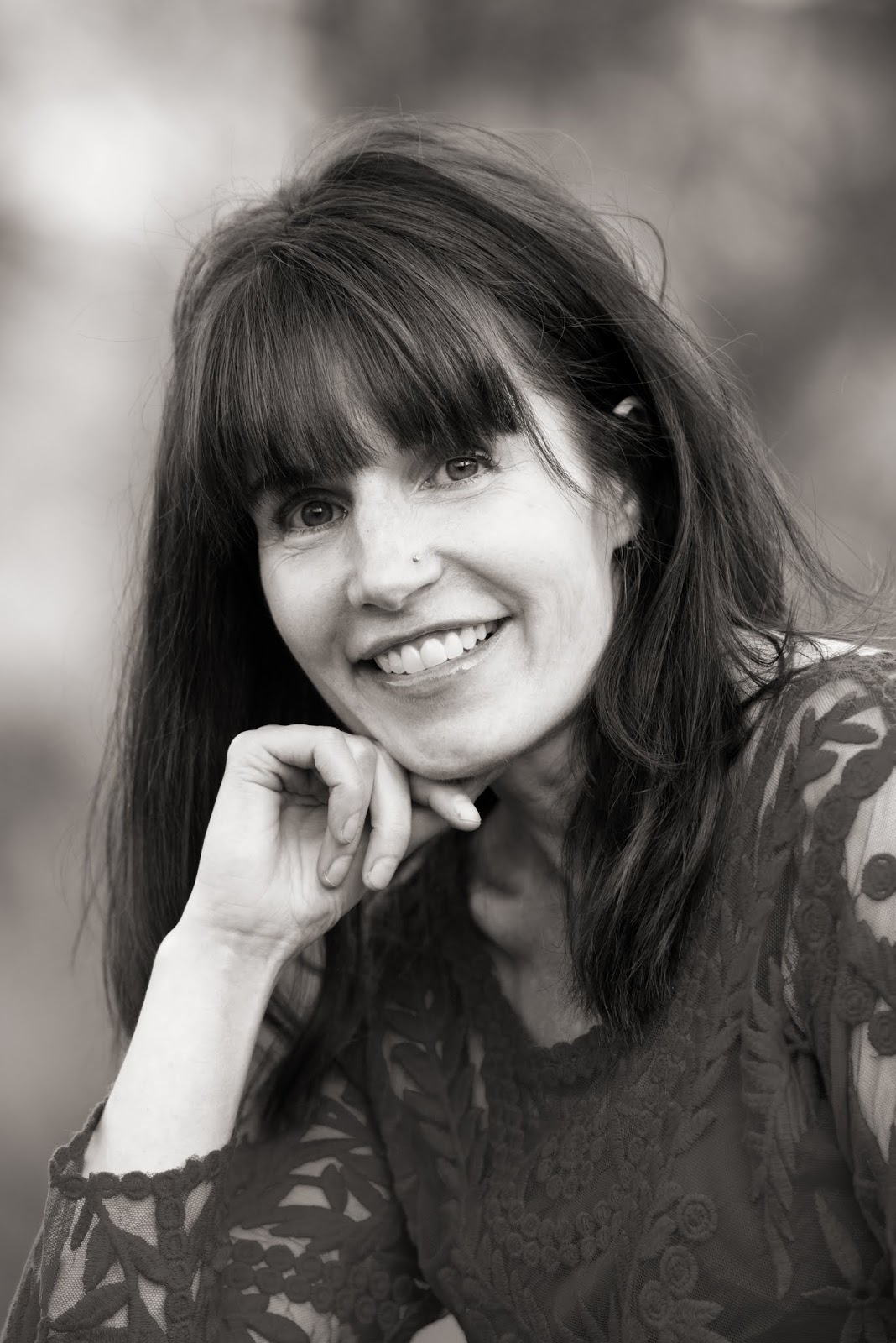
Kelley Kaye is the pen name for the cozy mystery fiction of Kelley Bowles Gusich. Kelley taught high school English and Drama for twenty years in Colorado and California, but a 1994 MS diagnosis has (circuitously) brought her, finally, to the life of writer and mother, both occupations she adores, and both of which were dreamed of clear back at stories surrounding her Barbie and Ken. Her debut novel, cozy mystery Death by Diploma, was released by Red Adept Publishing February 2016, and is first in the Chalkboard Outlines® series. Book #2, Poison by Punctuation, was released April 24! She’s also writing YA under the pseudonym Kelley Kay Bowles. That novel, Down in the Belly of the Whale, arrived May 5. Yay, books! She has two wonderful and funny sons and an amazing husband who cooks for her. She lives in Southern California.
I'm very happy to welcome Steve Marantz to A Blue Million Books today. Steve is the author of the non-fiction book Next Up At Fenway, just recently published by Inkwater Press.
About the book:
"Through the story of Marcos Baez and Fenway High, Steve Marantz shows the humanity and prospects of Latino student in our nation’s public schools. Next Up at Fenway gives us a window into how social forces and education policy decisions are playing out in real people’s lives -- for better and worse -- within America’s fastest growing demographic. This book is both Americana and a reality check for the 21st century.” - Sonia Chang-Diaz, Massachusetts state senator and former teacher.
Interview with Steve Marantz:
Steve, you've been a reporter, and now you're a researcher at ESPN. How long have you been writing, and how did you start?
For about 40 years now. I got a journalism degree from the University of Missouri and worked as a newspaper reporter. About ten years ago I switched to television, with ESPN, and continued my writing with books. Next Up at Fenway is my third.
Tell us about Next Up At Fenway.
Next Up tells the true story of Marcos Baez, whose public high school next to Fenway Park was his best hope for a college education and a better life. Baez, the son of a single mother of Puerto Rican descent, personifies the struggle and determination of America's fastest-growing demographic.
Recognized as one of two Boston high schools "where Latinos succeed" by the Mauricio Gaston Institute of the University of Massachusetts-Boston, Fenway High teaches critical thinking and community involvement in a familial environment. Through its innovative curriculum and Latino-sensitive culture, the school helps Latino students succeed academically and in personal development.
Inspired by this educational model, his teachers, and the Red Sox Foundation’s Lindos Sueños program that sent him to the Dominican Republic for training and community service, Baez works toward his goal of college. Few adults want to go back to high school, yet you did, in a manner of speaking, for two years. What was the experience like?
Fun - to be around so much youthful energy. Encouraging - to see how hard these kids worked. Humbling - to see how far education has come since my high school days. My high school, Omaha Central, was considered top-notch in its day, but it offered little of the innovation I saw at Fenway.
What was the toughest aspect of writing Next Up At Fenway?
Focusing the story. There were so many directions I could have taken it, so many strong characters, so many themes. I had to pick, and narrow it down. I’m a firm believer that a story that tries to do too much ends up doing too little.
How did you come up with the title Next Up At Fenway?
It seemed to fit, since the story is about upward mobility. Just under 70 percent of Fenway’s students live at or below the poverty line.
For what age group is this book intended?
High school-aged readers on up.
Tell us about your "day job."
I am a researcher for the ESPN E:60 show. It is a news magazine show with long-form storytelling, human interest and investigative stories. My job is to support the producers in whatever their needs are. It enables me to work at home four days a week, which frees me up to work on books in my spare time.
How would you describe your book in a tweet? (140 characters or less.)
Quick read. Fun. Provocative. Inspirational. Where America is heading - we hope.
Why did you decide to write this book?
I live in the Boston area - it was accessible to me. It was original - nobody had done it. It was relevant - education and Latino culture are on America’s front burner. It was fun - a high school next to Fenway Park. How cool is that?
Very cool. What do you hope others will get from reading Next Up At Fenway?
Pleasure. Hope and inspiration. Empathy. And maybe some ideas to apply to public schools everywhere and anywhere.
Do you outline or write by the seat of your pants?
Outline. A narrative needs to follow a few effective principles.
Tell us about your favorite scene in the book.
I love the image of Marcos at the ‘Lindos Suenos’ camp in the Domincan Republic, indignant at the behavior of his fellow American non-Latino teenagers, and provoked enough to write the opening lines in his college application essay.
What song would you pick to go with your book?
Marc Anthony’s “Ahora Quien.”
Who are your favorite authors?
Tom Wolfe, Frank Rich, Larry McMurtry, James M. Cain, Raymond Chandler, J.R.R. Tolkien, Jane Mayer, Elizabeth Kolbert, Malcolm Gladwell.
Which author would you most like to invite to dinner, and what would you fix him?
Tolkien. I would fix him whatever he wanted. And ask him what the heck he was smoking.
What book are you currently reading and in what format (e-book/paperback/hardcover)?
Do you have a routine for writing? Do you work better at night, in the afternoon, or in the morning?
Morning. Before my brain is fried.
You’re given the day off, and you can do anything but write. What would you do?
Golf. 36 holes if possible.
Where’s home for you?
Swampscott, Ma. It’s got Vinnan Square and Red Rock Bistro. Just about everything a person needs. What’s one of your favorite quotes?
“I am not afraid of death, I just don't want to be there when it happens.” - Woody Allen
“Sex without love is a meaningless experience, but as far as meaningless experiences go its pretty damn good.” - Woody Allen
Okay, that's two, but they're both good, so I'll let it slide. What three books have you
read recently and would recommend?
Stieg Larsson’s the Millennium trilogy. Tremendous. Made me want to see Sweden.
If you could take a trip anywhere in the world, where would you go? (Don’t worry about the money. A publisher is paying. )
Omaha would be cool. But I’m happy in Swampscott. Everything is here.
Omaha? Seriously? What are you working on now?
A vegetable and cheese omelet.
Always a wise guy. Thanks for being here, Steve!
More books by Steve Marantz:
About the author:
Steve Marantz is a researcher/producer for the ESPN
E:60 show and a former reporter in government, politics and sports for
the Boston Globe and Boston Herald. His last book, The Rhythm Boys of
Omaha Central: High School Basketball at the ’68 Racial Divide, won the
ForeWord Reviews gold medal for non-fiction sports, and the Nebraska
Center for the Book award for non-fiction history. He also authored
Sorcery at Caesars: Sugar Ray’s Marvelous Fight. Marantz lives in
Swampscott, Mass., with his wife, Alison Arnett, and their dog, Arthur.
Book 4 in the Lambda Award-winning Russel Middlebrook Series!
People aren't always what they seem to be. Sometimes we even surprise ourselves.
So discovers seventeen-year-old Russel Middlebrook in The Elephant of Surprise, a stand-alone sequel to Brent Hartinger's landmark 2003 gay young adult novel Geography Club (which has now been adapted as a feature film co-starring Scott Bakula and Nikki Blonsky).
In this latest book, Russel and his friends, Min and Gunnar, are laughing about something they call the Elephant of Surprise – the tendency for life to never turn out as expected. Sure enough, Russel soon happens upon a hot but mysterious homeless activist named Wade, even as he's drawn back to an old flame named Kevin. Meanwhile, Min is learning surprising things about her girlfriend Leah, and Gunnar just wants to be left alone to pursue his latest technology obsession.
But the elephant is definitely on the move in all three of their lives. Just who is Wade, and what are he and his friends planning? What is Leah hiding? And why is Gunnar taking naked pictures of Kevin in the shower?
The Elephant of Surprise includes Hartinger's trademark combination of humor and romance, angst and optimism. Before the story is over, Russel and his friends will learn that the Elephant of Surprise really does appear when you least expect him—and that when he stomps on you, it really, really hurts.
Interview with Brent
I’m very happy to have Brent Hartinger here today, to talk about The Elephant Of Surprise, his fourth book in the YA Russel Middlebrook series. Before we start talking about this latest book, due to launch tomorrow, I asked Brent to catch us up on the first three books in the series.
First of all, Brent, tell us a little bit about the three books leading up to The Elephant Of Surprise (great title, by the way). Geography Club tells the story of a gay kid and his misfit friends, as they create a secret gay-straight alliance in their school. It's mostly about Russel (the gay one), Min (who's bisexual), and Gunnar (who's straight).
As for the others in the series, well, my theory on sequels is that people THINK they want to know what happens "next" in a story -- they think they want a continuation of the last book. But that's not really what they want, because if a story is told well, it's resolved. It's over.
No, what readers want is a sequel that makes them FEEL the way that first book made them feel. To do that, you need to give your characters a whole new story: new challenges, new themes, new secondary characters, new twists, new resolutions.
So for The Order of the Poison Oak(the second book in the series), I had the three main characters, Russel, Min, and Gunnar, leave town completely: they go to work at a summer camp for burn survivors -- and they all learn about sex and betrayal.
Then inDouble Feature(the third book), the three of them get jobs as zombie extras working on a horror film -- and Russel has to deal with coming out to his parents, and also a long-distance relationship. That was a fun book to write, because we get to see the same period of time from two different perspectives -- Russel's and Min's -- and of course their experiences are COMPLETELY different.
You are living every author’s dream, Brent. A movie is being made of the first book, Geography Club. Congratulations! How did that come about?
Thank you. It's been a long time coming.
First of all, it took ten years to sell the book itself. I wrote the first draft in 1991. Over the next few years, lots of editors wanted to buy it, but their publishers wouldn't let them. The accountants always said, "There's no market for a book about gay teens."
So then HarperCollins finally buys it in early 2001, it's published in early 2003, and it's a big hit, right? I mean, right away. Apparently, there was a market for a book about gay teens. Who knew? And so the movie rights are optioned just a few months after it's published.
And for years, different producers tried to get it made. Big budgets, small budgets, as a TV series, you name it. It came really close to getting made a couple of times, but over and over, they kept hearing, "There's no market for a movie about gay teens."
I know. Right?
So when I learned in 2011 that it was finally really going to happen, I was, like, "Uh huh. Sure." In fact, even on the plane down to Los Angeles to the set, I was thinking, "I bet this still isn't going to happen." And when I got home, after the wrap party and everything, I remember thinking, "Boy, I really hope they back up their files!"
At that point, I'd been around the block a few times. But it did happen, and I'm overjoyed.
As a writer, I would be afraid of what a script would do to my story. Did you have anything to do with the movie? Did you have any say in the storyline?
I wasn't involved much with these particular producers, although they did ask my opinion from time-to-time. In a way, that's okay with me. There's much, much less pressure: I get credit if the movie's well-received, but I don't get blamed if it's not.
It helps that I have another movie that I wrote that will hopefully film this spring. Being involved with two movies in the span of a year has been wonderful. I feel like I've made so many new friends.
As for Geography Club, the movie, I finally saw it two weeks ago (and as I said, I was also on the set for a while). I'm pretty confident it'll be well-received, because it's very good. A little different from the book, but good.
An interesting thing about the individual scenes: I was watching them film one scene that was right out of the book and that also basically happened to me as a teenager. And as I was watching, I sort of had this weird, out-of-body experience where reality all ran together, and I couldn't quite remember which part happened to me, which I made up, and which I was seeing in front of my eyes.
Surreal!
Here's the trailer:
Go ahead, tell us the truth. Is the book better than the movie?
I'm not just being diplomatic when I say they're two totally different things. You can't compare them.
Okay, yes, I'm being diplomatic!
Okay then, I’ll say it: the book is always better! But I’ll still go see the movie. When will it be out?
No official release date just yet. They say by the end of the year, but you know how these things go.
(Fun fact: Justin Deeley who plays hunky Kevin in the movie was born in Louisville, Kentucky, where I live!)
He's a very nice guy! I hope he has a big career ahead of him.
Did any of the things that happen in the books actually happen to you? Have you ever saved someone from a forest fire? Did you ever join a baseball team to impress a guy...
It's almost never exactly what happened to me. I never saved anyone from a fire, and I never joined a baseball team for any reason. But when I write about something, I have almost always experienced the emotions involved. For example, I've worked with lots and lots of kids over the years, including some like Ian who are way wise beyond their years. I've always had a really easy rapport with kids and teenagers. One time one of their parents said that to me, and I said, "Really? I wonder why." And she said, "My child says it's because you don't treat him like a kid. You don't talk down to him." And for a minute, it didn't make sense. How else would you treat a kid? But then I remembered how adults had treated me as a kid, how patronizing they could be, and how incredibly frustrating that was. I guess that taught me not to do it!
I have saved kids from drowning (as a lifeguard). And unfortunately, I've also done waaay too many things to impress guys.
I also did once work as an extra in a movie, but it wasn't a zombie movie. It was Come See the Paradise with Dennis Quaid. And you can barely see me, and it ended up being a total flop. I mean, like one of the biggest flops of the year.
In Order of the Poison Oak, Russel is a camp counselor. It’s written so convincingly you must have also been a camp counselor once?
Nope, I was never a counselor, but I'm thrilled I fooled you!
I did have a couple of former camp counselor sources that I grilled mercilessly on the details of being a counselor. And just from life experience, I could sort of figure out the emotions involved.
There were certain things I wanted to include because they're seem so iconic to summer camp: skinny-dipping; an Indian legend; a summer romance; and lots of action around the camp fire. But I'd like to think I wrote about these things in a way that was somehow fresh and different. And just in its being a gay teen book, I think I subvert a lot of the camp stereotypes. How do you get your ideas for plotlines?
Usually something I read, or a story someone told me. Sometimes it actually happens to me. But whenever I see a good idea for a story, something fresh and new and original, I always know it right away. I think, "I'm going to write that story one day!"
And eventually, I do.
How do you handle the load of promoting published books and writing new books?
I don't sleep!
The truth is, I really, really, really love what I do. So even though I work really hard, it usually doesn't feel like work.
I've never enjoyed the "boring" parts of the business: pitching projects, outlining, putting together presentations or lesson plans, proof-reading, and the like.
But I can honestly say I love the actual writing, the answering emails from fans, doing interviews like this, meeting new people. I'm a shy person, but it's easy to talk to people when you're a writer, because everyone wants to talk to you!
Plus, I spend so much time alone, I'm always ready to go out into the world whenever anyone invites me. Is The Elephant of Surprise the last Russel Middlebrook book in the series or will there be more? Please say there will be more, please say there will be more...
It's very, very possible. It depends on how well this one sells. But if I do it, I'll jump five years into the future, with Russel in college. And if Geography Club, the movie, is a hit, there's already talk of doing the next book as a movie too.
Cool. I love the idea of a jump into Russel’s college years. Excellent idea. Now get writing it. :) I’ve read that you also had a trio friendship in real life, like Russel, Gunnar, and Min. Was your Gunnar a geek and Min a brain?
It's funny, those characters are so loosely based on my friends that I sort of forget that I've said they were. My friends are just as quirky, but in such different ways. Well, my "Gunnar" really did want a theramin once, and my "Min" is very smart, but not a know-it-all or a brainiac.
Incidentally, I love writing about Russel, Min, and Gunnar. I never get bored with them! I could write about them forever. It helps that they're all so different. But I especially love writing about their friendship -- how they affect each other, how they joke around. That's the most interesting aspect of all my friendships -- although, interestingly, my "Min" and my "Gunnar" live in different towns and barely know each other.
See how different my books are from my real life?
What do you like best about writing? What’s your least favorite thing?
It's actually the same thing. I love writing, and I hate writing.
I think everyone can write the first three chapters of any project based on excitement and momentum alone. But then you hit that wall. You realize you've got a whole story to tell – a whole damn world to create. And for me, that's intimidating and exhausting.
You're so right! I am totally there with my current WIP.
I always compare writing to getting a boulder rolling. It’s really, really, really hard for me to get it moving – so hard I really have to work myself up to even trying. And it’s so hard that once I get it rolling, I don’t want to stop, not until I’m done with the whole project. I'm sort of manic that way.
But there's another part of it too. Once I get rolling, once things are really coming, a sort of euphoria takes over. I'm not a religious person, but I gotta say: I find the writing process to be a transcendent experience. You're at one with the universe. It’s such a rush, pushing harder and harder for that elusive glimpse of infinity — and then, finally, getting it.
Basically, I hate the writing process, and I love it at exactly the same time.
Do you have another job outside of writing?
This is it. Which is great in those years when everything's hitting, and I'm making a lot of money. And it's terrifying when your projects aren't connecting, or your editor leaves, or when that "sure-fire" movie deal falls through.
They say writers should have a "back-up career," which is probably smart. The problem is, if I had a back-up career, I would have switched to it long ago. This is a high-wire act we writers do.
Writing fiction is a really, really, really hard way to make a (good) living. On the other hand, it's never dull.
How did you create the plot for this book?
This is book #4 in a series, and with every book, I've wanted my characters to have some interesting, but completely different experience. In Geography Club, they start a "secret" gay-straight alliance (they call it the Geography Club because they think that sounds so boring that no one else will want to join. And yes, I have heard from dozens of angry geographers over the years!).
In The Order of the Poison Oak (the second book in the series), they go to work at a summer camp for burn survivors. In Double Feature (the third book), they get jobs as zombie extras working on a horror film.
I've also always tried to make the books light and funny, which I think explains some of their success.
Well, for The Elephant of Surprise, this latest book, Russel gets involved with a mysterious guy who's a member of a group called "freegans." They're actually a real-life group of environmentalists who give up all their possessions and live on the streets, foraging for food and other necessities. I remember reading about them years ago. And the more I researched them for this book, the more interesting they became. It's a totally different kind of life – and as Russel learns in the book, it's a pretty fascinating one, and in some ways, even a very romantic one.
And dramatically speaking, there's nothing like a character who makes your main character question everything about his life. That's the function Wade (the freegan) has with Russel in The Elephant of Surprise.
Do you outline, write by the seat of your pants, or let your characters tell you what to write?
Oh, I'm a big outliner. I don't get into too much detail in the outline, and I never stick that closely to it, but I like knowing it's there. I need to know: can this story even work? IS there a story? Basically, I'd rather see the flaws in my story in an 8-page outline than after I've written myself into a corner in 200-page manuscript.
I know other writers use a different process, and whatever works for them works for them. I used to do it that way – for years, I resisted the whole idea of an outline. But I write screenplays too, and that's sort of impossible to do without outlining – screenplays are so much about plot and structure. So I was forced to outline, and it worked for me, and I'm so much more efficient now. I think my books are better to.
Did you have any say in your cover art? What do you think of it?
The cover was my idea, and I worked with an artist who I've worked with on all my recent books – April Martinez.
The title is a pun on the expression "the element of surprise," and it's a whole recurring theme in the book – when surprising things happen (and they do!), the character imagines an actual elephant stomping on him.
I wanted to convey the book's humor and fun, and I think April got the look exactly right. But then she always does.
I think she did too. Great cover. Have you ever bought any books just for the cover? Did you enjoy the book(s)?
Yes, when I was 12. And no. Learned that lesson well!
What do you do to market your book?
You name it. Wash your windows? Bake you some cookies?
Why yes, to both. But I have to admit I’ve already read all four in the series.
It's funny, just about the only thing I don't do anymore is tour. I've done that – I once did a 14-city tour. And it's fun to meet new people, make new friends. But it's also expensive and exhausting, especially for an introvert like I am. But the Internet has changed all that – bookstores have closed, and it's much harder to get people to turn out for any author's event (unless you're Suzanne Collins). Which is actually fine by me. I'd rather interact via social media anyway.
That said, I still do just enough events that if you really want to meet me in person, you can.
Do you have imaginary friends?
I do! I constructed these whole, elaborate fantasy worlds when I was a boy – super-spy, Middle Earth adventurer, member of a rock band. And I'm proud to say, but also a little embarrassed, that I still return to these worlds whenever I'm alone. And you know what? You're the first person I've ever admitted that too!
That's probably because you sense I have imaginary friends too. I’m constantly on the lookout for new names. How do you name your characters?
That's such a tough one. You want it to be unique, but not call too much attention to itself, not be too precious. You want it to maybe say something about the character's personality, but you're worried about being too literal.
I have a character named Otto Digmore, which is about as far out as I've even gotten. But it is my favorite name.
My main character in these books is Russel Middlebrook. I liked the named "Russel" because it seemed to suggest movement (and I spelled it with only one "l" to indicate he was different from other people). And the last name, which I love the sound of, was meant to sort of indicate that he was "mid-stream," in the process of moving from one place to another – on the border between one place and another. Since the title of the first book was Geography Club, and I sort of play with the metaphor of "geography," it seemed like the perfect choice.
What would your main character say about you?
"Geez, you're even more neurotic than I am!"
I think your imaginary friends have a lot in common with mine. Are any of your characters inspired by real people?
Russel is certainly "inspired" by me, and his two best friends Min and Gunnar were "inspired" by two of my friends. All through my life, I've also always had a thing for friendship trios. Maybe this has something to do my being a gay teenager -- life was safer that way. But it's interesting how quickly Russel, Min, and Gunnar became their own characters. In my mind, they now seem totally different from myself and my actual friends. Embarrassingly, I think of them as real people. Even now, when people ask me who they're based on, my first impulse is to think, "What do you mean 'based on'? They're real people!" Which I guess is the goal of writing fiction, right?
Absolutely. Tell us about your favorite scene in the book.
There are four long scenes that map out the trajectory of the love affair between the two main characters, two guys, but they're about as unlikely settings for a love story as you can get (by design!): the first takes place at a Dumpster and then a garbage dump; the next takes place in an abandoned building; the next takes place in an abandoned streetcar in the woods; and the last one takes place in the abandoned building again.
If I do say so myself – ahem! – I love everything that happens in all these scenes. I think it's one of the most unusual gay teen love stories ever I've ever heard about, and I think it's some of my best writing ever.
Thanks for asking!
Thanks for answering! How do you handle criticism of your work?
That's the real challenge, isn't it? Because the job of a writer isn't to be adored. It's to be read. And reading fictional is all about an emotional response, some good, some bad. It's literally a writer's job to be criticized.
That said, I stay as far away from criticism as I can. I write the book, and my job is pretty much done. While I'm writing the book, I listen to criticism from my editors and early readers. But once I'm done writing it, that means I'm satisfied. It also means it's out of my hands – it can't be changed. I let other people have their own reactions, and I don't want to intrude. I also don't want it to bum me out! It can be such an emotional roller coaster if you let it, because obviously everyone reacts to a book differently. Again, that's the whole point. But I don't want to be there to watch. I'd never get out of bed if I did.
Smart man, very smart. Tell us one weird thing, one nice thing, and one fact about where you live.
I live near Green Lake in Seattle, which is a neighborhood near this urban lake just north of downtown. It's so fantastic!
It has something called an "aqua theater," which means the stage is out on the water, and the seats are built on the shore. Good idea, huh? Um, yeah, except for synchronized swimming, it didn't work so well. Now they just use it for rowing.
There's a park that surrounds the whole lake – almost three miles. And almost every day, when I'm done writing, I walk it. It's WONDERFUL, especially for a work-at-home person like I am.
A fact? I think it's the second most-used urban park in the country (after Central Park in New York). Do you ever get writer’s block? What do you do when it happens?
What I get is "I don't want to write" block. Writing is hard, hard work for me (see above answer), so I procrastinate. But it's never been the case that if I actually turn off the Internet and sit down at the computer for five days in a row, nothing comes.
If anything, I have the opposite problem. There are way more stories that I want to write that I'll ever have the time to get down on paper.
Is there anything in particular that you do to help the writing flow?
Oh, I get stuck all the time. So I go for a walk, or take a shower. Or I give up for the day, think about it before I go to sleep that night, and let my subconscious mind work it out. What do you know? Nine times out of ten, that works!
You obviously write a lot, but what do you like to do when you’re not writing?
I confess I’m a little envious of writers like Stephen King, who writes for exactly four hours every day (even Christmas), stopping at noon. And I feel bad that I don’t do what all the writing books say I should do: keep a journal, constantly observe the world, make notes on napkins.
But when I’m not writing, I’m so not writing. I’m reading or biking or cooking or playing video games or going to plays and movies — basically, enjoying life — but I am definitely not writing. I don’t think I’ve ever once had an inspiration for anything writing-related if I’m in one of my “non-writing” phases.
I can’t just turn my creativity on and off, and it’s definitely not always running in the background, like my computer’s anti-virus program.
For me, it’s all or nothing: all consuming or completely checked out.
Fortunately for us, the "all consuming" wins out most of the time. I read all four books in the series and loved them all. Brent's characters stick with you and become your imaginary friends. Check them out, people.
About the author:
Brent Hartinger is an author, teacher,
playwright, and screenwriter. Geography Club, the first book in his
Lambda Award-winning Russel Middlebrook Series, is now a feature film.
In 1990, Brent helped found one of the country's first LGBT teen support
groups, in his hometown of Tacoma, Washington. In 2005, he co-founded
the entertainment website AfterElton.com, which was sold to MTV/Viacom
in 2006. Read more by and about Brent, or contact him at
www.brenthartinger.com.
It's here! It's launch day for Tricia Drammeh's The Claiming Words. We've had a fun week leading up to today, and I'm thrilled to be in St. Charles for the launch. But before we send Tricia's book out into the world, there's one last piece of business: the review. So without further ado...
The Claiming Words: A heart racing and heart swelling fantasy novel The Alexanders have a secret. Jace’s family is not exactly your normal, everyday, run of the mill family. They have certain supernatural gifts that make them very special. Jace’s girlfriend soon learns she has something in common with the Alexanders, and Jace’s best friend is taken into their confidences when she saves Jace from an attack from a Hunter.
As if keeping a secret of who they really are from the rest of the world, and trying to stay alive and out of the clutches of evil isn’t enough stress for a high schooler, Jace has to juggle the feelings of his friends. Life is tough when you have two girls who are in love with you. But one of them soon has another secret, and you’ll be as surprised as Jace when you find out what it is.
With The Claiming Words, Tricia Drammeh proves J.K. Rowling isn’t the only author who writes young adult novels that adults will enjoy. Tricia’s characters come across as real people—people we’ve all known and loved, and some we’ve hated. High school is like that, and Tricia nails the feelings associated with high school. Popularity, romance, bullies, friends, juggling sports and schoolwork…we all can relate to these characters. The Claiming Words is a young adult fantasy novel with three high school kids as the main characters. It can also fit under the romance genre, and even falls under the paranormal category, although you won’t see any vampires in this book. The three teens have some pretty heavy issues to deal with, but Tricia’s writing style keeps it from being depressing and gloomy. Amidst the drama, danger, and action, the book is sprinkled with humor, light-hearted moments, and romance. I have to say I really enjoyed the anticipation of the characters--I won't spoil it and say who--falling in love. I also loved the special gift Jace and his girlfriend share—they can carry on conversations in their minds without saying a word out loud, whether they’re great distances apart or in the same room. How cool is that? And she has the power to enter another person’s mind and find out what they’re thinking—or hiding. If I had a choice of a supernatural power, that would be high on my list.
I loved the sense of family in this book. Jace’s parents are so likeable. They’re friendly, warm, understanding, loving, and knowledgeable about the supernatural problems that pop up, making them the go-to people in time of trouble. It’s nice to see kids and parents interact in such a healthy way. They enjoy each other, and they help and support one another too.
I also like the way Tricia wrote romance into this story but left sex out of the equation. The romances were fun to watch, and once the characters did get together, the romance was more about them falling in love with each other rather than falling in lust. This is a great book for any age--even pre-teens, because the romances are chaste and wholesome. There is some evil at work in this book, and Tricia writes bad guys as well as she writes good ones. You will loathe and fear the bad guys as much as you root for and love the good guys.
The Claiming Words is a great book with action, adventure, mystery, love, and a bit of the supernatural. To be perfectly honest, I have to give a disclaimer: Tricia Drammeh and I are both published by Iconic Publishing. I know Tricia. I love Tricia. But I truly do love this book too. I have to give it five stars, because it deserves it.
The Claiming Words is available in paperback and in Kindle format. You can find it at Amazon, Barnes & Noble, or other online stores.
About the author: Tricia Drammeh is a wife and a mother of four children. Although she currently lives in Missouri, she has called many places home, including Georgia, Ohio, and California. She’s worked in retail, customer service, sales, and accounting, but writing has always been her dream career. When she isn’t writing, she enjoys reading, drinking vast amounts of coffee, and spending time with her family and the multitude of animals who have taken over her home. Tricia is currently working on her sixth novel. You can find Tricia at: Her website Her blog Facebook Goodreads Twitter